
患者相关的障碍和促进因素对慢性疼痛的高价值物理治疗的实施:系统评价。
Patient-related barriers and enablers to the implementation of high-value physiotherapy for chronic pain: a systematic review.
机构信息
School of Allied Health Science and Practice, The University of Adelaide, Adelaide, 5005, Australia.
Allied Health and Human Performance Unit, IIMPACT in Health, The University of South Australia, Adelaide, 5001, Australia.
出版信息
Pain Med. 2024 Feb 1;25(2):104-115. doi: 10.1093/pm/pnad134.
OBJECTIVE
To identify and synthesize patient-related barriers to and enablers of the implementation of high-value physiotherapy (HVP) for chronic pain. Furthermore, to review what patient-related interventions have been used to facilitate the implementation of HVP for chronic pain, as well as their efficacy.
METHODS
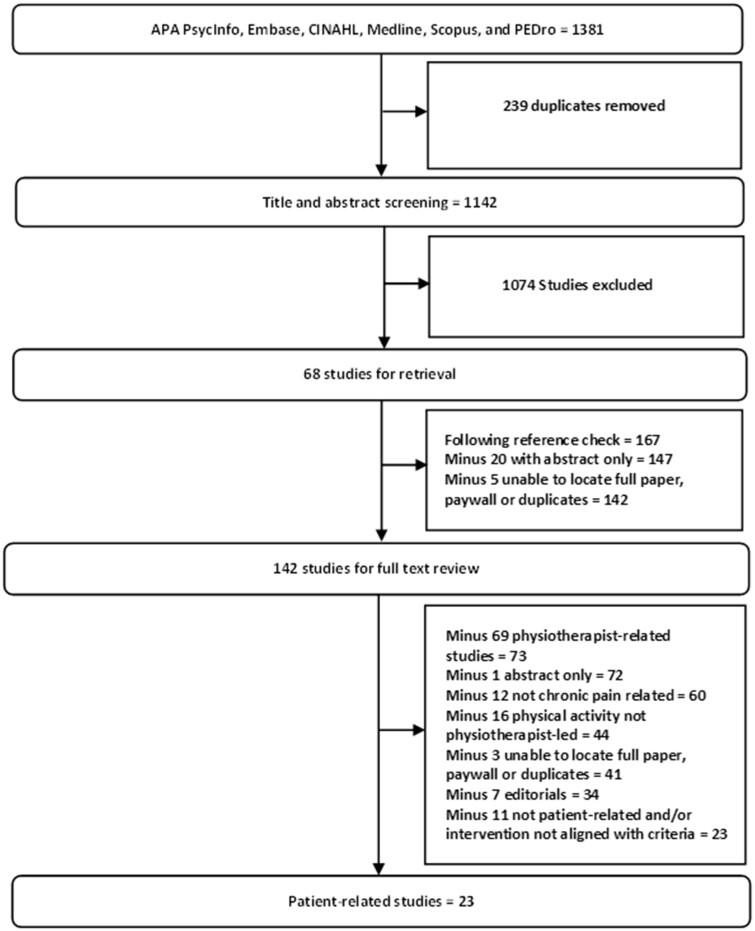
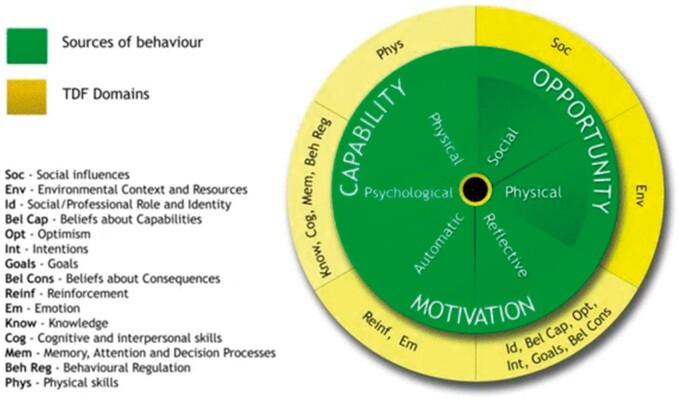
We systematically searched the APA PsycInfo, Embase, CINAHL, Medline, Scopus, and PEDro databases for peer-reviewed studies (published in English) of adults with chronic pain. We used the Theoretical Domains Framework of behavior change to synthesize identified themes relating to barriers and enablers. Outcomes from studies reporting on interventions were also qualitatively synthesized.
RESULTS
Fourteen studies reported on barriers and enablers, 8 of which related to exercise adherence. Themes common to barriers and enablers included perceived efficacy of treatment, interrelationship with the physiotherapist, exercise burden, and the patient's understanding of exercise benefits. Other barriers included fear of movement, fragmented care, and cost. Ten studies explored interventions, 9 of which aimed to improve exercise adherence. Of these, evidence from 4 randomized controlled trials of technology-based interventions demonstrated improved exercise adherence among intervention groups compared with controls.
CONCLUSION
Patients with chronic pain experience barriers to HVP, including their beliefs, the nature of their interaction with their physiotherapist, perceived treatment efficacy, and cost. Enablers include rapport with their physiotherapist, achievable exercises, and seamless cost-effective care. Technology-based interventions have demonstrated effectiveness at increasing exercise adherence. Our findings suggest that interventions seeking to enhance implementation of HVP need to consider the multifactorial barriers experienced by patients with chronic pain.
STUDY REGISTRATION
Open Science Framework (https://doi.org/10.17605/OSF.IO/AYGZV).
目的
确定并综合与实施慢性疼痛高价值物理治疗(HVP)相关的患者障碍和促进因素。此外,还回顾了哪些与患者相关的干预措施已被用于促进慢性疼痛的 HVP 实施,以及这些干预措施的效果如何。
方法
我们系统地检索了 APA PsycInfo、Embase、CINAHL、Medline、Scopus 和 PEDro 数据库,以获取有关成年人慢性疼痛的同行评审研究(以英文发表)。我们使用行为改变的理论领域框架来综合与障碍和促进因素相关的已确定主题。还对报告干预措施结果的研究进行了定性综合。
结果
有 14 项研究报告了障碍和促进因素,其中 8 项与运动依从性有关。障碍和促进因素的共同主题包括治疗效果的感知、与物理治疗师的相互关系、运动负担以及患者对运动益处的理解。其他障碍包括对运动的恐惧、碎片化的护理和费用。有 10 项研究探讨了干预措施,其中 9 项旨在提高运动依从性。其中,4 项基于技术的干预措施的随机对照试验的证据表明,干预组的运动依从性优于对照组。
结论
慢性疼痛患者在接受 HVP 治疗时会遇到障碍,包括他们的信念、与物理治疗师互动的性质、对治疗效果的感知以及费用。促进因素包括与物理治疗师的融洽关系、可实现的运动以及经济高效的无缝护理。基于技术的干预措施已被证明能有效提高运动依从性。我们的研究结果表明,旨在增强 HVP 实施的干预措施需要考虑慢性疼痛患者所经历的多种因素障碍。
研究注册
 Zotero 插件