
肺部微生物群的抗生素耐药性储备随年龄增长而扩大。
The antibiotic resistance reservoir of the lung microbiome expands with age.
作者信息
Chu Victoria T, Tsitsiklis Alexandra, Mick Eran, Ambroggio Lilliam, Kalantar Katrina L, Glascock Abigail, Osborne Christina M, Wagner Brandie D, Matthay Michael A, DeRisi Joseph L, Calfee Carolyn S, Mourani Peter M, Langelier Charles R
机构信息
Division of Infectious Diseases, University of California, San Francisco, CA, USA.
Chan Zuckerberg Biohub, San Francisco, CA, USA.
出版信息
Res Sq. 2023 Sep 18:rs.3.rs-3283415. doi: 10.21203/rs.3.rs-3283415/v1.
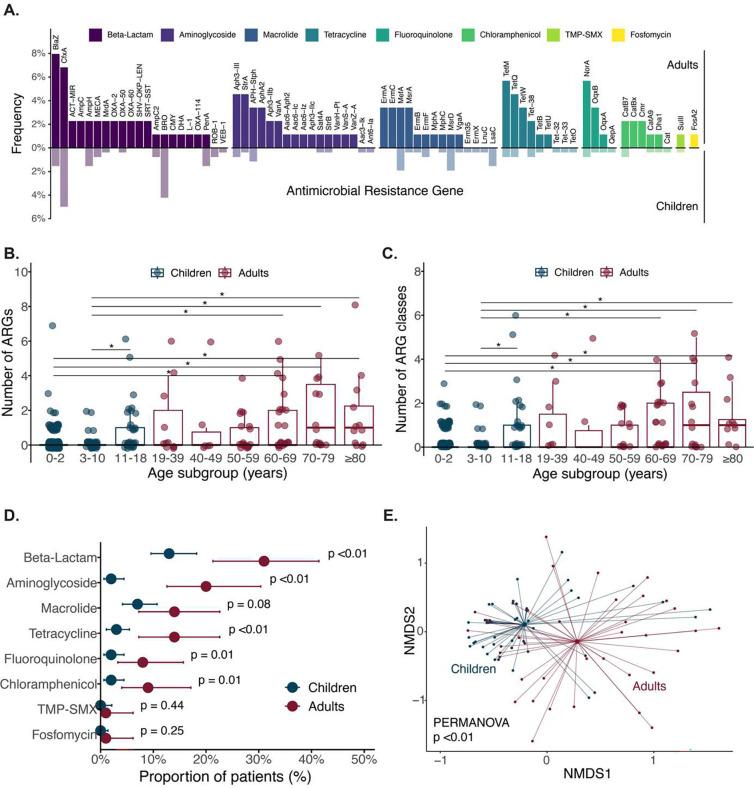
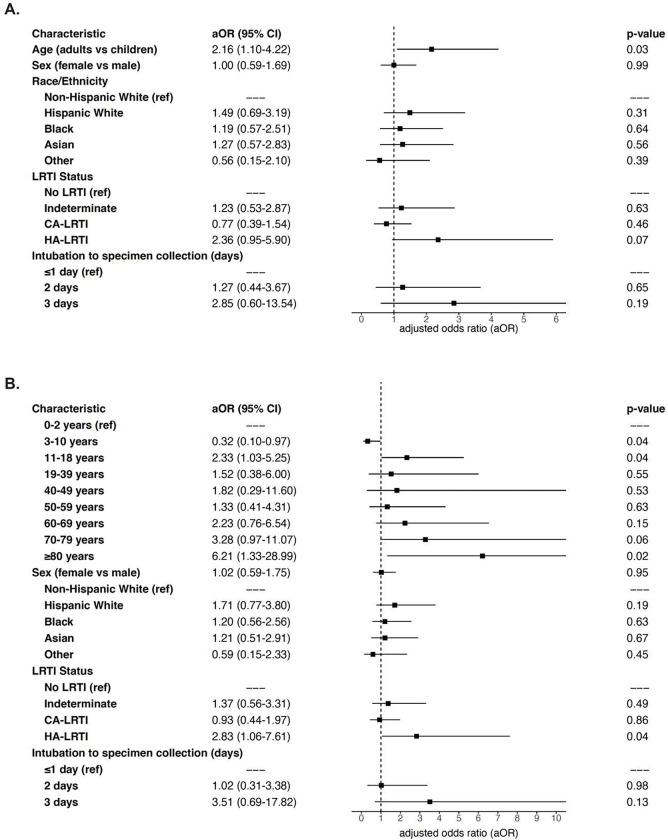
Antimicrobial resistant lower respiratory tract infections (LRTI) are an increasing public health threat, and an important cause of global mortality. The lung microbiome influences LRTI susceptibility and represents an important reservoir for exchange of antimicrobial resistance genes (ARGs). Studies of the gut microbiome have found an association between age and increasing antimicrobial resistance gene (ARG) burden, however corollary studies in the lung microbiome remain absent, despite the respiratory tract representing one of the most clinically significant sites for drug resistant infections. We performed a prospective, multicenter observational study of 261 children and 88 adults with acute respiratory failure, ranging in age from 31 days to ≥ 89 years, admitted to intensive care units in the United States. We performed RNA sequencing on tracheal aspirates collected within 72 hours of intubation, and evaluated age-related differences in detectable ARG expression in the lung microbiome as a primary outcome. Secondary outcomes included number and classes of ARGs detected, proportion of patients with an ARG class, and composition of the lung microbiome. Multivariable logistic regression models (adults vs children) or continuous age (years) were adjusted for sex, race/ethnicity, LRTI status, and days from intubation to specimen collection. Detection of ARGs was significantly higher in adults compared with children after adjusting for sex, race/ethnicity, LRTI diagnosis, and days from intubation to specimen collection (adjusted odds ratio (aOR): 2.16, 95% confidence interval (CI): 1.10-4.22). A greater proportion of adults compared with children had beta-lactam ARGs (31% (CI: 21-41%) vs 13% (CI: 10-18%)), aminoglycoside ARGs (20% (CI: 13-30%) vs 2% (CI: 0.6-4%)), and tetracycline ARGs (14% (CI: 7-23%) vs 3% (CI: 1-5%)). Adults ≥70 years old had the highest proportion of these three ARG classes. The total bacterial abundance of the lung microbiome increased with age, and microbiome alpha diversity varied with age. Taxonomic composition of the lung microbiome, measured by Bray Curtis dissimilarity index, differed between adults and children (p = 0.003). The association between age and increased ARG detection remained significant after additionally including lung microbiome total bacterial abundance and alpha diversity in the multivariable logistic regression model (aOR: 2.38, (CI: 1.25-4.54)). Furthermore, this association remained robust when modeling age as a continuous variable (aOR: 1.02, (CI: 1.01-1.03) per year of age). Taken together, our results demonstrate that age is an independent risk factor for ARG detection in the lower respiratory tract microbiome. These data shape our understanding of the lung resistome in critically ill patients across the lifespan, which may have implications for clinical management and global public health.
耐抗菌药物的下呼吸道感染(LRTI)对公众健康构成的威胁日益增加,是全球死亡率上升的一个重要原因。肺部微生物群影响LRTI易感性,是抗菌药物耐药基因(ARG)交换的一个重要储存库。对肠道微生物群的研究发现年龄与抗菌药物耐药基因(ARG)负担增加之间存在关联,然而,尽管呼吸道是耐药感染最重要的临床部位之一,但关于肺部微生物群的相应研究仍然缺乏。我们对美国重症监护病房收治的261名儿童和88名成人进行了一项前瞻性、多中心观察性研究,这些患者年龄从31天至≥89岁,均患有急性呼吸衰竭。我们对插管后72小时内采集的气管吸出物进行了RNA测序,并将肺部微生物群中可检测到的ARG表达的年龄相关差异作为主要观察指标。次要观察指标包括检测到的ARG数量和类别、具有某一ARG类别的患者比例以及肺部微生物群的组成。多变量逻辑回归模型(成人与儿童对比)或连续年龄(岁)针对性别、种族/民族、LRTI状态以及从插管到标本采集的天数进行了校正。在对性别、种族/民族、LRTI诊断以及从插管到标本采集的天数进行校正后,成人中ARG的检测率显著高于儿童(校正比值比(aOR):2.16,95%置信区间(CI):1.10 - 4.22)。与儿童相比,成人中有更大比例的人携带β-内酰胺类ARG(31%(CI:21 - 41%)对13%(CI:10 - 18%))、氨基糖苷类ARG(20%(CI:13 - 30%)对2%(CI:0.6 - 4%))以及四环素类ARG(14%(CI:7 - 23%)对3%(CI:1 - 5%))。70岁及以上的成年人中这三类ARG的比例最高。肺部微生物群的总细菌丰度随年龄增长而增加,微生物群的α多样性也随年龄变化。通过Bray Curtis差异指数测量的肺部微生物群的分类组成在成人和儿童之间存在差异(p = 0.003)。在多变量逻辑回归模型中额外纳入肺部微生物群的总细菌丰度和α多样性后,年龄与ARG检测增加之间的关联仍然显著(aOR:2.38,(CI:1.25 - 4.54))。此外,当将年龄建模为连续变量时,这种关联仍然很强(aOR:1.02,(CI:1.01 - 1.03)每岁)。综上所述,我们的结果表明年龄是下呼吸道微生物群中ARG检测的独立危险因素。这些数据塑造了我们对不同年龄段重症患者肺部耐药组的理解,这可能对临床管理和全球公共卫生具有重要意义。


 Zotero 插件