
疟原虫天然免疫主要针对 PfEMP1s 的内皮蛋白 C 受体结合区域。
Natural immunity to malaria preferentially targets the endothelial protein C receptor-binding regions of PfEMP1s.
机构信息
Malaria Research Program, Center for Vaccine Development and Global Health, University of Maryland School of Medicine , Baltimore, Maryland, USA.
Malaria Research and Training Center, University of Sciences, Techniques and Technologies , Bamako, Mali.
出版信息
mSphere. 2023 Oct 24;8(5):e0045123. doi: 10.1128/msphere.00451-23. Epub 2023 Oct 4.
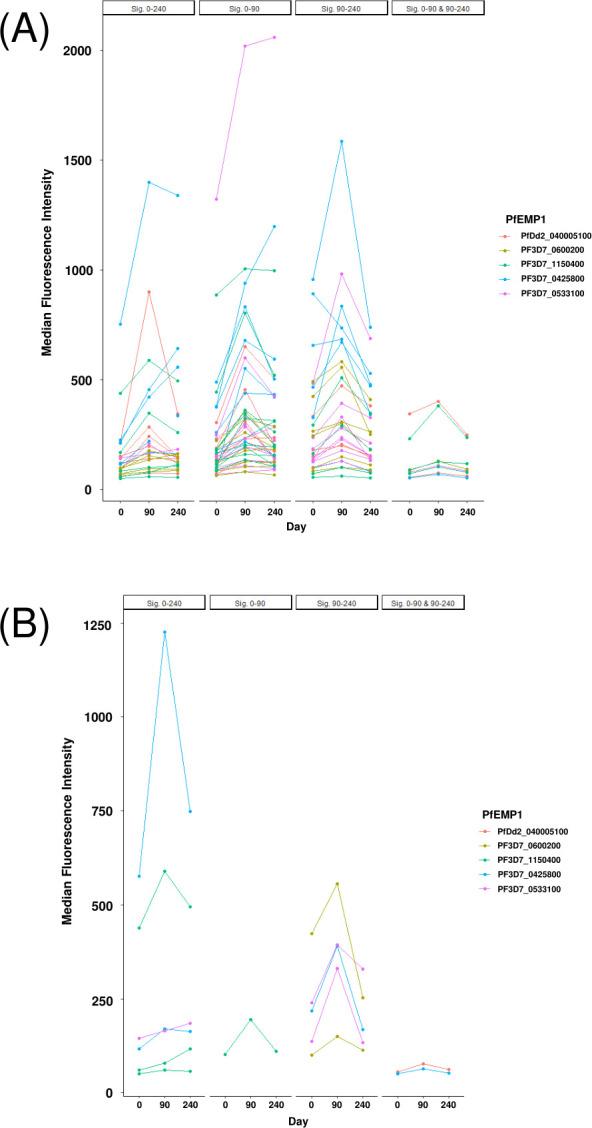
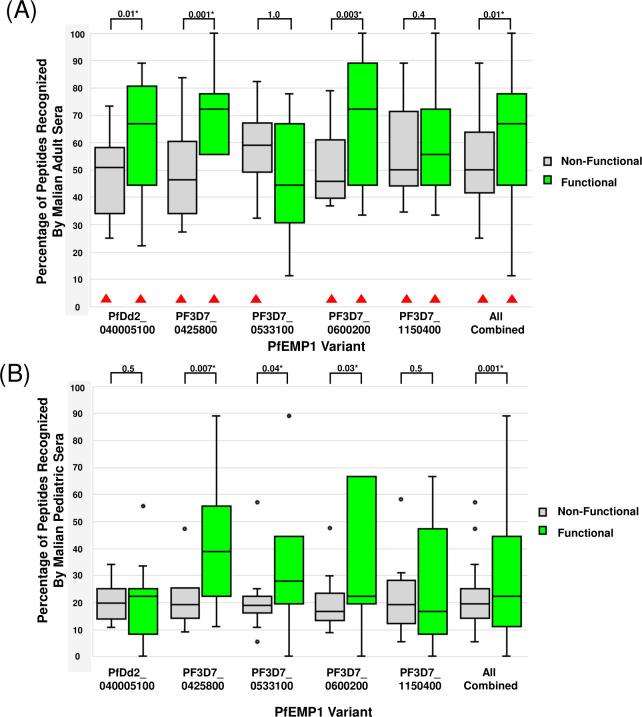
Antibody responses to variant surface antigens (VSAs) produced by the malaria parasite may contribute to age-related natural immunity to severe malaria. One VSA family, erythrocyte membrane protein-1 (PfEMP1), includes a subset of proteins that binds endothelial protein C receptor (EPCR) in human hosts and potentially disrupts the regulation of inflammatory responses, which may lead to the development of severe malaria. We probed peptide microarrays containing segments spanning five PfEMP1 EPCR-binding domain variants with sera from 10 Malian adults and 10 children to determine the differences between adult and pediatric immune responses. We defined serorecognized peptides and amino acid residues as those that elicited a significantly higher antibody response than malaria-naïve controls. We aimed to identify regions consistently serorecognized among adults but not among children across PfEMP1 variants, potentially indicating regions that drive the development of immunity to severe malaria. Adult sera consistently demonstrated broader and more intense serologic responses to constitutive PfEMP1 peptides than pediatric sera, including peptides in EPCR-binding domains. Both adults and children serorecognized a significantly higher proportion of EPCR-binding peptides than peptides that do not directly participate in receptor binding, indicating a preferential development of serologic responses at functional residues. Over the course of a single malaria transmission season, pediatric serological responses increased between the start and the peak of the season, but waned as the transmission season ended. IMPORTANCE Severe malaria and death related to malaria disproportionately affect sub-Saharan children under 5 years of age, commonly manifesting as cerebral malaria and/or severe malarial anemia. In contrast, adults in malaria-endemic regions tend to experience asymptomatic or mild disease. Our findings indicate that natural immunity to malaria targets specific regions within the EPCR-binding domain, particularly peptides containing EPCR-binding residues. Epitopes containing these residues may be promising targets for vaccines or therapeutics directed against severe malaria. Our approach provides insight into the development of natural immunity to a binding target linked to severe malaria by characterizing an "adult-like" response as recognizing a proportion of epitopes within the PfEMP1 protein, particularly regions that mediate EPCR binding. This "adult-like" response likely requires multiple years of malaria exposure, as increases in pediatric serologic response over a single malaria transmission season do not appear significant.
针对疟原虫产生的变异表面抗原 (VSAs) 的抗体反应可能有助于与严重疟疾相关的年龄相关的自然免疫力。VSA 家族之一,红细胞膜蛋白 1 (PfEMP1),包括一组与人类宿主内皮蛋白 C 受体 (EPCR) 结合的蛋白质,并且可能破坏炎症反应的调节,这可能导致严重疟疾的发展。我们用来自 10 名马里成年人和 10 名儿童的血清探测含有五个 PfEMP1 EPCR 结合结构域变体的肽微阵列,以确定成人和儿科免疫反应之间的差异。我们将血清识别肽和氨基酸残基定义为比疟原虫未感染对照产生更高抗体反应的肽和氨基酸残基。我们的目的是确定在 PfEMP1 变体中,在成年人中一致被血清识别但在儿童中不被识别的区域,这些区域可能表明是导致对严重疟疾产生免疫力的区域。与儿科血清相比,成人血清对组成性 PfEMP1 肽的血清学反应更广泛和更强烈,包括 EPCR 结合结构域中的肽。成人和儿童对 EPCR 结合肽的血清识别比例明显高于不直接参与受体结合的肽,表明在功能残基处优先发展血清学反应。在一个单一的疟疾传播季节期间,儿科血清学反应在季节开始和高峰之间增加,但随着传播季节结束而减弱。重要性 与疟疾相关的严重疟疾和死亡不成比例地影响撒哈拉以南非洲地区 5 岁以下儿童,通常表现为脑疟疾和/或严重疟疾贫血。相比之下,疟疾流行地区的成年人往往会经历无症状或轻度疾病。我们的发现表明,针对 EPCR 结合结构域内特定区域的疟疾自然免疫力,特别是包含 EPCR 结合残基的肽。包含这些残基的表位可能是针对严重疟疾的疫苗或治疗方法的有希望的靶点。我们的方法通过描述“成人样”反应识别 PfEMP1 蛋白内的一部分表位,特别是介导 EPCR 结合的区域,从而为针对与严重疟疾相关的结合靶标自然免疫力的发展提供了深入了解。这种“成人样”反应可能需要多年的疟疾暴露,因为在一个疟疾传播季节内儿科血清反应的增加似乎并不显著。



 Zotero 插件