
使用胰高血糖素样肽-1受体激动剂和钠-葡萄糖协同转运蛋白2抑制剂治疗2型糖尿病后的治疗效果异质性:一项系统评价
Treatment effect heterogeneity following type 2 diabetes treatment with GLP1-receptor agonists and SGLT2-inhibitors: a systematic review.
作者信息
Young Katherine G, McInnes Eram Haider, Massey Robert J, Kahkoska Anna R, Pilla Scott J, Raghavan Sridharan, Stanislawski Maggie A, Tobias Deirdre K, McGovern Andrew P, Dawed Adem Y, Jones Angus G, Pearson Ewan R, Dennis John M
机构信息
Exeter Centre of Excellence in Diabetes (EXCEED), University of Exeter Medical School, RILD Building, Royal Devon & Exeter Hospital, Exeter, UK.
Division of Population Health & Genomics, School of Medicine, University of Dundee, Dundee, UK.
出版信息
Commun Med (Lond). 2023 Oct 5;3(1):131. doi: 10.1038/s43856-023-00359-w.
BACKGROUND
A precision medicine approach in type 2 diabetes requires the identification of clinical and biological features that are reproducibly associated with differences in clinical outcomes with specific anti-hyperglycaemic therapies. Robust evidence of such treatment effect heterogeneity could support more individualized clinical decisions on optimal type 2 diabetes therapy.
METHODS
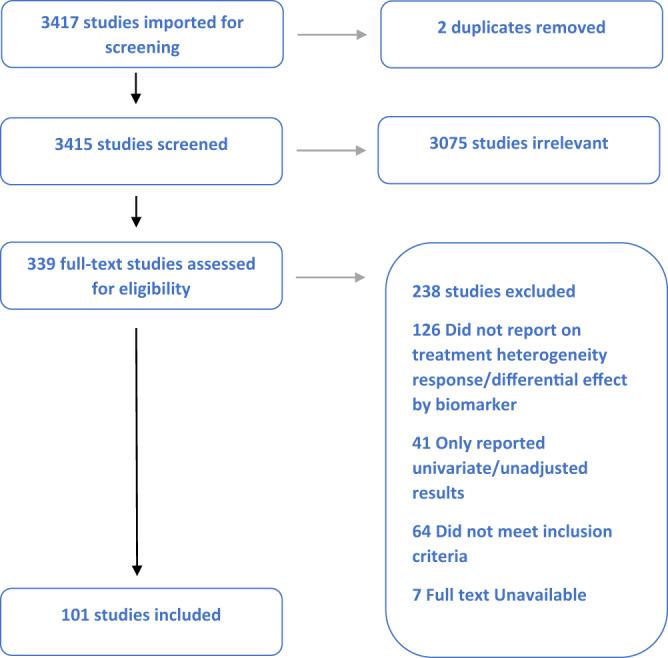
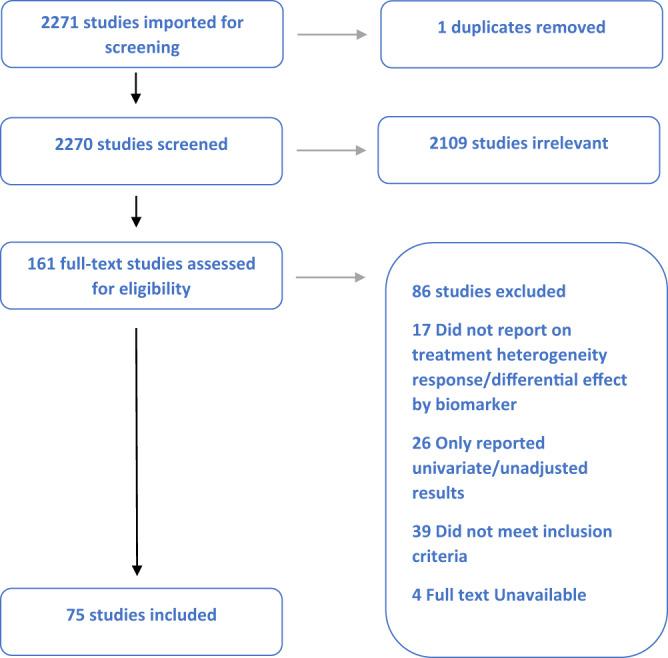
We performed a pre-registered systematic review of meta-analysis studies, randomized control trials, and observational studies evaluating clinical and biological features associated with heterogenous treatment effects for SGLT2-inhibitor and GLP1-receptor agonist therapies, considering glycaemic, cardiovascular, and renal outcomes. After screening 5,686 studies, we included 101 studies of SGLT2-inhibitors and 75 studies of GLP1-receptor agonists in the final systematic review.
RESULTS
Here we show that the majority of included papers have methodological limitations precluding robust assessment of treatment effect heterogeneity. For SGLT2-inhibitors, multiple observational studies suggest lower renal function as a predictor of lesser glycaemic response, while markers of reduced insulin secretion predict lesser glycaemic response with GLP1-receptor agonists. For both therapies, multiple post-hoc analyses of randomized control trials (including trial meta-analysis) identify minimal clinically relevant treatment effect heterogeneity for cardiovascular and renal outcomes.
CONCLUSIONS
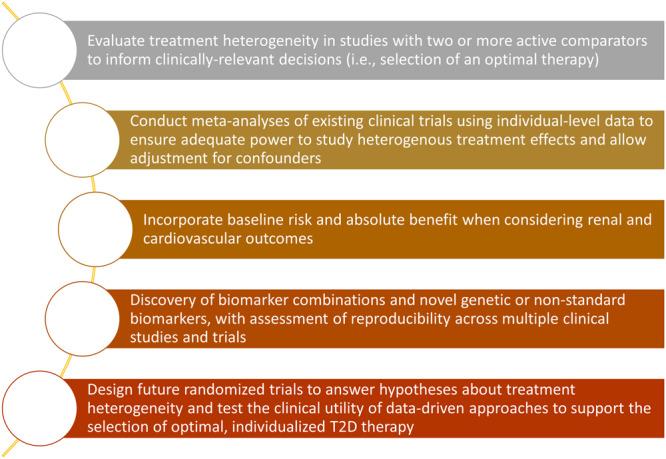
Current evidence on treatment effect heterogeneity for SGLT2-inhibitor and GLP1-receptor agonist therapies is limited, likely reflecting the methodological limitations of published studies. Robust and appropriately powered studies are required to understand type 2 diabetes treatment effect heterogeneity and evaluate the potential for precision medicine to inform future clinical care.
背景
2型糖尿病的精准医学方法需要识别与特定降糖治疗的临床结局差异可重复相关的临床和生物学特征。这种治疗效果异质性的有力证据可支持关于最佳2型糖尿病治疗的更个体化临床决策。
方法
我们对荟萃分析研究、随机对照试验和观察性研究进行了预先注册的系统评价,评估与SGLT2抑制剂和GLP1受体激动剂治疗的异质治疗效果相关的临床和生物学特征,同时考虑血糖、心血管和肾脏结局。在筛选了5686项研究后,我们在最终的系统评价中纳入了101项SGLT2抑制剂研究和75项GLP1受体激动剂研究。
结果
我们发现,大多数纳入的论文存在方法学局限性,妨碍了对治疗效果异质性的有力评估。对于SGLT2抑制剂,多项观察性研究表明肾功能较低是血糖反应较小的预测因素,而胰岛素分泌减少的标志物则预测GLP1受体激动剂的血糖反应较小。对于这两种疗法,随机对照试验的多项事后分析(包括试验荟萃分析)确定心血管和肾脏结局的临床相关治疗效果异质性极小。
结论
目前关于SGLT2抑制剂和GLP1受体激动剂治疗效果异质性的证据有限,这可能反映了已发表研究的方法学局限性。需要进行有力且有足够样本量的研究,以了解2型糖尿病治疗效果异质性,并评估精准医学为未来临床护理提供信息的潜力。
 Zotero 插件