
外膜囊泡疫苗平台。
Outer Membrane Vesicle Vaccine Platforms.
机构信息
GSK Vaccines Institute for Global Health (GVGH) S.r.l., Siena, Italy.
GSK, Siena, Italy.
出版信息
BioDrugs. 2024 Jan;38(1):47-59. doi: 10.1007/s40259-023-00627-0. Epub 2023 Oct 5.
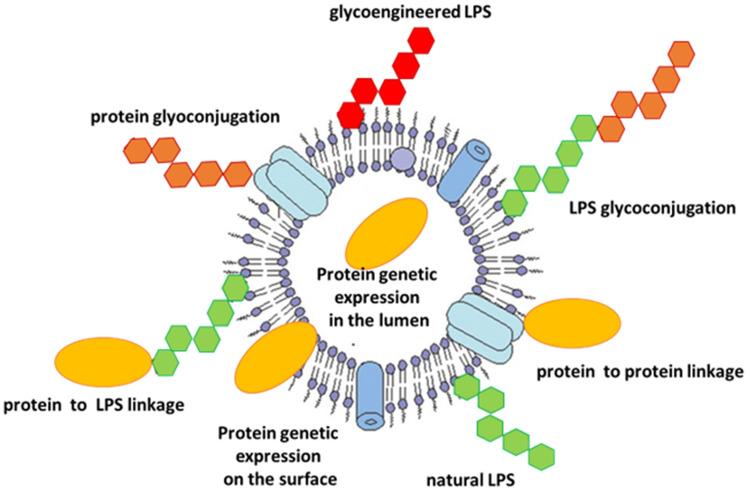
Outer membrane vesicles (OMVs) are spontaneously released by many gram-negative bacteria during their growth and constitute an important virulence factor for bacteria, helping them to survive through harsh environmental conditions. Native OMVs, naturally-released from bacteria, are produced at a level too low for vaccine manufacturing, requiring chemical treatment (detergent-extracted) or genetic manipulation, resulting in generalized modules for membrane antigens (GMMAs). Over the years, the nature and properties of OMVs have made them a viable platform for vaccine development. There are a few licensed OMV vaccines mainly for the prevention of meningitis caused by Neisseria meningitidis serogroup B (MenB) and Haemophilus influenzae type b (Hib). There are several candidates in clinical development against other gram-negative organisms from which the OMVs are derived, but also against heterologous targets in which the OMVs are used as carriers (e.g. coronavirus disease 2019 [COVID-19]). The use of OMVs for targets other than those from which they are derived is a major advancement in OMV technology, improving its versatility by being able to deliver protein or polysaccharide antigens. Other advances include the range of genetic modifications that can be made to improve their safety, reduce reactogenicity, and increase immunogenicity and protective efficacy. However, significant challenges remain, such as identification of general tools for high-content surface expression of heterologous proteins on the OMV surface. Here, we outline the progress of OMV vaccines to date, particularly discussing licensed OMV-based vaccines and candidates in clinical development. Recent trends in preclinical research are described, mainly focused on genetic manipulation and chemical conjugation for the use of OMVs as carriers for heterologous protein and polysaccharide antigens. Remaining challenges with the use of OMVs and directions for future research are also discussed.
外膜囊泡(OMVs)是许多革兰氏阴性菌在生长过程中自发释放的,是细菌的一个重要毒力因子,帮助它们在恶劣的环境条件下生存。天然的 OMVs 是由细菌自然释放的,其产生水平太低,无法用于疫苗制造,需要进行化学处理(去污剂提取)或遗传操作,从而产生通用膜抗原模块(GMMAs)。多年来,OMVs 的性质和特性使其成为疫苗开发的可行平台。目前有几种许可的 OMV 疫苗,主要用于预防由脑膜炎奈瑟菌 B 群(MenB)和流感嗜血杆菌 b 型(Hib)引起的脑膜炎。有几种候选疫苗正在临床开发中,用于对抗从其衍生而来的其他革兰氏阴性生物体,也用于对抗将 OMV 用作载体的异源靶标(例如,2019 年冠状病毒病[COVID-19])。将 OMV 用于其来源以外的靶标是 OMV 技术的重大进步,通过能够递送蛋白质或多糖抗原来提高其多功能性。其他进展包括可以进行的一系列遗传修饰,以提高其安全性、降低反应原性,并提高免疫原性和保护效力。然而,仍然存在重大挑战,例如确定用于在 OMV 表面上高内涵表达异源蛋白质的通用工具。在这里,我们概述了迄今为止 OMV 疫苗的进展,特别是讨论了许可的基于 OMV 的疫苗和临床开发中的候选疫苗。描述了最近在临床前研究中的趋势,主要侧重于遗传操作和化学缀合,以将 OMV 用作异源蛋白质和多糖抗原的载体。还讨论了使用 OMV 存在的剩余挑战和未来研究方向。
 Zotero 插件