
没有睡眠时长与脑萎缩之间存在关联的表型或基因型证据。
No phenotypic or genotypic evidence for a link between sleep duration and brain atrophy.
机构信息
Center for Lifespan Changes in Brain and Cognition, University of Oslo, Oslo, Norway.
Department of Radiology and Nuclear Medicine, Oslo University Hospital, Oslo, Norway.
出版信息
Nat Hum Behav. 2023 Nov;7(11):2008-2022. doi: 10.1038/s41562-023-01707-5. Epub 2023 Oct 5.
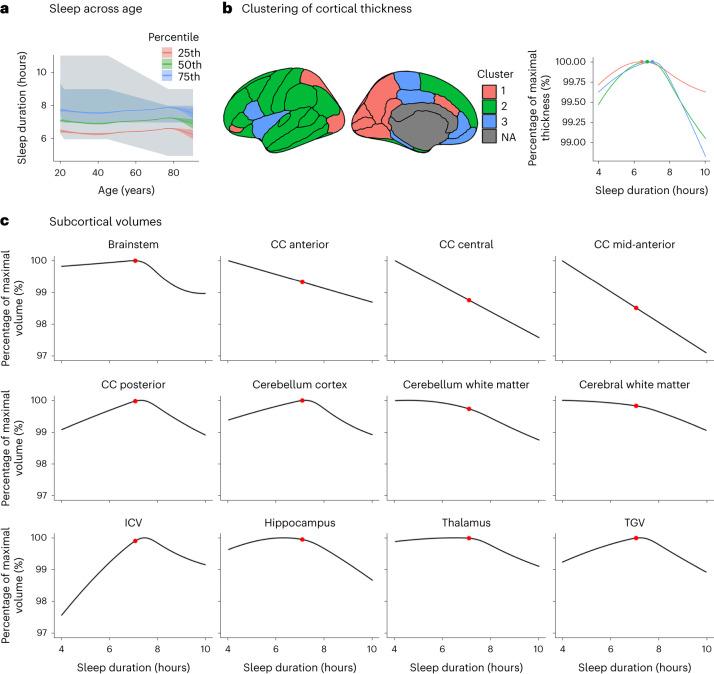
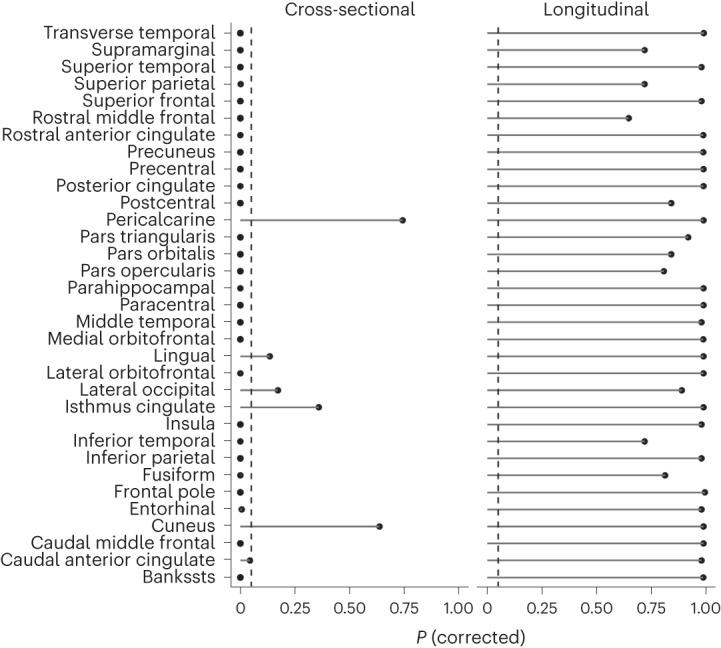
Short sleep is held to cause poorer brain health, but is short sleep associated with higher rates of brain structural decline? Analysing 8,153 longitudinal MRIs from 3,893 healthy adults, we found no evidence for an association between sleep duration and brain atrophy. In contrast, cross-sectional analyses (51,295 observations) showed inverse U-shaped relationships, where a duration of 6.5 (95% confidence interval, (5.7, 7.3)) hours was associated with the thickest cortex and largest volumes relative to intracranial volume. This fits converging evidence from research on mortality, health and cognition that points to roughly seven hours being associated with good health. Genome-wide association analyses suggested that genes associated with longer sleep for below-average sleepers were linked to shorter sleep for above-average sleepers. Mendelian randomization did not yield evidence for causal impacts of sleep on brain structure. The combined results challenge the notion that habitual short sleep causes brain atrophy, suggesting that normal brains promote adequate sleep duration-which is shorter than current recommendations.
短睡眠被认为会导致较差的大脑健康,但短睡眠是否与更高的大脑结构衰退率有关?通过分析 3893 名健康成年人的 8153 份纵向 MRI,我们没有发现睡眠持续时间与大脑萎缩之间存在关联的证据。相比之下,横断面分析(51295 次观察)显示出反 U 形关系,其中 6.5 小时(95%置信区间,5.7 至 7.3)与皮质最厚和相对于颅内体积的最大体积相关。这与死亡率、健康和认知研究的综合证据相吻合,表明大约七个小时与健康相关。全基因组关联分析表明,与睡眠较长的基因相关的基因与睡眠较长的基因相关。孟德尔随机化没有为睡眠对大脑结构的因果影响提供证据。综合结果对习惯性短睡眠导致大脑萎缩的观点提出了挑战,表明正常的大脑会促进足够的睡眠时间——比目前的建议更短。


 Zotero 插件