
脓毒症相关性脑病的范围:临床视角。
The spectrum of sepsis-associated encephalopathy: a clinical perspective.
机构信息
INSERM UMR 1137, Université Paris Cité, 75018, Paris, France.
Department of Intensive Care Medicine, Bichat-Claude Bernard University Hospital, APHP, 46 Rue Henri Huchard, 75877, Paris Cedex, France.
出版信息
Crit Care. 2023 Oct 5;27(1):386. doi: 10.1186/s13054-023-04655-8.
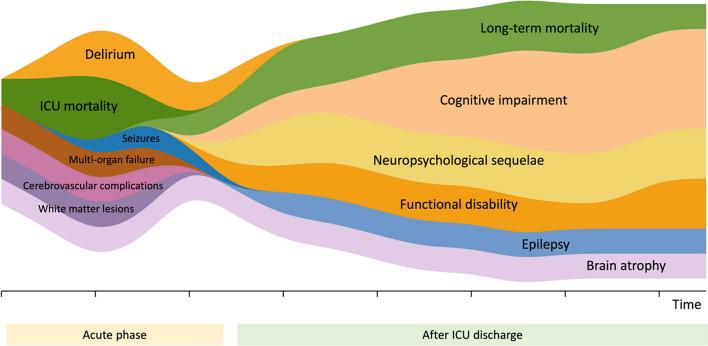
Sepsis-associated encephalopathy is a severe neurologic syndrome characterized by a diffuse dysfunction of the brain caused by sepsis. This review provides a concise overview of diagnostic tools and management strategies for SAE at the acute phase and in the long term. Early recognition and diagnosis of SAE are crucial for effective management. Because neurologic evaluation can be confounded by several factors in the intensive care unit setting, a multimodal approach is warranted for diagnosis and management. Diagnostic tools commonly employed include clinical evaluation, metabolic tests, electroencephalography, and neuroimaging in selected cases. The usefulness of blood biomarkers of brain injury for diagnosis remains limited. Clinical evaluation involves assessing the patient's mental status, motor responses, brainstem reflexes, and presence of abnormal movements. Electroencephalography can rule out non-convulsive seizures and help detect several patterns of various severity such as generalized slowing, epileptiform discharges, and triphasic waves. In patients with acute encephalopathy, the diagnostic value of non-contrast computed tomography is limited. In septic patients with persistent encephalopathy, seizures, and/or focal signs, magnetic resonance imaging detects brain injury in more than 50% of cases, mainly cerebrovascular complications, and white matter changes. Timely identification and treatment of the underlying infection are paramount, along with effective control of systemic factors that may contribute to secondary brain injury. Upon admission to the ICU, maintaining appropriate levels of oxygenation, blood pressure, and metabolic balance is crucial. Throughout the ICU stay, it is important to be mindful of the potential neurotoxic effects associated with specific medications like midazolam and cefepime, and to closely monitor patients for non-convulsive seizures. The potential efficacy of targeted neurocritical care during the acute phase in optimizing patient outcomes deserves to be further investigated. Sepsis-associated encephalopathy may lead to permanent neurologic sequelae. Seizures occurring in the acute phase increase the susceptibility to long-term epilepsy. Extended ICU stays and the presence of sepsis-associated encephalopathy are linked to functional disability and neuropsychological sequelae, underscoring the necessity for long-term surveillance in the comprehensive care of septic patients.
脓毒症相关性脑病是一种严重的神经系统综合征,其特征为脓毒症导致的大脑弥漫性功能障碍。本综述提供了脓毒症相关性脑病在急性期和长期的诊断工具和管理策略的简明概述。早期识别和诊断脓毒症相关性脑病对于有效管理至关重要。由于在重症监护病房环境中,神经评估可能受到多种因素的干扰,因此需要采用多模态方法进行诊断和管理。常用的诊断工具包括临床评估、代谢测试、脑电图和神经影像学检查,在某些情况下还可以进行。脑损伤的血液生物标志物对诊断的帮助仍然有限。临床评估包括评估患者的精神状态、运动反应、脑干反射和异常运动的存在。脑电图可以排除非惊厥性发作,并有助于检测出各种严重程度的几种模式,如广泛性减慢、癫痫样放电和三相波。在急性脑病患者中,非对比计算机断层扫描的诊断价值有限。在持续性脑病、癫痫发作和/或局灶性体征的脓毒症患者中,磁共振成像可在超过 50%的病例中检测到脑损伤,主要为脑血管并发症和白质改变。及时识别和治疗潜在感染以及有效控制可能导致继发性脑损伤的全身因素至关重要。入住重症监护病房时,保持适当的氧合、血压和代谢平衡至关重要。在整个重症监护病房期间,需要注意与咪达唑仑和头孢吡肟等特定药物相关的潜在神经毒性作用,并密切监测患者是否发生非惊厥性发作。在急性期中进行靶向神经重症监护的潜在疗效值得进一步研究,以优化患者结局。脓毒症相关性脑病可能导致永久性神经后遗症。急性期中发生的癫痫发作会增加长期癫痫的易感性。延长的重症监护病房停留时间和脓毒症相关性脑病的存在与功能障碍和神经心理学后遗症相关,这突显了在脓毒症患者的综合护理中进行长期监测的必要性。


 Zotero 插件