
炎症信号通路在阿尔茨海默病治疗中的抑制剂、天然产物和代谢物(综述)。
Inflammatory signaling pathways in the treatment of Alzheimer's disease with inhibitors, natural products and metabolites (Review).
机构信息
Tianjin University of Traditional Chinese Medicine, Tianjin 301617, P.R. China.
出版信息
Int J Mol Med. 2023 Nov;52(5). doi: 10.3892/ijmm.2023.5314. Epub 2023 Oct 6.
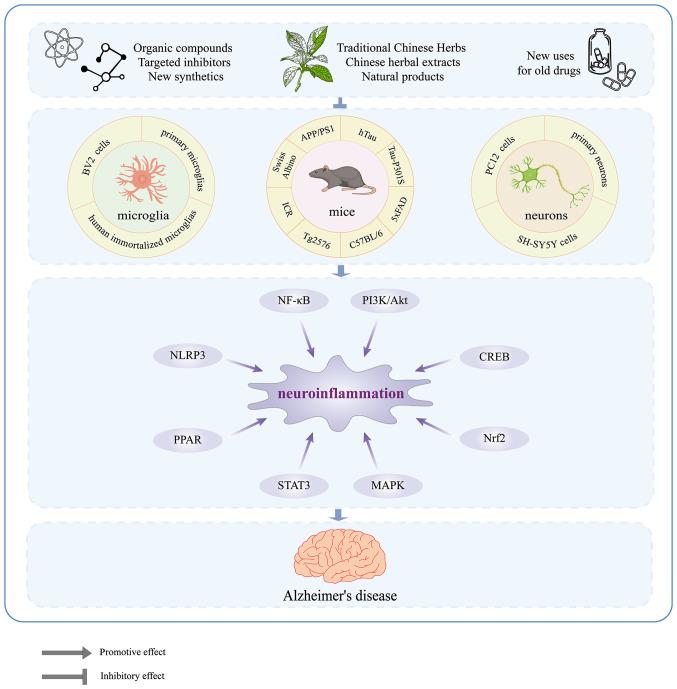
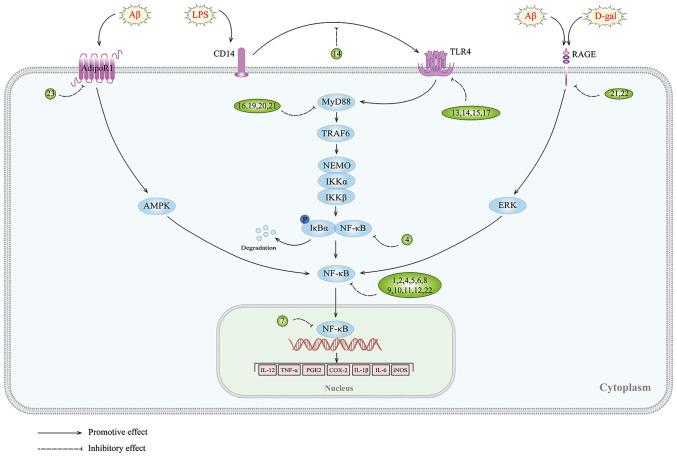
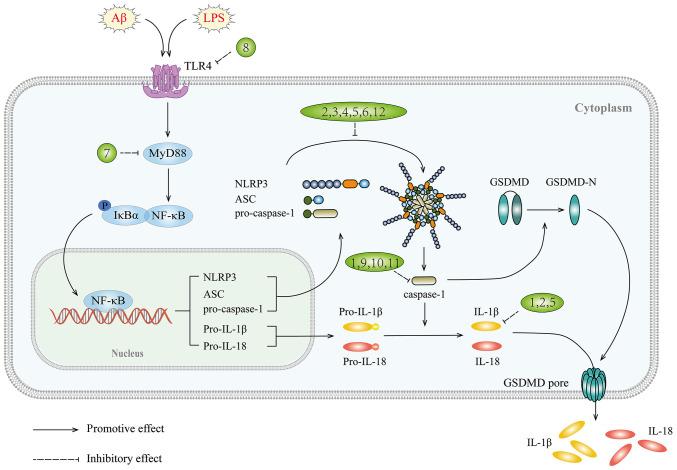
The intricate nature of Alzheimer's disease (AD) pathogenesis poses a persistent obstacle to drug development. In recent times, neuroinflammation has emerged as a crucial pathogenic mechanism of AD, and the targeting of inflammation has become a viable approach for the prevention and management of AD. The present study conducted a comprehensive review of the literature between October 2012 and October 2022, identifying a total of 96 references, encompassing 91 distinct pharmaceuticals that have been investigated for their potential impact on AD by inhibiting neuroinflammation. Research has shown that pharmaceuticals have the potential to ameliorate AD by reducing neuroinflammation mainly through regulating inflammatory signaling pathways such as NF‑κB, MAPK, NLRP3, PPARs, STAT3, CREB, PI3K/Akt, Nrf2 and their respective signaling pathways. Among them, tanshinone IIA has been extensively studied for its anti‑inflammatory effects, which have shown significant pharmacological properties and can be applied clinically. Thus, it may hold promise as an effective drug for the treatment of AD. The present review elucidated the inflammatory signaling pathways of pharmaceuticals that have been investigated for their therapeutic efficacy in AD and elucidates their underlying mechanisms. This underscores the auspicious potential of pharmaceuticals in ameliorating AD by impeding neuroinflammation.
阿尔茨海默病(AD)发病机制的复杂性是药物开发的持续障碍。最近,神经炎症已成为 AD 的一个重要发病机制,针对炎症的治疗已成为预防和治疗 AD 的可行方法。本研究对 2012 年 10 月至 2022 年 10 月期间的文献进行了全面回顾,共确定了 96 篇参考文献,涵盖了 91 种不同的药物,这些药物通过抑制神经炎症被研究用于治疗 AD 的潜力。研究表明,药物通过主要通过调节 NF-κB、MAPK、NLRP3、PPARs、STAT3、CREB、PI3K/Akt、Nrf2 及其各自的信号通路等炎症信号通路,具有改善 AD 的潜力。其中,丹参酮 IIA 因其抗炎作用而被广泛研究,其具有显著的药理学特性,并可应用于临床。因此,它可能作为一种有效的 AD 治疗药物具有广阔的前景。本综述阐明了已研究用于 AD 治疗功效的药物的炎症信号通路及其潜在机制。这突出了药物通过阻止神经炎症改善 AD 的可喜潜力。


 Zotero 插件