
关于生态毒理学生物标志物中环境咖啡因污染及其潜在健康影响的见解。 (原文句末不完整,推测补充了“caffeine”使句子完整后翻译如上)
Insights into environmental caffeine contamination in ecotoxicological biomarkers and potential health effects of .
作者信息
Diogo Bárbara S, Antunes Sara C, Pinto Ivo, Amorim João, Teixeira Cláudia, Teles Luís Oliva, Golovko Oksana, Žlábek Vladimír, Carvalho António Paulo, Rodrigues Sara
机构信息
ICBAS, Instituto de Ciências Biomédicas de Abel Salazar, Universidade do Porto, Rua de Jorge Viterbo Ferreira, 228, 4050-313, Porto, Portugal.
CIMAR/CIIMAR, Centro Interdisciplinar de Investigação Marinha e Ambiental, Universidade do Porto, Terminal de Cruzeiros do Porto de Leixões, Avenida General Norton de Matos, S/N, 4450-208, Matosinhos, Portugal.
出版信息
Heliyon. 2023 Sep 6;9(9):e19875. doi: 10.1016/j.heliyon.2023.e19875. eCollection 2023 Sep.
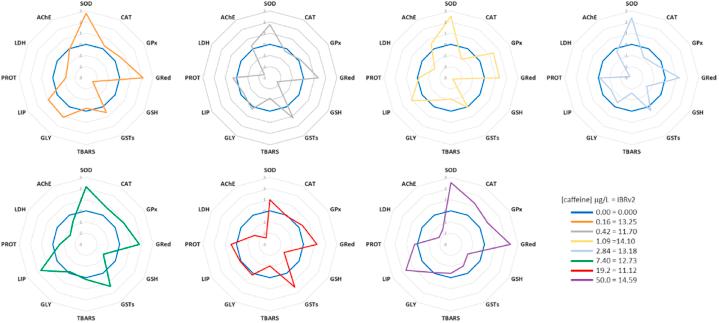
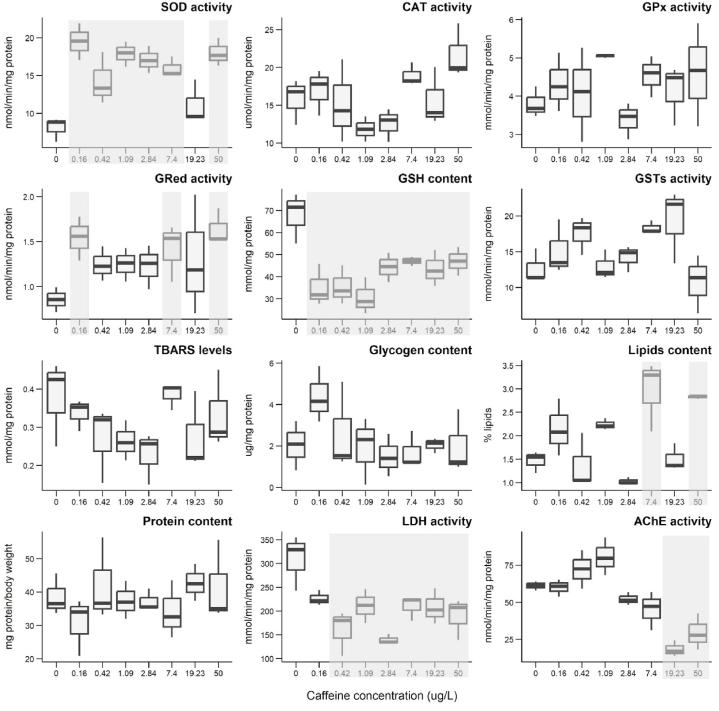
Caffeine (CAF) exposures have been shown to cause several pharmacological and biological effects in target and non-target organisms. Although there are already several ecotoxicological studies with CAF in non-target organisms, they are focused on marine organisms, with relevant concentrations in these ecosystems, therefore, less ecologically relevant to freshwater ecosystems (the main ecoreceptor of this type of anthropogenic contaminant). The present study aimed to assess the chronic effects (28 days) of sub-lethal and environmentally relevant concentrations of CAF (0.16, 0.42, 1.09, 2.84, 7.40, 19.23, and 50 μg/L) in . Biochemical endpoints as biomarkers of antioxidant defense, biotransformation, lipid peroxidation, energy sources, and neurotransmission were assessed. CAF exposure induced alterations in antioxidant defenses (superoxide dismutase and glutathione reductase activities, and glutathione content) preventing lipid peroxidation. Lactate dehydrogenase activity decreased in all the concentrations tested, while acetylcholinesterase activity was only affected by the highest concentrations tested (19.23 and 50 μg/L). We also utilized a multi-biomarker approach (Integrated Biomarker Response version 2, IBRv2) to investigate the effects of CAF in the dispersion scope of individual biochemical responses of . IBRv2 showed that the concentration of 50 μg/L promotes the highest stress. However, the results showed that CAF induced disturbances in the metabolic pathways studied in . These results demonstrated the toxic effects of CAF on freshwater fish, compromising their physiological functions and evidencing the need for monitoring the residues of CAF released into the inland aquatic environments. Furthermore, this research evidence that phylogenetically and physiologically different species may present different biological responses with concern for ecologically relevant environmental conditions. In this sense, the present study generated ecotoxicologically relevant data, that can be considered by environment regulators, since the here-endpoints evaluated showed sensitivity and consistency in the evaluation of caffeine risks in freshwater environments.
咖啡因(CAF)暴露已被证明会对目标生物和非目标生物产生多种药理和生物学效应。尽管已经有多项关于非目标生物中CAF的生态毒理学研究,但这些研究主要集中在海洋生物上,在这些生态系统中的相关浓度与淡水生态系统(这类人为污染物的主要生态受体)的生态相关性较低。本研究旨在评估亚致死且与环境相关浓度的CAF(0.16、0.42、1.09、2.84、7.40、19.23和50μg/L)在28天内对[未提及的生物]的慢性影响。评估了作为抗氧化防御、生物转化、脂质过氧化、能量来源和神经传递生物标志物的生化终点。CAF暴露导致抗氧化防御(超氧化物歧化酶和谷胱甘肽还原酶活性以及谷胱甘肽含量)发生改变,从而防止脂质过氧化。在所有测试浓度下,乳酸脱氢酶活性均降低,而乙酰胆碱酯酶活性仅受到测试的最高浓度(19.23和50μg/L)的影响。我们还采用了多生物标志物方法(综合生物标志物响应版本2,IBRv2)来研究CAF对[未提及的生物]个体生化反应离散范围的影响。IBRv2表明,50μg/L的浓度会引发最高的应激反应。然而,结果表明CAF会对[未提及的生物]所研究的代谢途径产生干扰。这些结果证明了CAF对淡水鱼的毒性作用,损害了它们的生理功能,并表明有必要监测排放到内陆水生环境中的CAF残留量。此外,这项研究证明,在系统发育和生理上不同的物种可能会对生态相关的环境条件呈现出不同的生物学反应。从这个意义上说,本研究生成了与生态毒理学相关的数据,环境监管机构可以参考这些数据,因为这里评估的终点在评估淡水环境中咖啡因风险时显示出了敏感性和一致性。
 Zotero 插件