
在……中实现聚-3-羟基丁酸厌氧生产途径的设计与热力学分析 。 (你提供的原文似乎不完整,“in”后面缺少具体内容)
Design and thermodynamic analysis of a pathway enabling anaerobic production of poly-3-hydroxybutyrate in .
作者信息
Olavarria Karel, Becker Marco V, Sousa Diana Z, van Loosdrecht Mark C M, Wahl S Aljoscha
机构信息
Laboratory of Microbiology, Wageningen University and Research, Stippenenweg 4, 6708 WE, Wageningen, The Netherlands.
Centre for Living Technologies, Eindhoven-Wageningen-Utrecht Alliance, Princetonlaan 6, 3584 CB, Utrecht, The Netherlands.
出版信息
Synth Syst Biotechnol. 2023 Sep 27;8(4):629-639. doi: 10.1016/j.synbio.2023.09.005. eCollection 2023 Dec.
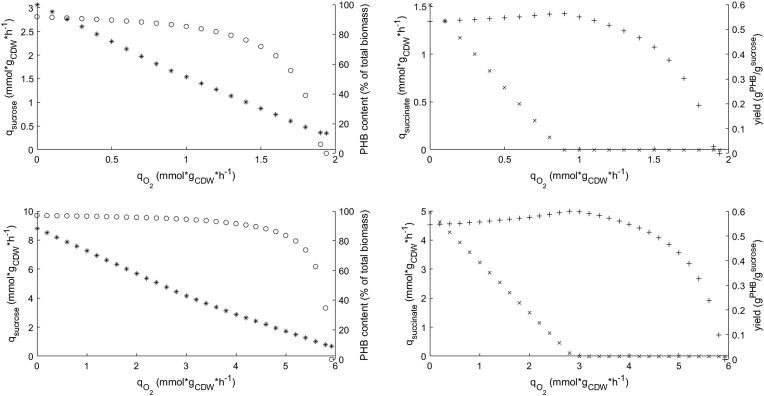
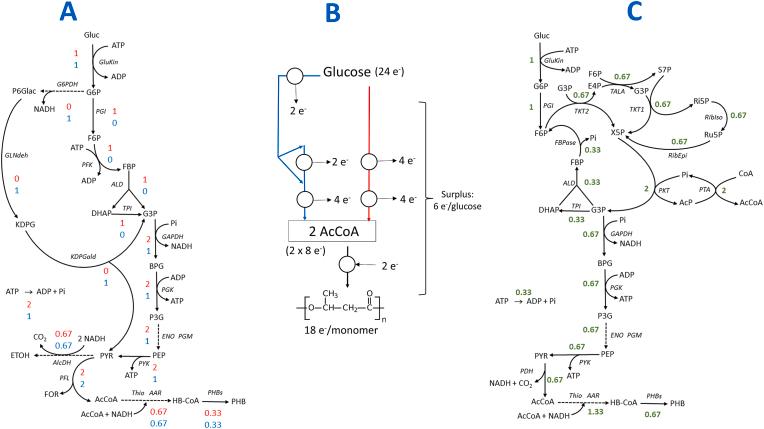
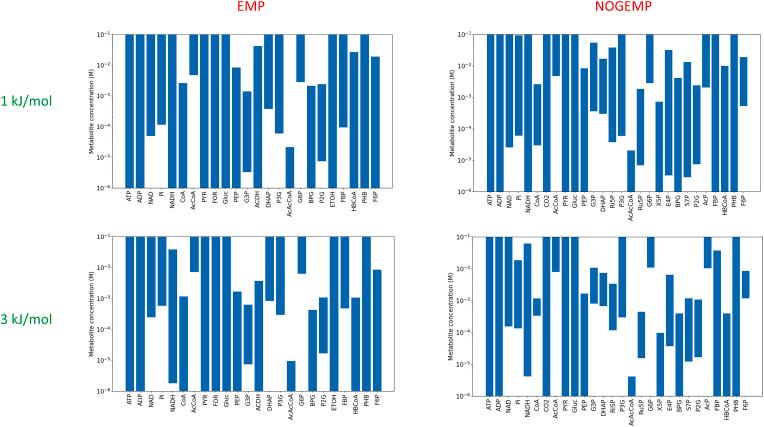
Utilizing anaerobic metabolisms for the production of biotechnologically relevant products presents potential advantages, such as increased yields and reduced energy dissipation. However, lower energy dissipation may indicate that certain reactions are operating closer to their thermodynamic equilibrium. While stoichiometric analyses and genetic modifications are frequently employed in metabolic engineering, the use of thermodynamic tools to evaluate the feasibility of planned interventions is less documented. In this study, we propose a novel metabolic engineering strategy to achieve an efficient anaerobic production of poly-(R)-3-hydroxybutyrate (PHB) in the model organism . Our approach involves re-routing of two-thirds of the glycolytic flux through non-oxidative glycolysis and coupling PHB synthesis with NADH re-oxidation. We complemented our stoichiometric analysis with various thermodynamic approaches to assess the feasibility and the bottlenecks in the proposed engineered pathway. According to our calculations, the main thermodynamic bottleneck are the reactions catalyzed by the acetoacetyl-CoA β-ketothiolase (EC 2.3.1.9) and the acetoacetyl-CoA reductase (EC 1.1.1.36). Furthermore, we calculated thermodynamically consistent sets of kinetic parameters to determine the enzyme amounts required for sustaining the conversion fluxes. In the case of the engineered conversion route, the protein pool necessary to sustain the desired fluxes could account for 20% of the whole cell dry weight.
利用厌氧代谢生产具有生物技术相关性的产品具有潜在优势,例如提高产量和减少能量耗散。然而,较低的能量耗散可能表明某些反应更接近其热力学平衡。虽然化学计量分析和基因改造在代谢工程中经常使用,但使用热力学工具评估计划干预的可行性的文献较少。在本研究中,我们提出了一种新的代谢工程策略,以在模式生物中实现高效厌氧生产聚(R)-3-羟基丁酸酯(PHB)。我们的方法包括将三分之二的糖酵解通量通过非氧化糖酵解重新定向,并将PHB合成与NADH再氧化耦合。我们用各种热力学方法补充了化学计量分析,以评估所提出的工程途径的可行性和瓶颈。根据我们的计算,主要的热力学瓶颈是由乙酰乙酰辅酶Aβ-酮硫解酶(EC 2.3.1.9)和乙酰乙酰辅酶A还原酶(EC 1.1.1.36)催化的反应。此外,我们计算了热力学上一致的动力学参数集,以确定维持转化通量所需的酶量。在工程转化途径的情况下,维持所需通量所需的蛋白质库可能占全细胞干重的20%。

 Zotero 插件