
热量限制调节人类肌肉中与应激反应和长寿相关基因的转录:CALERIE 研究。
Calorie restriction modulates the transcription of genes related to stress response and longevity in human muscle: The CALERIE study.
机构信息
Longitudinal Studies Section, Translation Gerontology Branch, National Institute on Aging, National Institutes of Health, Baltimore, Maryland, USA.
Computational Biology and Genomics Core, National Institute on Aging, National Institutes of Health, Baltimore, Maryland, USA.
出版信息
Aging Cell. 2023 Dec;22(12):e13963. doi: 10.1111/acel.13963. Epub 2023 Oct 12.
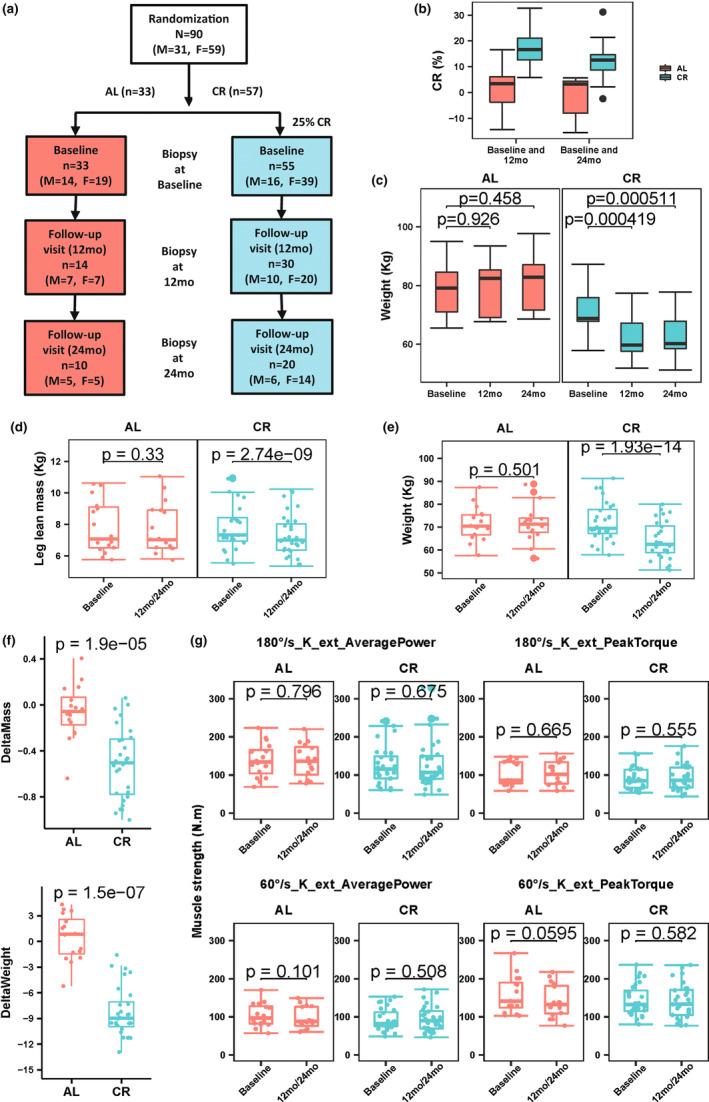
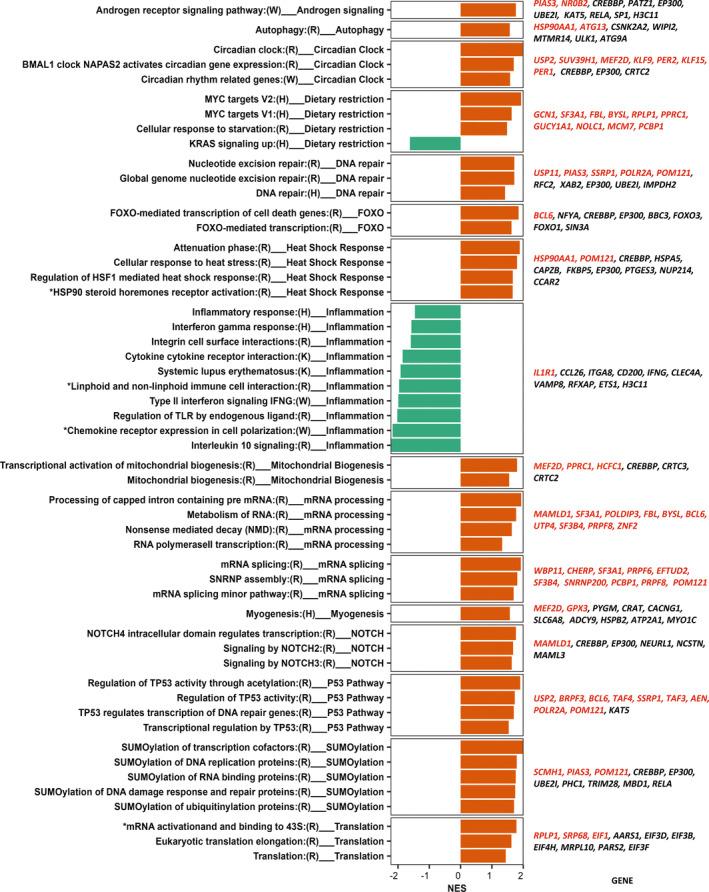
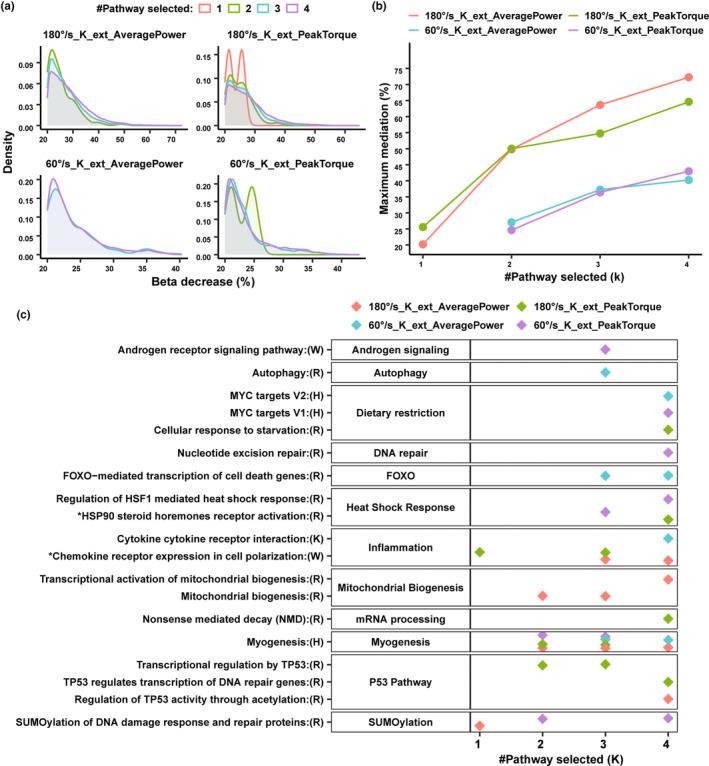
The lifespan extension induced by 40% caloric restriction (CR) in rodents is accompanied by postponement of disease, preservation of function, and increased stress resistance. Whether CR elicits the same physiological and molecular responses in humans remains mostly unexplored. In the CALERIE study, 12% CR for 2 years in healthy humans induced minor losses of muscle mass (leg lean mass) without changes of muscle strength, but mechanisms for muscle quality preservation remained unclear. We performed high-depth RNA-Seq (387-618 million paired reads) on human vastus lateralis muscle biopsies collected from the CALERIE participants at baseline, 12- and 24-month follow-up from the 90 CALERIE participants randomized to CR and "ad libitum" control. Using linear mixed effect model, we identified protein-coding genes and splicing variants whose expression was significantly changed in the CR group compared to controls, including genes related to proteostasis, circadian rhythm regulation, DNA repair, mitochondrial biogenesis, mRNA processing/splicing, FOXO3 metabolism, apoptosis, and inflammation. Changes in some of these biological pathways mediated part of the positive effect of CR on muscle quality. Differentially expressed splicing variants were associated with change in pathways shown to be affected by CR in model organisms. Two years of sustained CR in humans positively affected skeletal muscle quality, and impacted gene expression and splicing profiles of biological pathways affected by CR in model organisms, suggesting that attainable levels of CR in a lifestyle intervention can benefit muscle health in humans.
限制热量摄入 40%可延长啮齿动物寿命,同时延缓疾病发生、保持器官功能、增强抗应激能力。限制热量摄入对人类是否会产生同样的生理和分子反应,这在很大程度上仍未得到探索。在 CALERIE 研究中,健康人类通过 2 年 12%的热量限制(CR),导致肌肉质量(腿部瘦肉量)略有下降,而肌肉力量没有变化,但肌肉质量保持的机制尚不清楚。我们对来自 CALERIE 参与者的人股外侧肌活检组织进行了深度 RNA-Seq(387-618 百万对读长)分析,这些参与者在基线、12 个月和 24 个月时进行了随访,共 90 名参与者随机分配到 CR 组和“自由进食”对照组。使用线性混合效应模型,我们鉴定了 CR 组与对照组相比表达显著变化的蛋白质编码基因和剪接变异体,包括与蛋白质稳态、昼夜节律调节、DNA 修复、线粒体生物发生、mRNA 加工/剪接、FOXO3 代谢、细胞凋亡和炎症相关的基因。这些生物学途径中的一些变化介导了 CR 对肌肉质量的积极影响。一些差异表达的剪接变异体与 CR 在模型生物中受影响的途径变化有关。在人类中持续 2 年的 CR 积极影响了骨骼肌质量,并影响了受 CR 影响的模型生物中生物学途径的基因表达和剪接谱,这表明生活方式干预中可达到的 CR 水平可以有益于人类的肌肉健康。



 Zotero 插件