
用于 SARS-CoV-2 的反向遗传学系统:开发与应用。
Reverse genetics systems for SARS-CoV-2: Development and applications.
机构信息
Department of Veterinary Medicine, Zhejiang University, Hangzhou, 310058, China.
Department of Veterinary Medicine, Zhejiang University, Hangzhou, 310058, China; State Key Laboratory for Animal Disease Control and Prevention, South China Agricultural University, Guangzhou, 510642, China; Guangdong Laboratory for Lingnan Modern Agriculture, College of Veterinary Medicine, South China Agricultural University, Guangzhou, 510642, China.
出版信息
Virol Sin. 2023 Dec;38(6):837-850. doi: 10.1016/j.virs.2023.10.001. Epub 2023 Oct 11.
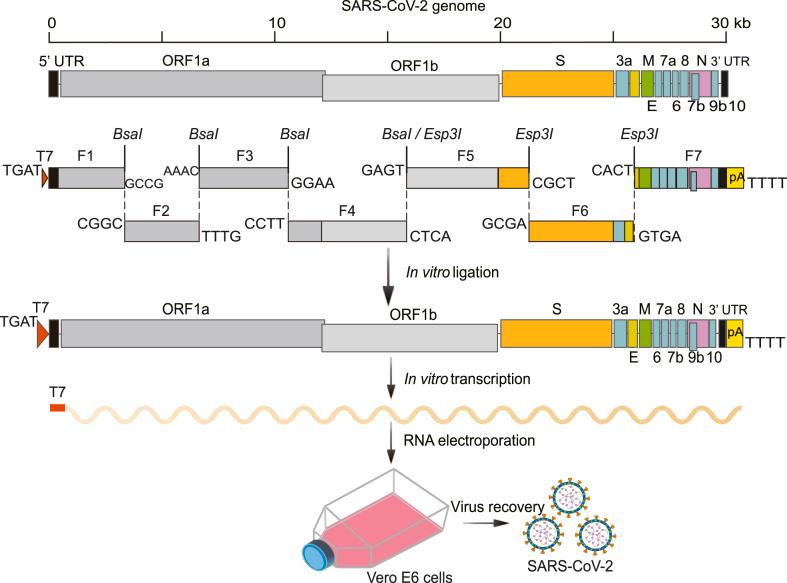
The recent emergence of severe acute respiratory syndrome coronavirus 2 (SARS-CoV-2) caused serious harm to human health and struck a blow to global economic development. Research on SARS-CoV-2 has greatly benefited from the use of reverse genetics systems, which have been established to artificially manipulate the viral genome, generating recombinant and reporter infectious viruses or biosafety level 2 (BSL-2)-adapted non-infectious replicons with desired modifications. These tools have been instrumental in studying the molecular biological characteristics of the virus, investigating antiviral therapeutics, and facilitating the development of attenuated vaccine candidates. Here, we review the construction strategies, development, and applications of reverse genetics systems for SARS-CoV-2, which may be applied to other CoVs as well.
严重急性呼吸综合征冠状病毒 2(SARS-CoV-2)的最近出现对人类健康造成了严重危害,并打击了全球经济发展。对 SARS-CoV-2 的研究极大地受益于使用反向遗传学系统,该系统已被建立用于人工操纵病毒基因组,从而产生具有所需修饰的重组和报告感染性病毒或生物安全级别 2(BSL-2)适应的非感染性复制子。这些工具对于研究病毒的分子生物学特性、研究抗病毒治疗药物以及促进减毒疫苗候选物的开发非常重要。在这里,我们回顾了 SARS-CoV-2 的反向遗传学系统的构建策略、发展和应用,这些系统也可能适用于其他 CoV。




 Zotero 插件