
熔融沉积成型打印 PLA/Nano β-TCP 复合骨组织工程支架促进成骨诱导功能。
Fused Deposition Modeling Printed PLA/Nano β-TCP Composite Bone Tissue Engineering Scaffolds for Promoting Osteogenic Induction Function.
机构信息
Department of Orthopaedics, Qilu Hospital of Shandong University, Shandong University Centre for Orthopaedics, Advanced Medical Research Institute, Shandong University, Jinan, Shandong, People's Republic of China.
Department of Orthopedics, West China Hospital of Sichuan University, Chengdu, Sichuan, People's Republic of China.
出版信息
Int J Nanomedicine. 2023 Oct 17;18:5815-5830. doi: 10.2147/IJN.S416098. eCollection 2023.
PURPOSE
Large bone defects caused by congenital defects, infections, degenerative diseases, trauma, and tumors often require personalized shapes and rapid reconstruction of the bone tissue. Three-dimensional (3D)-printed bone tissue engineering scaffolds exhibit promising application potential. Fused deposition modeling (FDM) technology can flexibly select and prepare printed biomaterials and design and fabricate bionic microstructures to promote personalized large bone defect repair. FDM-3D printing technology was used to prepare polylactic acid (PLA)/nano β-tricalcium phosphate (TCP) composite bone tissue engineering scaffolds in this study. The ability of the bone-tissue-engineered scaffold to repair bone defects was evaluated in vivo and in vitro.
METHODS
PLA/nano-TCP composite bone tissue engineering scaffolds were prepared using FDM-3D printing technology. The characterization data of the scaffolds were obtained using relevant detection methods. The physical and chemical properties, biocompatibility, and in vitro osteogenic capacity of the scaffolds were investigated, and their bone repair capacity was evaluated using an in vivo animal model of rabbit femur bone defects.
RESULTS
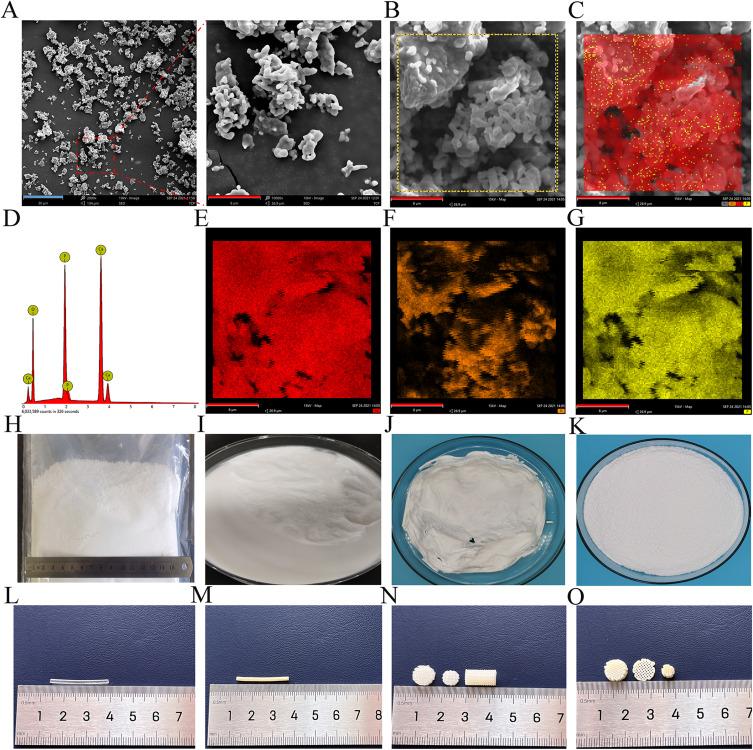
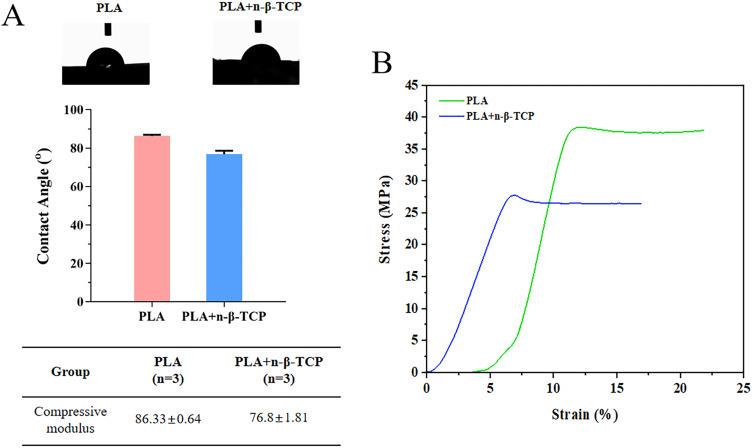
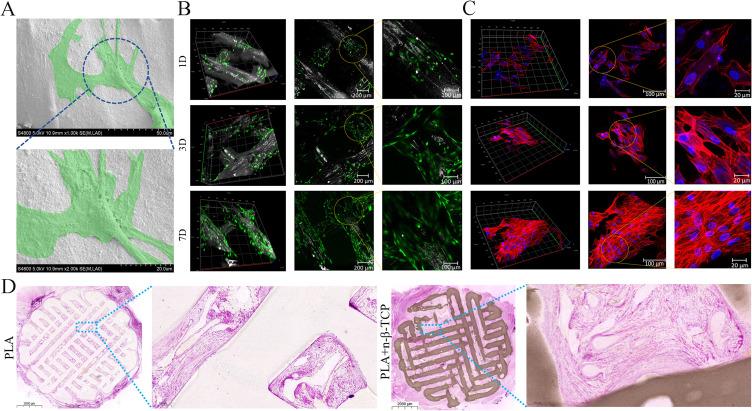
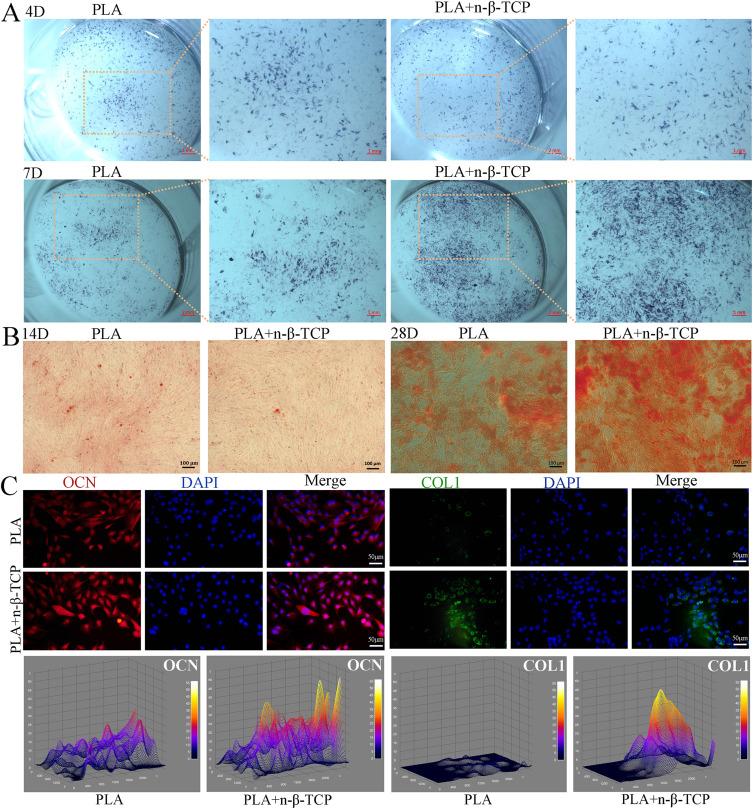
The FDM-printed PLA/nano β-TCP composite scaffolds exhibited good personalized porosity and shape, and their osteogenic ability, biocompatibility, and bone repair ability in vivo were superior to those of pure PLA. The merits of biodegradable PLA and bioactive nano β-TCP ceramics were combined to improve the overall biological performance of the composites.
CONCLUSION
The FDM-printed PLA/nano-β-TCP composite scaffold with a ratio of 7:3 exhibited good personalized porosity and shape, as well as good osteogenic ability, biocompatibility, and bone repair ability. This study provides a promising strategy for treating large bone defects.
目的
先天性缺陷、感染、退行性疾病、创伤和肿瘤引起的大骨缺损通常需要个性化形状和快速骨组织重建。三维(3D)打印的组织工程支架具有广阔的应用前景。熔丝制造(Fused Deposition Modeling,FDM)技术可以灵活选择和制备打印生物材料,并设计和制造仿生微结构,以促进个性化的大骨缺损修复。本研究采用 FDM-3D 打印技术制备聚乳酸(PLA)/纳米 β-磷酸三钙(TCP)复合组织工程支架。通过体内和体外实验评估了组织工程支架修复骨缺损的能力。
方法
采用 FDM-3D 打印技术制备 PLA/nano-TCP 复合组织工程支架。采用相关检测方法获取支架的表征数据。研究了支架的物理化学性能、生物相容性和体外成骨能力,并通过兔股骨骨缺损的体内动物模型评估了其骨修复能力。
结果
FDM 打印的 PLA/nano-β-TCP 复合支架具有良好的个性化孔隙率和形状,其体内成骨能力、生物相容性和骨修复能力均优于纯 PLA。可生物降解的 PLA 和生物活性纳米β-TCP 陶瓷的优点相结合,提高了复合材料的整体生物学性能。
结论
比例为 7:3 的 FDM 打印 PLA/nano-β-TCP 复合支架具有良好的个性化孔隙率和形状,以及良好的成骨能力、生物相容性和骨修复能力。该研究为治疗大骨缺损提供了一种有前途的策略。




 Zotero 插件