
用于骨组织工程的基于液晶显示(LCD)光固化3D打印的聚乳酸/β-磷酸三钙支架的制备与性能
Fabrication and properties of PLA/β-TCP scaffolds using liquid crystal display (LCD) photocuring 3D printing for bone tissue engineering.
作者信息
Wang Boqun, Ye Xiangling, Chen Guocai, Zhang Yongqiang, Zeng Zhikui, Liu Cansen, Tan Zhichao, Jie Xiaohua
机构信息
School of Materials and Energy, Guangdong University of Technology, Guangzhou, Guangdong, China.
School of Intelligent Manufacturing, Dongguan Polytechnic, Dongguan, Guangdong, China.
出版信息
Front Bioeng Biotechnol. 2024 Feb 19;12:1273541. doi: 10.3389/fbioe.2024.1273541. eCollection 2024.
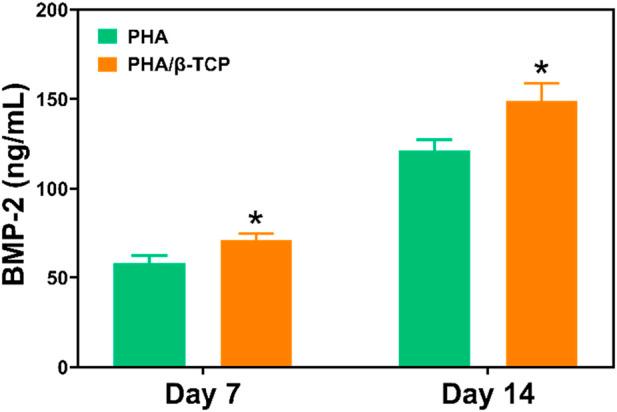
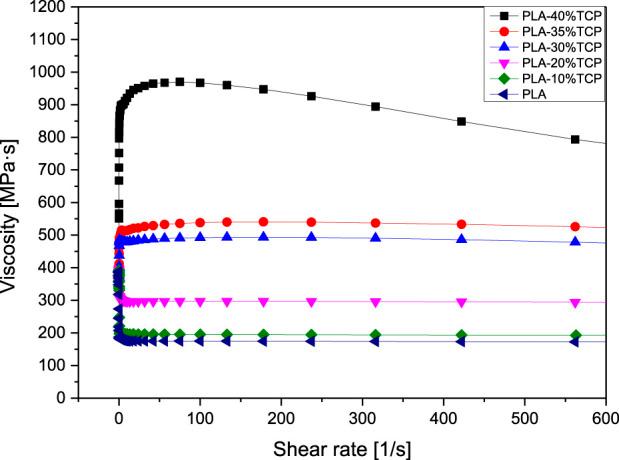
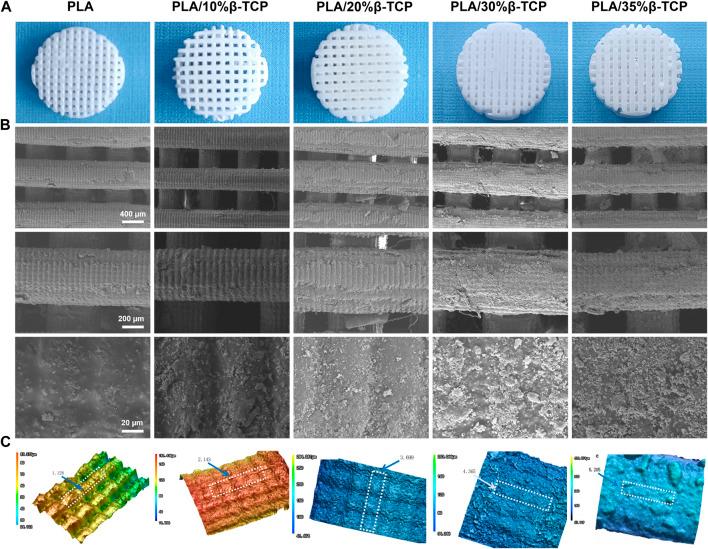
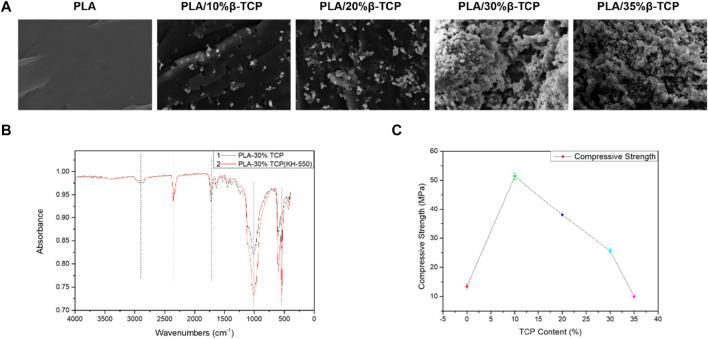
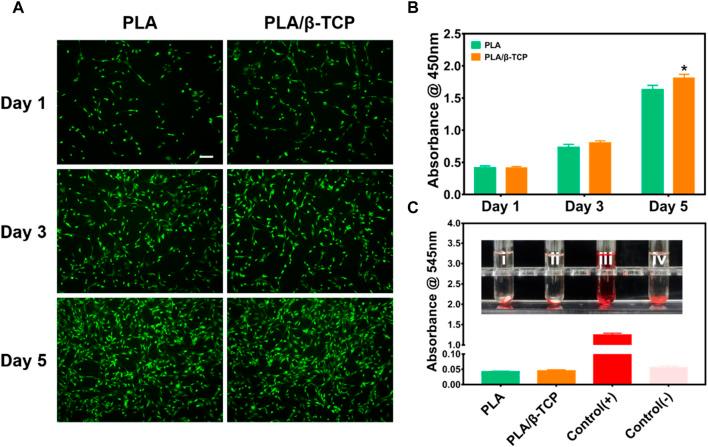
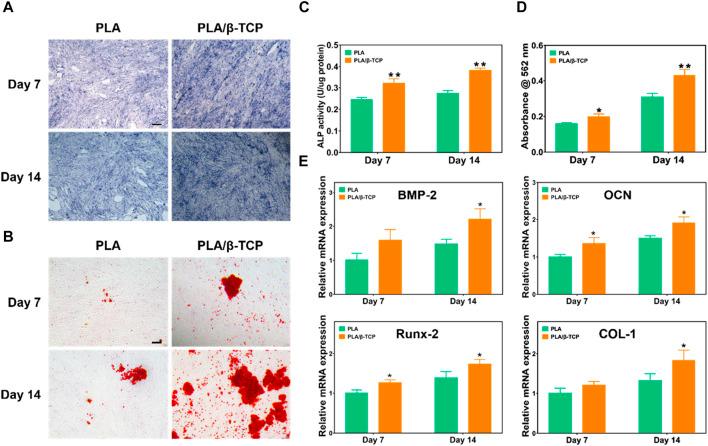
Bone defects remain a thorny challenge that clinicians have to face. At present, scaffolds prepared by 3D printing are increasingly used in the field of bone tissue repair. Polylactic acid (PLA) has good thermoplasticity, processability, biocompatibility, and biodegradability, but the PLA is brittle and has poor osteogenic performance. Beta-tricalcium phosphate (β-TCP) has good mechanical properties and osteogenic induction properties, which can make up for the drawbacks of PLA. In this study, photocurable biodegradable polylactic acid (bio-PLA) was utilized as the raw material to prepare PLA/β-TCP slurries with varying β-TCP contents (β-TCP dosage at 0%, 10%, 20%, 30%, 35% of the PLA dosage, respectively). The PLA/β-TCP scaffolds were fabricated using liquid crystal display (LCD) light-curing 3D printing technology. The characterization of the scaffolds was assessed, and the biological activity of the scaffold with the optimal compressive strength was evaluated. The biocompatibility of the scaffold was assessed through CCK-8 assays, hemocompatibility assay and live-dead staining experiments. The osteogenic differentiation capacity of the scaffold on MC3T3-E1 cells was evaluated through alizarin red staining, alkaline phosphatase (ALP) detection, immunofluorescence experiments, and RT-qPCR assays. The prepared scaffold possesses a three-dimensional network structure, and with an increase in the quantity of β-TCP, more β-TCP particles adhere to the scaffold surface. The compressive strength of PLA/β-TCP scaffolds exhibits a trend of initial increase followed by decrease with an increasing amount of β-TCP, reaching a maximum value of 52.1 MPa at a 10% β-TCP content. Degradation rate curve results indicate that with the passage of time, the degradation rate of the scaffold gradually increases, and the pH of the scaffold during degradation shows an alkaline tendency. Additionally, Live/dead staining and blood compatibility experiments suggest that the prepared PLA/β-TCP scaffold demonstrates excellent biocompatibility. CCK-8 experiments indicate that the PLA/β-TCP group promotes cell proliferation, and the prepared PLA/β-TCP scaffold exhibits a significant ability to enhance the osteogenic differentiation of MC3T3-E1 cells . 3D printed LCD photocuring PLA/β-TCP scaffolds could improve surface bioactivity and lead to better osteogenesis, which may provide a unique strategy for developing bioactive implants in orthopedic applications.
骨缺损仍然是临床医生不得不面对的棘手挑战。目前,通过3D打印制备的支架在骨组织修复领域的应用越来越广泛。聚乳酸(PLA)具有良好的热塑性、加工性能、生物相容性和生物降解性,但PLA脆性大且成骨性能差。β-磷酸三钙(β-TCP)具有良好的力学性能和成骨诱导性能,能够弥补PLA的缺点。在本研究中,以光固化可生物降解聚乳酸(生物-PLA)为原料,制备了β-TCP含量不同(β-TCP用量分别为PLA用量的0%、10%、20%、30%、35%)的PLA/β-TCP浆料。采用液晶显示(LCD)光固化3D打印技术制备PLA/β-TCP支架。对支架进行表征,并评估具有最佳抗压强度的支架的生物活性。通过CCK-8检测、血液相容性检测和活死染色实验评估支架的生物相容性。通过茜素红染色、碱性磷酸酶(ALP)检测、免疫荧光实验和RT-qPCR检测评估支架对MC3T3-E1细胞的成骨分化能力。制备的支架具有三维网络结构,随着β-TCP含量的增加,更多的β-TCP颗粒附着在支架表面。PLA/β-TCP支架的抗压强度呈现先增加后降低的趋势,β-TCP含量为10%时达到最大值52.1MPa。降解率曲线结果表明,随着时间的推移,支架的降解率逐渐增加,降解过程中支架的pH值呈碱性趋势。此外,活死染色和血液相容性实验表明,制备的PLA/β-TCP支架具有优异的生物相容性。CCK-8实验表明,PLA/β-TCP组促进细胞增殖,制备的PLA/β-TCP支架具有显著增强MC3T3-E1细胞成骨分化的能力。3D打印的LCD光固化PLA/β-TCP支架可以提高表面生物活性并导致更好的成骨效果,这可能为骨科应用中开发生物活性植入物提供一种独特的策略。



 Zotero 插件