
体外冲击波疗法通过靶向 NF-κB 信号通路抑制破骨细胞分化。
Extracorporeal shock wave therapy inhibits osteoclast differentiation by targeting NF-κB signaling pathway.
机构信息
Department of Radiation Oncology, Nanfang Hospital, Southern Medical University, Guangzhou, China.
Department of Orthopaedics, General Hospital of Southern Theater Command of PLA, Guangdong Key Lab of Orthopedic Technology and Implant Materials, Guangzhou, China.
出版信息
J Orthop Surg Res. 2023 Oct 27;18(1):805. doi: 10.1186/s13018-023-04166-w.
BACKGROUND
Extracorporeal shock wave therapy (ESWT) has been reported to promote osteoblast differentiation. However, the role of ESWT on osteoclast differentiation is still elusive.
METHODS
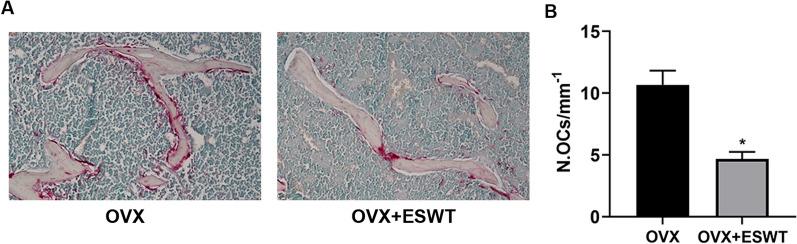
This study analyzed the differentiation of osteoclasts in the shock wave group and the control group in vitro, and TRAP staining, RT-PCR, WB assays, and MTT assays were assessed between the two groups. Furthermore, we analyzed the bone formation in these two groups in vivo and micro-CT and trap staining were assessed between the two groups.
RESULTS
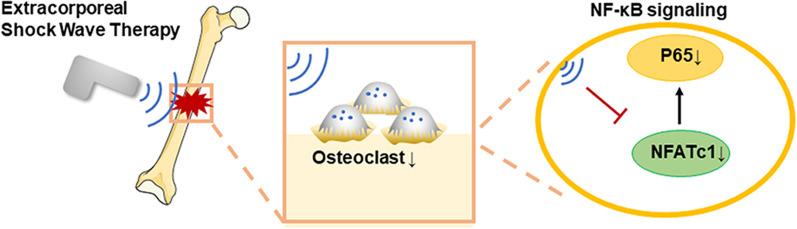
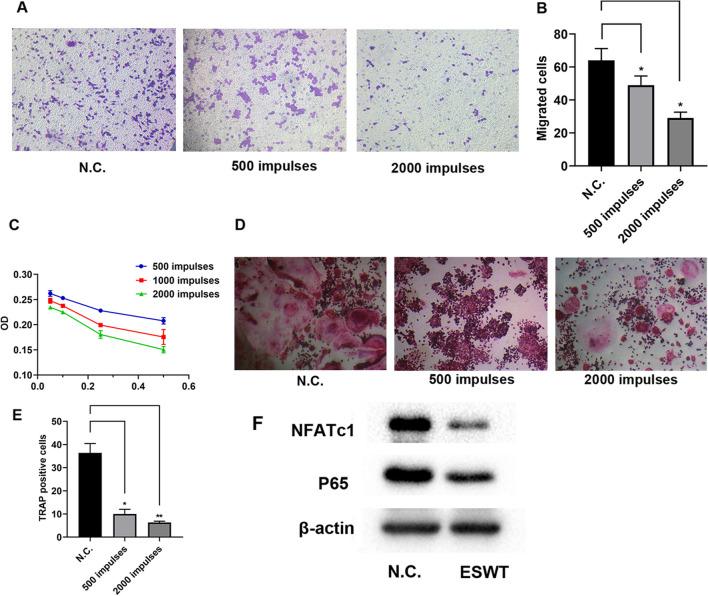
We found that ESWT inhibited osteoclast maturation in vitro and ESW treatment of femur promoted bone formation in vivo. Mechanically, osteoclast differentiation was inhibited as the number of impulses increased and ESWT decreased endogenous levels of NTAFc1 and P65 protein.
CONCLUSIONS
ESWT may be a potential therapy of osteoporosis through NF-κB signaling pathway.
背景
体外冲击波疗法 (ESWT) 已被报道可促进成骨细胞分化。然而,ESWT 对破骨细胞分化的作用仍不清楚。
方法
本研究分析了体外冲击波组和对照组中破骨细胞的分化,对两组间 TRAP 染色、RT-PCR、WB 检测和 MTT 检测进行了评估。此外,我们还分析了两组动物体内的骨形成情况,并对两组间的 micro-CT 和 trap 染色进行了评估。
结果
我们发现,ESWT 可抑制体外破骨细胞成熟,股骨 ESW 治疗可促进体内骨形成。从机制上讲,随着冲击次数的增加,ESWT 降低了内源性 NTAFc1 和 P65 蛋白水平,从而抑制了破骨细胞分化。
结论
ESWT 可能通过 NF-κB 信号通路成为骨质疏松症的一种潜在治疗方法。


 Zotero 插件