
丁酸钠缓解乙醇诱导的组蛋白 H3 和 p65-NFκB 的赖氨酸乙酰化,下调 CCL2 的表达,从而减轻肝脏炎症和损伤。
Tributyrin Mitigates Ethanol-Induced Lysine Acetylation of Histone-H3 and p65-NFκB Downregulating CCL2 Expression and Consequent Liver Inflammation and Injury.
机构信息
Department of Medicine, University of Louisville, Louisville, KY 40202, USA.
UofL Alcohol Center, University of Louisville, Louisville, KY 40202, USA.
出版信息
Nutrients. 2023 Oct 17;15(20):4397. doi: 10.3390/nu15204397.
PURPOSE
Chemokine-driven leukocyte infiltration and sustained inflammation contribute to alcohol-associated liver disease (ALD). Elevated hepatic CCL2 expression, seen in ALD, is associated with disease severity. However, mechanisms of CCL2 regulation are not completely elucidated. Post-translational modifications (PTMs) of proteins, particularly acetylation, modulate gene expression. This study examined the acetylation changes of promoter-associated histone-H3 and key transcription factor-NFκB in regulating hepatic CCL2 expression and subsequent inflammation and injury. Further, the effect of therapeutic modulation of the acetylation state by tributyrin (TB), a butyrate prodrug, was assessed.
METHODS
Hepatic CCL2 expression was assessed in mice fed control (PF) or an ethanol-containing Lieber-DeCarli (5% /, EF) diet for 7 weeks with or without oral administration of tributyrin (TB, 2 g/kg, 5 days/week). A chromatin immunoprecipitation (ChIP) assay evaluated promoter-associated modifications. Nuclear association between SIRT1, p300, and NFκB-p65 and acetylation changes of p65 were determined using immunoprecipitation and Western blot analyses. A Student's -test and one-way ANOVA determined the significance.
RESULTS
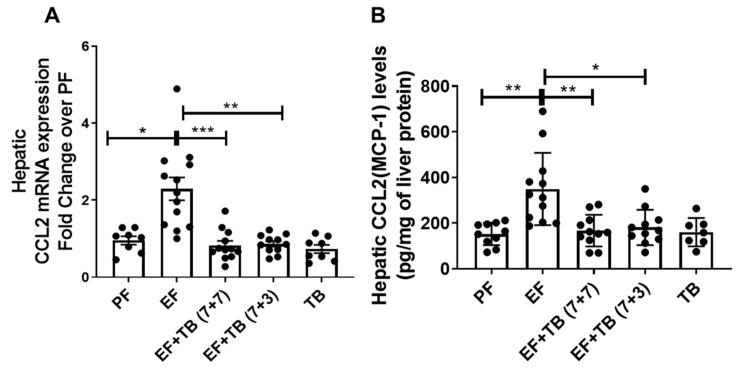
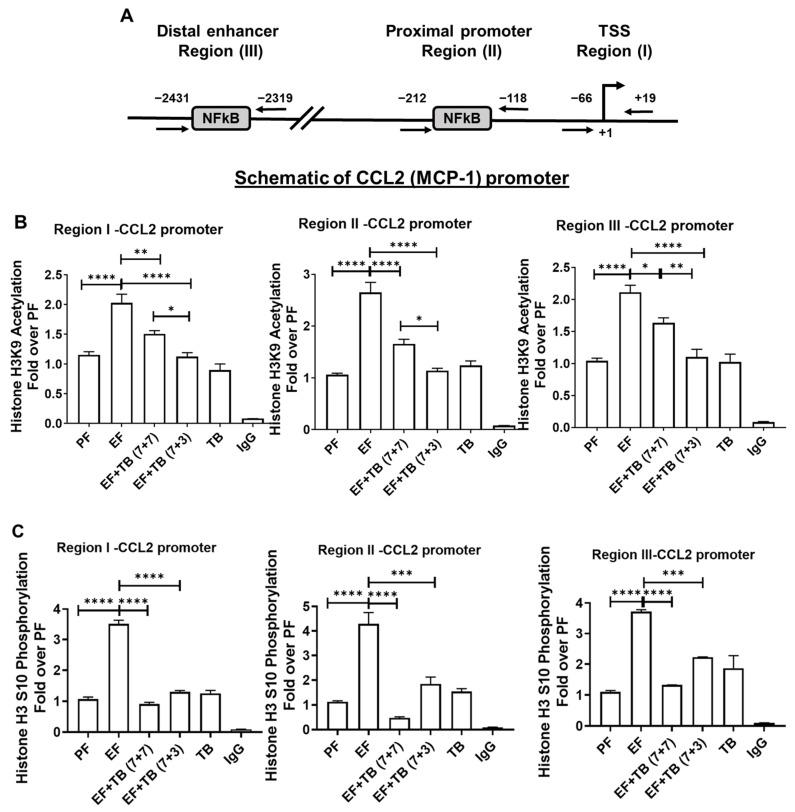
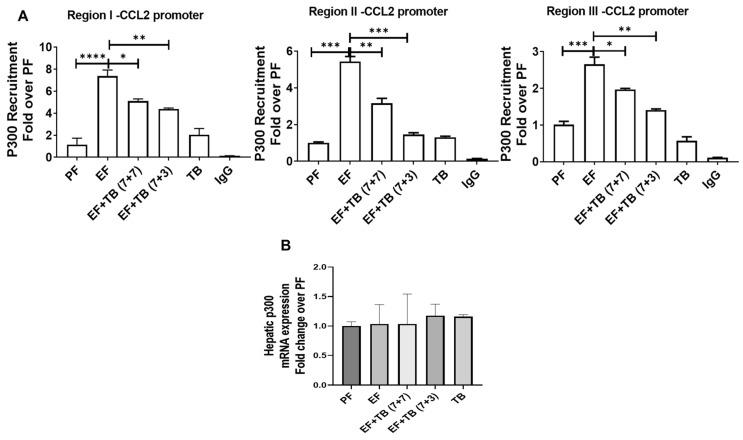
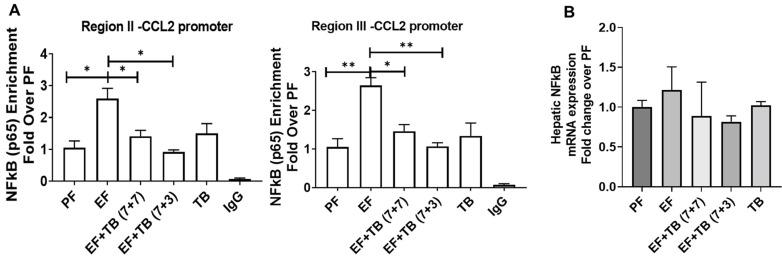
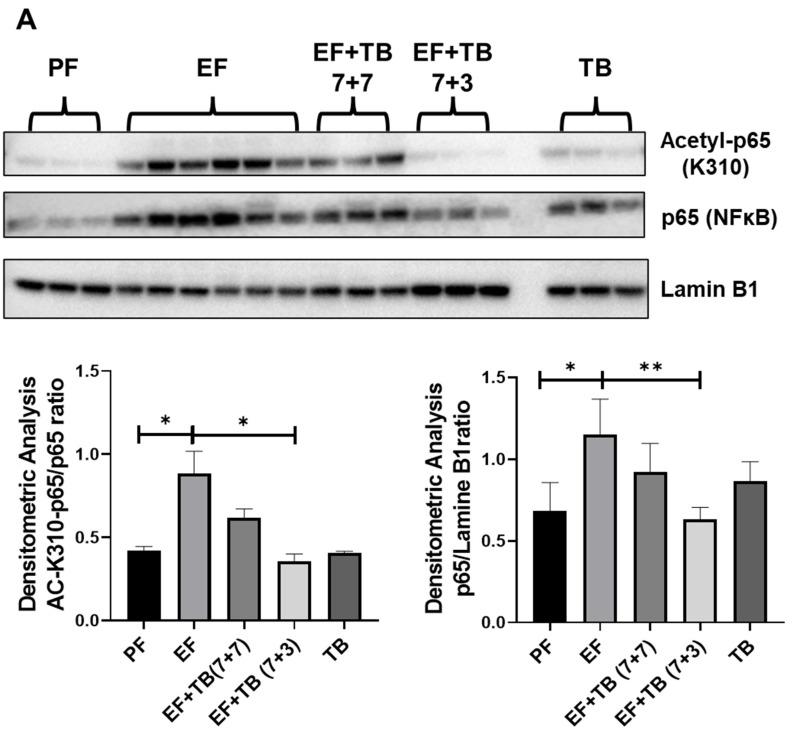
Ethanol significantly increased promoter-associated histone-H3-lysine-9 acetylation (H3K9Ac), reflecting a transcriptionally permissive state with a resultant increase in hepatic CCL2 mRNA and protein expression. Moreover, increased lysine-310-acetylation of nuclear RelA/p65 decreased its association with SIRT1, a class III HDAC, but concomitantly increased with p300, a histone acetyltransferase. This further led to enhanced recruitment of NF-κB/p65 and RNA polymerase-II to the CCL2 promoter. Oral TB administration prevented ethanol-associated acetylation changes, thus downregulating CCL2 expression, hepatic neutrophil infiltration, and inflammation/ injury.
CONCLUSION
The modulation of a protein acetylation state via ethanol or TB mechanistically regulates hepatic CCL2 upregulation in ALD.
目的
趋化因子驱动的白细胞浸润和持续的炎症反应是导致酒精相关性肝病(ALD)的原因之一。在 ALD 中可见到的肝组织 CCL2 表达升高与疾病严重程度相关。然而,CCL2 调控的机制尚未完全阐明。蛋白质的翻译后修饰(PTMs),特别是乙酰化,可调节基因表达。本研究旨在探讨组蛋白-H3 与关键转录因子-NFκB 的启动子相关乙酰化变化在调节肝组织 CCL2 表达及随后的炎症和损伤中的作用。此外,还评估了丁酸钠(TB)——一种丁酸盐前体药物——对乙酰化状态的治疗调节作用。
方法
用对照(PF)或含乙醇的 Lieber-DeCarli(5%,EF)饮食喂养小鼠 7 周,并用或不用丁酸钠(TB,2g/kg,每周 5 天)进行口服给药,评估肝组织 CCL2 的表达。通过染色质免疫沉淀(ChIP)实验评估启动子相关修饰。采用免疫沉淀和 Western blot 分析来确定 SIRT1、p300 和 NFκB-p65 的核相关以及 p65 的乙酰化变化。采用学生 t 检验和单因素方差分析来确定显著性。
结果
乙醇显著增加了启动子相关组蛋白-H3-赖氨酸-9 乙酰化(H3K9Ac),这反映了一种转录允许状态,导致肝组织 CCL2mRNA 和蛋白表达增加。此外,核 RelA/p65 的赖氨酸-310 乙酰化增加,与 SIRT1(一种 III 类组蛋白去乙酰化酶)的结合减少,但同时与组蛋白乙酰转移酶 p300 的结合增加。这进一步导致 NF-κB/p65 和 RNA 聚合酶 II 募集到 CCL2 启动子。口服 TB 给药可防止乙醇相关的乙酰化变化,从而下调 CCL2 表达、肝内中性粒细胞浸润以及炎症/损伤。
结论
通过乙醇或 TB 调节蛋白质乙酰化状态可在 ALD 中对肝组织 CCL2 的上调进行机制调控。


 Zotero 插件