
丁酸钠降低酒精摄入量潜力的临床前评估:在抗生素增强的类似暴饮暴食饮酒模型中对C57BL/6J小鼠进行的剂量递增研究。
Preclinical Evaluation of Sodium Butyrate's Potential to Reduce Alcohol Consumption: A Dose-Escalation Study in C57BL/6J Mice in Antibiotic-Enhanced Binge-Like Drinking Model.
作者信息
Havton Gregory C, Tai Alex T C, Vasisht Surabhi, Davies Daryl L, Asatryan Liana
机构信息
Titus Department of Clinical Pharmacy, Alfred E. Mann School of Pharmacy and Pharmaceutical Sciences, University of Southern California, Los Angeles, California, USA.
出版信息
Pharmacology. 2025;110(1):36-48. doi: 10.1159/000540882. Epub 2024 Aug 12.
INTRODUCTION
In our earlier efforts to establish gut-brain axis during alcohol use disorder (AUD), we have demonstrated that supplementation of C57BL/6J male mice with 8 mg/mL sodium butyrate, a major short-chain fatty acid, in drinking water reduced ethanol intake and neuroinflammatory response in antibiotic (ABX)-enhanced voluntary binge-like alcohol consumption model, drinking in the dark (DID).
METHODS
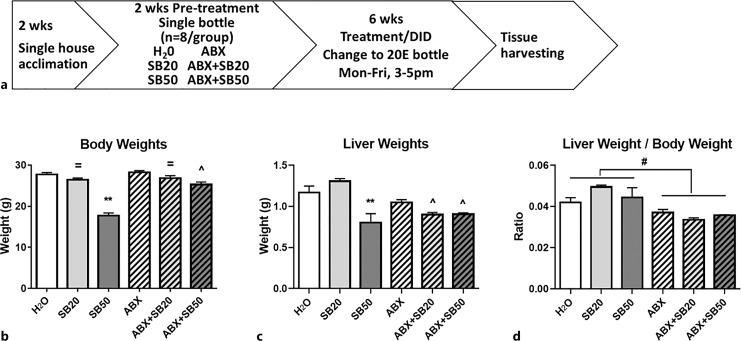
To further evaluate the preclinical potential of SB, we have set a dose-escalation study in C57BL/6J male mice to test effects of ad libitum 20 mg/mL SB and 50 mg/mL SB and their combinations with ABX in the DID procedure for 4 weeks. Effects of these SB concentrations on ethanol consumption and bodily parameters were determined for the duration of the treatments. At the end of study, blood, liver, and intestinal tissues were collected to study any potential adverse effects ad to measure blood ethanol concentrations.
RESULTS
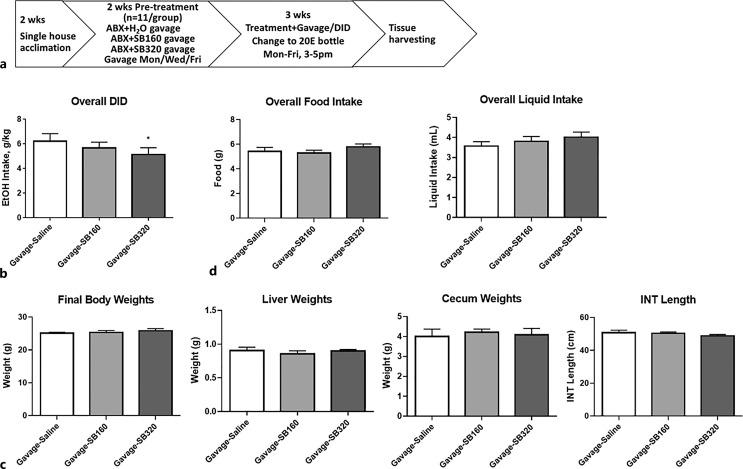
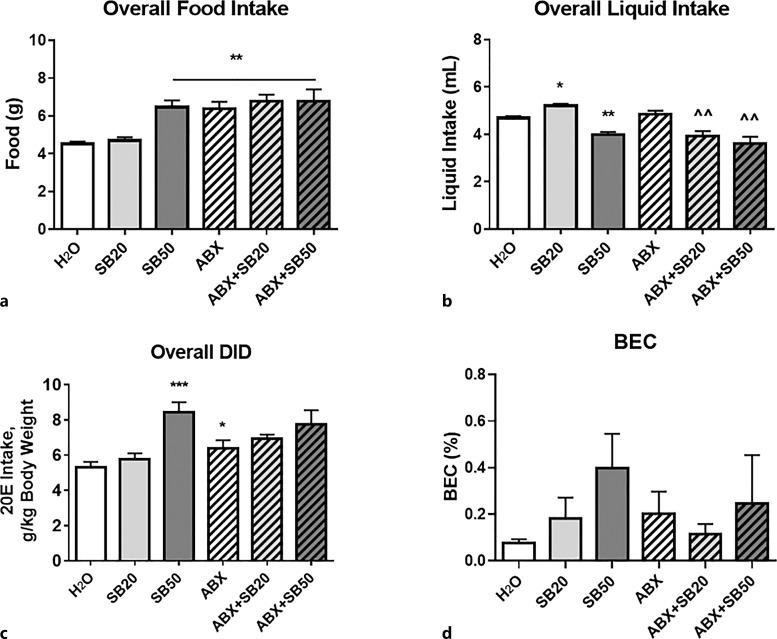
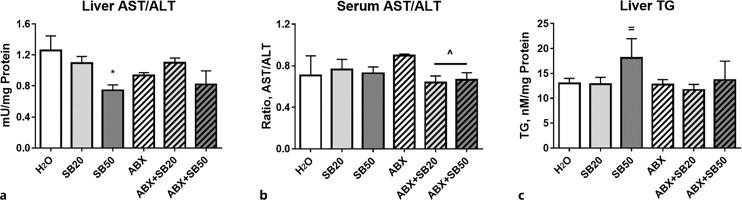
Increasing SB concentrations in the drinking water caused a loss in the protective effect against ethanol consumption and produced adverse effects on body and liver weights, reduced overall liquid intake. The hypothesis that these effects were due to aversion to SB smell/taste at these high concentrations were further tested in a follow up proof-of-concept study with intragastric gavage administration of SB. The higher gavage dose (320 mg/kg) caused reduction in ethanol consumption without any adverse effects.
CONCLUSION
Overall, these findings added more support for the therapeutic potential of SB in management of AUD, given a proper form of administration.
INTRODUCTION
In our earlier efforts to establish gut-brain axis during alcohol use disorder (AUD), we have demonstrated that supplementation of C57BL/6J male mice with 8 mg/mL sodium butyrate, a major short-chain fatty acid, in drinking water reduced ethanol intake and neuroinflammatory response in antibiotic (ABX)-enhanced voluntary binge-like alcohol consumption model, drinking in the dark (DID).
METHODS
To further evaluate the preclinical potential of SB, we have set a dose-escalation study in C57BL/6J male mice to test effects of ad libitum 20 mg/mL SB and 50 mg/mL SB and their combinations with ABX in the DID procedure for 4 weeks. Effects of these SB concentrations on ethanol consumption and bodily parameters were determined for the duration of the treatments. At the end of study, blood, liver, and intestinal tissues were collected to study any potential adverse effects ad to measure blood ethanol concentrations.
RESULTS
Increasing SB concentrations in the drinking water caused a loss in the protective effect against ethanol consumption and produced adverse effects on body and liver weights, reduced overall liquid intake. The hypothesis that these effects were due to aversion to SB smell/taste at these high concentrations were further tested in a follow up proof-of-concept study with intragastric gavage administration of SB. The higher gavage dose (320 mg/kg) caused reduction in ethanol consumption without any adverse effects.
CONCLUSION
Overall, these findings added more support for the therapeutic potential of SB in management of AUD, given a proper form of administration.
引言
在我们早期建立酒精使用障碍(AUD)期间肠道 - 脑轴的研究中,我们已经证明,在C57BL/6J雄性小鼠的饮用水中补充8mg/mL丁酸钠(一种主要的短链脂肪酸),可降低抗生素(ABX)增强的自愿性暴饮样酒精消费模型(即黑暗中饮酒,DID)中的乙醇摄入量和神经炎症反应。
方法
为了进一步评估丁酸钠(SB)的临床前潜力,我们在C57BL/6J雄性小鼠中进行了剂量递增研究,以测试在DID程序中自由饮用20mg/mL SB和50mg/mL SB及其与ABX组合的效果,持续4周。在治疗期间确定这些SB浓度对乙醇消费和身体参数的影响。在研究结束时,收集血液、肝脏和肠道组织以研究任何潜在的不良反应并测量血液乙醇浓度。
结果
饮用水中SB浓度的增加导致对乙醇消费的保护作用丧失,并对体重和肝脏重量产生不利影响,减少了总体液体摄入量。在后续的概念验证研究中,通过胃内灌胃给予SB,进一步测试了这些影响是由于对这些高浓度SB气味/味道的厌恶这一假设。较高的灌胃剂量(320mg/kg)导致乙醇消费减少且无任何不良反应。
结论
总体而言,考虑到适当的给药形式,这些发现为SB在AUD管理中的治疗潜力提供了更多支持。
引言
在我们早期建立酒精使用障碍(AUD)期间肠道 - 脑轴的研究中,我们已经证明,在C57BL/6J雄性小鼠的饮用水中补充8mg/mL丁酸钠(一种主要的短链脂肪酸),可降低抗生素(ABX)增强的自愿性暴饮样酒精消费模型(即黑暗中饮酒,DID)中的乙醇摄入量和神经炎症反应。
方法
为了进一步评估丁酸钠(SB)的临床前潜力,我们在C57BL/6J雄性小鼠中进行了剂量递增研究,以测试在DID程序中自由饮用20mg/mL SB和50mg/mL SB及其与ABX组合的效果,持续4周。在治疗期间确定这些SB浓度对乙醇消费和身体参数的影响。在研究结束时,收集血液、肝脏和肠道组织以研究任何潜在的不良反应并测量血液乙醇浓度。
结果
饮用水中SB浓度的增加导致对乙醇消费的保护作用丧失,并对体重和肝脏重量产生不利影响,减少了总体液体摄入量。在后续的概念验证研究中,通过胃内灌胃给予SB,进一步测试了这些影响是由于对这些高浓度SB气味/味道的厌恶这一假设。较高的灌胃剂量(320mg/kg)导致乙醇消费减少且无任何不良反应。
结论
总体而言,考虑到适当的给药形式,这些发现为SB在AUD管理中的治疗潜力提供了更多支持。

 Zotero 插件