
甲型流感病毒感染MDCK细胞诱导的lncRNA和靶基因的转录分析
Transcriptional Analysis of lncRNA and Target Genes Induced by Influenza A Virus Infection in MDCK Cells.
作者信息
Liu Geng, Pei Mengyuan, Wang Siya, Qiu Zhenyu, Li Xiaoyun, Ma Hua, Ma Yumei, Wang Jiamin, Qiao Zilin, Ma Zhongren, Liu Zhenbin
机构信息
Engineering Research Center of Key Technology and Industrialization of Cell-Based Vaccine, Ministry of Education, Lanzhou 730030, China.
Gansu Tech Innovation Center of Animal Cell, Biomedical Research Center, Northwest Minzu University, Lanzhou 730030, China.
出版信息
Vaccines (Basel). 2023 Oct 14;11(10):1593. doi: 10.3390/vaccines11101593.
BACKGROUND
The MDCK cell line is the primary cell line used for influenza vaccine production. Using genetic engineering technology to change the expression and activity of genes that regulate virus proliferation to obtain high-yield vaccine cell lines has attracted increasing attention. A comprehensive understanding of the key genes, targets, and molecular mechanisms of viral regulation in cells is critical to achieving this goal, yet the post-transcriptional regulation mechanism involved in virus proliferation-particularly the effect of lncRNA on influenza virus proliferation-is still poorly understood. Therefore, this study used high-throughput RNA-seq technology to identify H1N1 infection-induced lncRNA and mRNA expression changes in MDCK cells and explore the regulatory relationship between these crucial lncRNAs and their target genes.
RESULTS
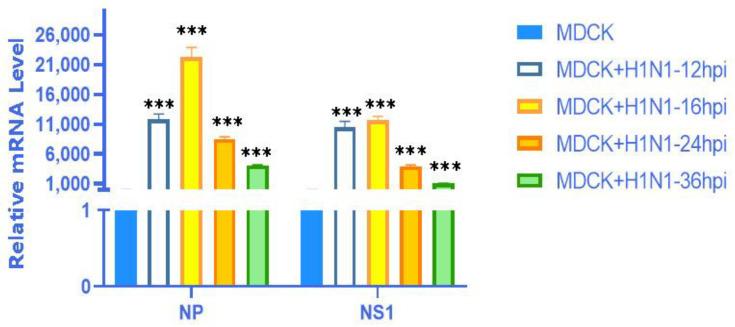
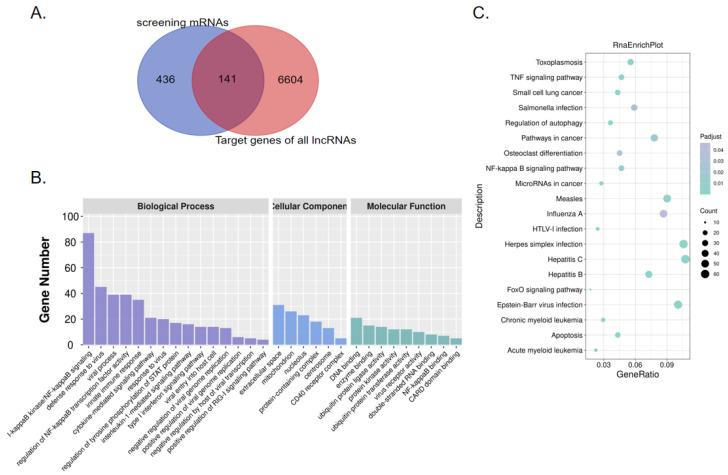
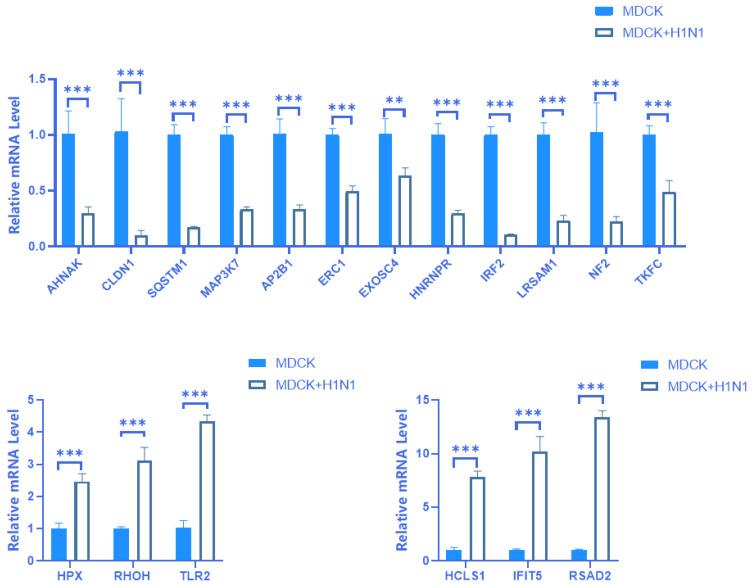
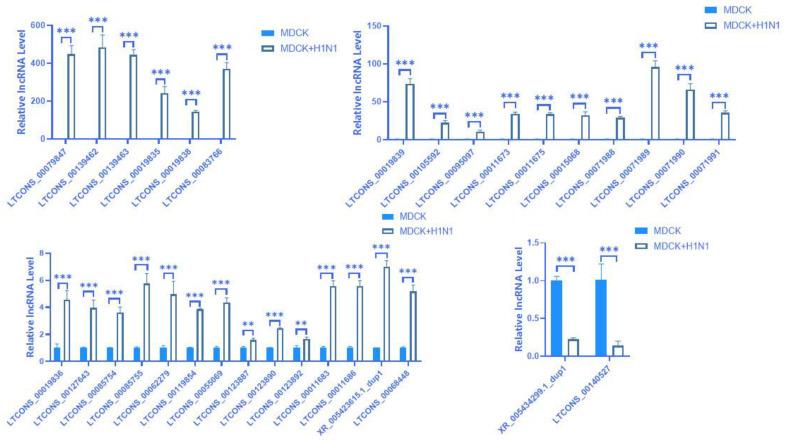
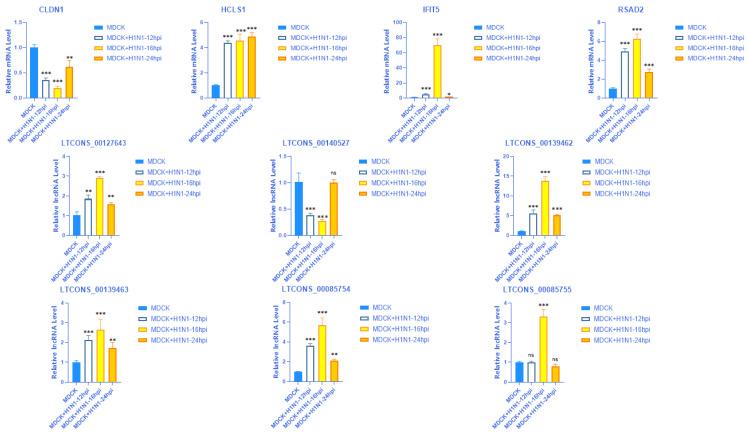
In response to H1N1 infection in MDCK cells 16 h post-infection (hpi) relative to uninfected controls, we used multiple gene function annotation databases and initially identified 31,501 significantly differentially expressed (DE) genes and 39,920 DE lncRNAs (|log2FC| > 1, < 0.05). Among these, 102 lncRNAs and 577 mRNAs exhibited predicted correlations with viral response mechanisms. Based on the magnitude of significant expression differences, related research, and RT-qPCR expression validation at the transcriptional level, we further focused on 18 DE mRNAs and 32 DE lncRNAs. Among these, the differential expression of the genes RSAD2, CLDN1, HCLS1, and IFIT5 in response to influenza virus infection was further verified at the protein level using Western blot technology, which showed results consistent with the RNA-seq and RT-qPCR findings. We then developed a potential molecular regulatory network between these four genes and their six predicted lncRNAs.
CONCLUSIONS
The results of this study will contribute to a more comprehensive understanding of the molecular mechanism of host cell non-coding RNA-mediated regulation of influenza virus replication. These results may also identify methods for screening target genes in the development of genetically engineered cell lines capable of high-yield artificial vaccine production.
背景
MDCK细胞系是用于流感疫苗生产的主要细胞系。利用基因工程技术改变调控病毒增殖的基因的表达和活性以获得高产疫苗细胞系已引起越来越多的关注。全面了解细胞中病毒调控的关键基因、靶点和分子机制对于实现这一目标至关重要,然而,病毒增殖所涉及的转录后调控机制,特别是lncRNA对流感病毒增殖的影响,仍知之甚少。因此,本研究利用高通量RNA-seq技术鉴定MDCK细胞中H1N1感染诱导的lncRNA和mRNA表达变化,并探索这些关键lncRNA与其靶基因之间的调控关系。
结果
在感染后16小时(hpi)相对于未感染对照的MDCK细胞中,针对H1N1感染,我们使用多个基因功能注释数据库,初步鉴定出31,501个显著差异表达(DE)基因和39,920个DE lncRNA(|log2FC|>1,<0.05)。其中,102个lncRNA和577个mRNA与病毒反应机制表现出预测的相关性。基于显著表达差异的幅度、相关研究以及转录水平的RT-qPCR表达验证结果,我们进一步聚焦于18个DE mRNA和32个DE lncRNA。其中,使用蛋白质印迹技术在蛋白质水平进一步验证了RSAD2、CLDN1、HCLS1和IFIT5基因在流感病毒感染后的差异表达,结果与RNA-seq和RT-qPCR结果一致。然后,我们构建了这四个基因与其六个预测的lncRNA之间的潜在分子调控网络。
结论
本研究结果将有助于更全面地了解宿主细胞非编码RNA介导的流感病毒复制调控的分子机制。这些结果还可能为筛选能够高产人工疫苗生产的基因工程细胞系开发中的靶基因提供方法。




 Zotero 插件