
大学生宗教信仰与HPV疫苗接种态度之间的关联
Association between Religious Beliefs and HPV Vaccination Attitudes among College Students.
作者信息
Hittson Hannah, McAleer Leah, Saucedo Lydia, Mahler Lindsay, Andino Gabriel, Zorba Andie, Walden Sarah, Pickett Brett E, Poole Brian D, Abel Erika L
机构信息
Honors Program, Honors College, Baylor University, Waco, TX 76798, USA.
Baylor Interdisciplinary Core, Honors College, Baylor University, Waco, TX 76798, USA.
出版信息
Vaccines (Basel). 2023 Oct 21;11(10):1623. doi: 10.3390/vaccines11101623.
OBJECTIVE AND PARTICIPANTS
The authors sought an updated examination of attitudes toward Human Papillomavirus (HPV) catch-up vaccination among college students at a private religious university.
METHODS
A total of 1557 college students completed a 62-question survey of religious and HPV vaccination attitudes during the fall of 2021. Students' willingness to receive catch-up HPV vaccination and willingness to vaccinate a future child against HPV were recorded.
RESULTS
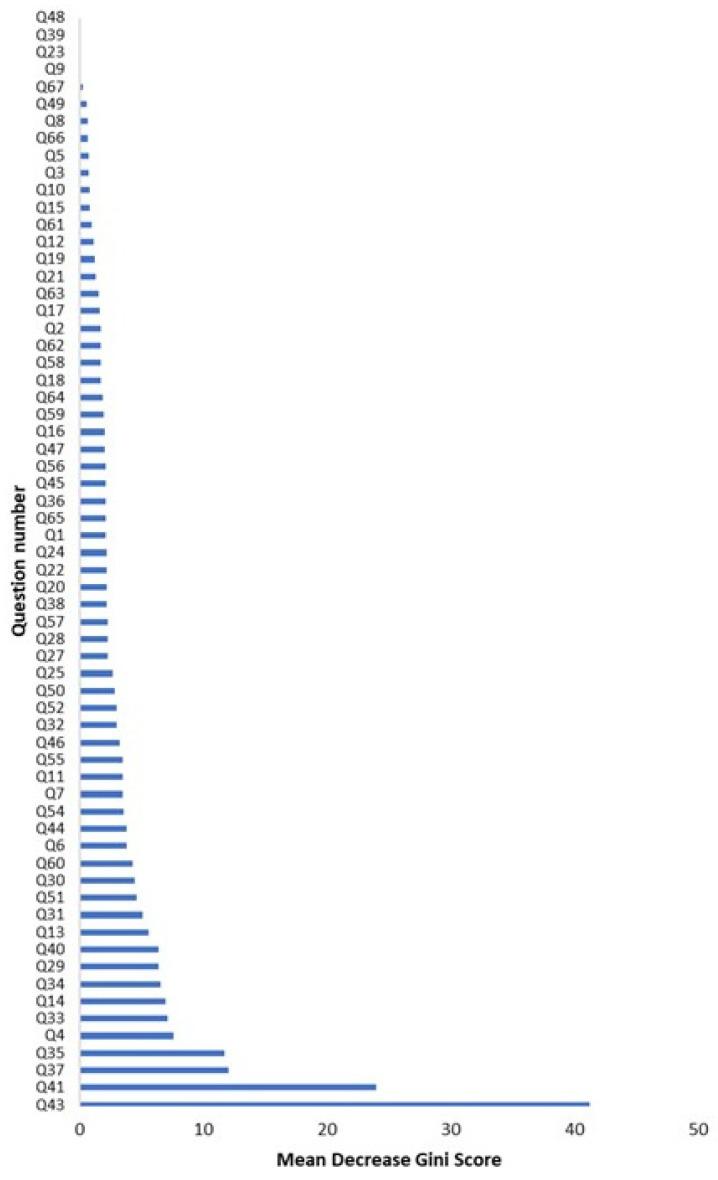
Of the 46.8% of students who reported being unvaccinated or unaware of vaccination status, ~26% reported being uninterested in receiving catch-up HPV vaccination; ~22% of all students surveyed reported being unwilling to vaccinate a future child against HPV. The strongest predictors of vaccine hesitancy included religious concerns about sexual abstinence and safety concerns.
CONCLUSIONS
College health professionals can increase the rate of HPV vaccination among college students and subsequent future generations by addressing the safety and utility of the vaccine regardless of intentions for sexual abstinence prior to marriage. Additionally, rather than a uniform approach to all students who self-identify as Christian, an effort to identify and discuss the unique religiously influenced beliefs of individual students is recommended when discussing HPV vaccination.
目的与参与者
作者对一所私立宗教大学的大学生对人乳头瘤病毒(HPV)补种疫苗的态度进行了更新调查。
方法
2021年秋季,共有1557名大学生完成了一项关于宗教和HPV疫苗接种态度的62个问题的调查。记录了学生接受HPV补种疫苗的意愿以及为未来孩子接种HPV疫苗的意愿。
结果
在报告未接种或不清楚接种状况的46.8%的学生中,约26%表示对接受HPV补种疫苗不感兴趣;在所有接受调查的学生中,约22%表示不愿意为未来孩子接种HPV疫苗。疫苗犹豫的最有力预测因素包括对性禁欲的宗教担忧和安全担忧。
结论
大学健康专业人员可以通过解决疫苗的安全性和实用性问题,提高大学生及后代的HPV疫苗接种率,而不论婚前性禁欲的意图如何。此外,在讨论HPV疫苗接种时,建议不要对所有自称是基督徒的学生采取统一方法,而是努力识别并讨论个别学生受宗教影响的独特信念。
 Zotero 插件