
刺激响应型纳米医学与癌症诊治一体化。
Stimuli-activatable nanomedicine meets cancer theranostics.
机构信息
Department of Radiology, and Department of Geriatrics, Laboratory of Heart Valve Disease, Huaxi MR Research Center (HMRRC), Laboratory of Stem Cell Biology, National Clinical Research Center for Geriatrics, Frontiers Science Center for Disease-Related Molecular Network, State Key Laboratory of Biotherapy, West China Hospital, Sichuan University, No. 37 Guoxue Alley, Chengdu 610041, China.
Functional and Molecular Imaging Key Laboratory of Sichuan Province and Research Unit of Psychoradiology, Chinese Academy of Medical Sciences, Chengdu 610041, China.
出版信息
Theranostics. 2023 Oct 2;13(15):5386-5417. doi: 10.7150/thno.87854. eCollection 2023.
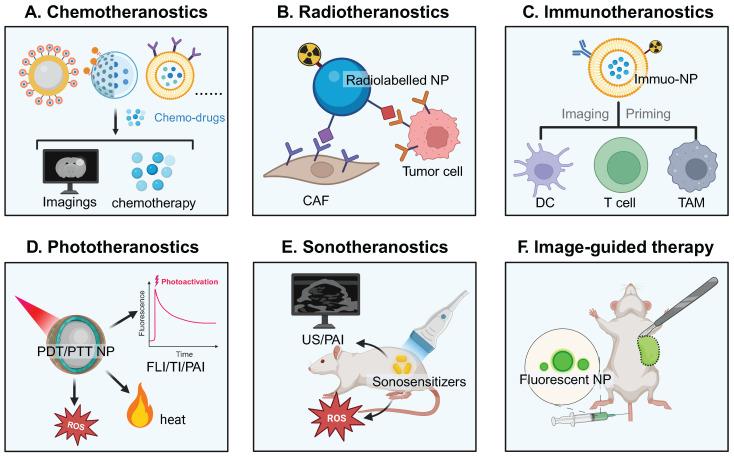
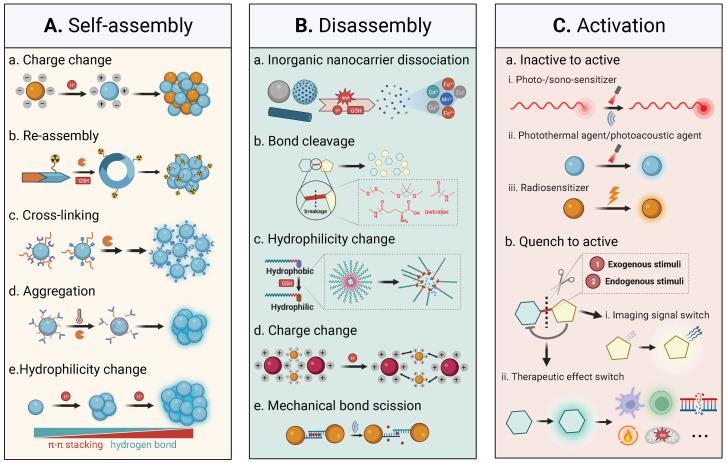
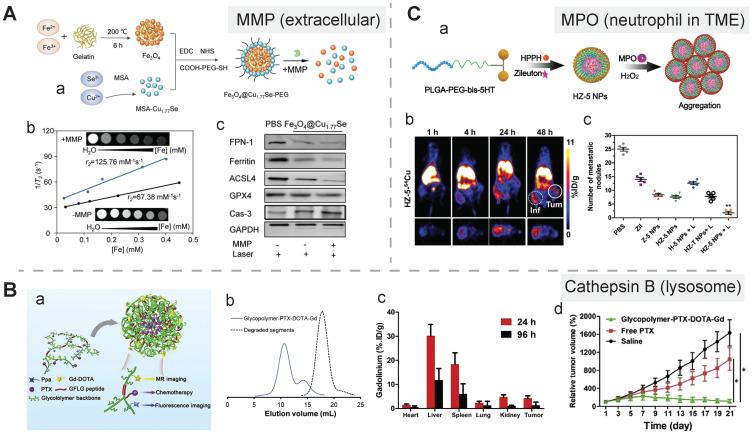
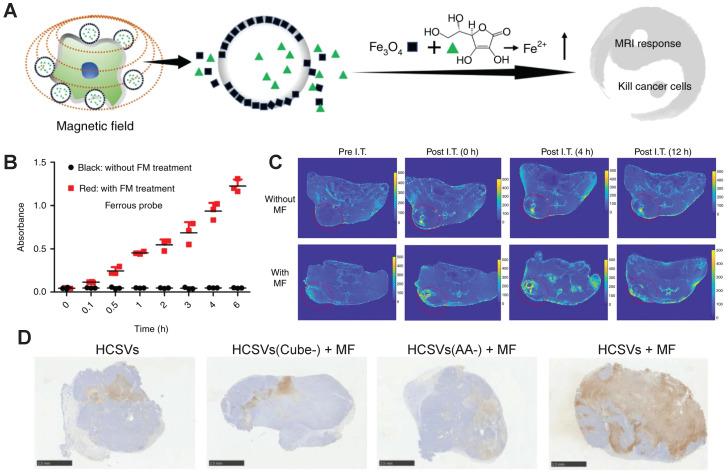
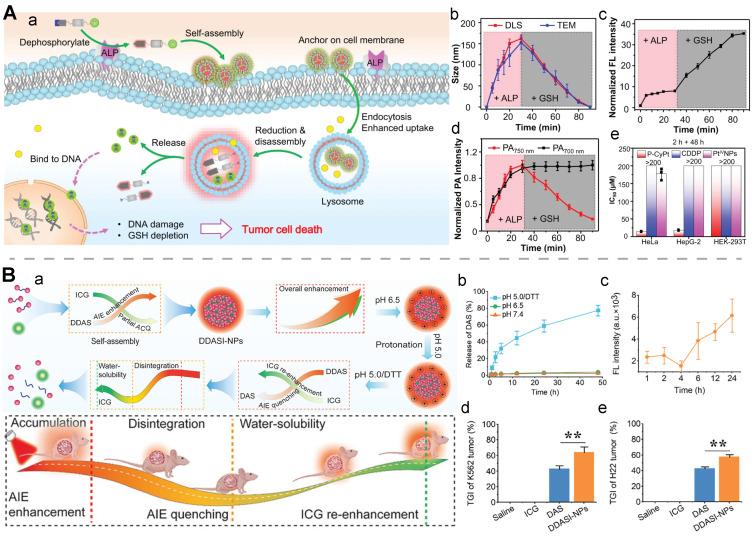
Stimuli-activatable strategies prevail in the design of nanomedicine for cancer theranostics. Upon exposure to endogenous/exogenous stimuli, the stimuli-activatable nanomedicine could be self-assembled, disassembled, or functionally activated to improve its biosafety and diagnostic/therapeutic potency. A myriad of tumor-specific features, including a low pH, a high redox level, and overexpressed enzymes, along with exogenous physical stimulation sources (light, ultrasound, magnet, and radiation) have been considered for the design of stimuli-activatable nano-medicinal products. Recently, novel stimuli sources have been explored and elegant designs emerged for stimuli-activatable nanomedicine. In addition, multi-functional theranostic nanomedicine has been employed for imaging-guided or image-assisted antitumor therapy. In this review, we rationalize the development of theranostic nanomedicine for clinical pressing needs. Stimuli-activatable self-assembly, disassembly or functional activation approaches for developing theranostic nanomedicine to realize a better diagnostic/therapeutic efficacy are elaborated and state-of-the-art advances in their structural designs are detailed. A reflection, clinical status, and future perspectives in the stimuli-activatable nanomedicine are provided.
刺激响应策略在癌症诊治的纳米医学设计中占主导地位。在受到内源性/外源性刺激时,刺激响应型纳米医学可以进行自组装、解组装或功能激活,以提高其生物安全性和诊断/治疗效果。许多肿瘤特异性特征,包括低 pH 值、高氧化还原水平和过表达的酶,以及外源性物理刺激源(光、超声、磁和辐射),都被用于设计刺激响应型纳米药物产品。最近,人们探索了新的刺激源,并为刺激响应型纳米医学设计出了优雅的方案。此外,多功能治疗性纳米医学已被用于成像引导或图像辅助抗肿瘤治疗。在这篇综述中,我们根据临床迫切需求,对治疗性纳米医学的发展进行了合理化分析。详细阐述了用于开发治疗性纳米医学的刺激响应自组装、解组装或功能激活方法,以实现更好的诊断/治疗效果,并详细介绍了其结构设计的最新进展。提供了对刺激响应纳米医学的反思、临床现状和未来展望。






 Zotero 插件