
探索靶向多梳抑制复合物2在肺癌中的治疗潜力。
Exploring the therapeutic potential of targeting polycomb repressive complex 2 in lung cancer.
作者信息
Gao Min, Li Yongwen, Cao Peijun, Liu Hongyu, Chen Jun, Kang Shirong
机构信息
Department of Thoracic Surgery, The Affiliated Hospital of Inner Mongolia Medical University, Hohhot, China.
Inner Mongolia Medical University, First Clinical Medical College, Hohhot, China.
出版信息
Front Oncol. 2023 Oct 16;13:1216289. doi: 10.3389/fonc.2023.1216289. eCollection 2023.
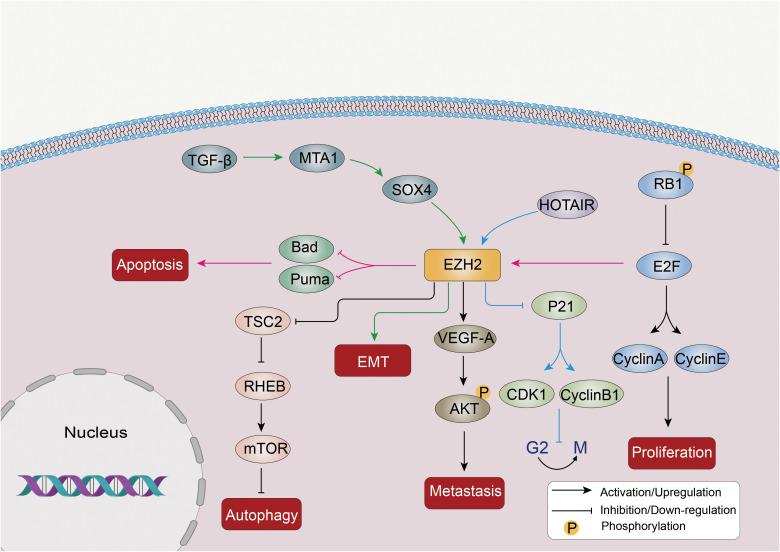
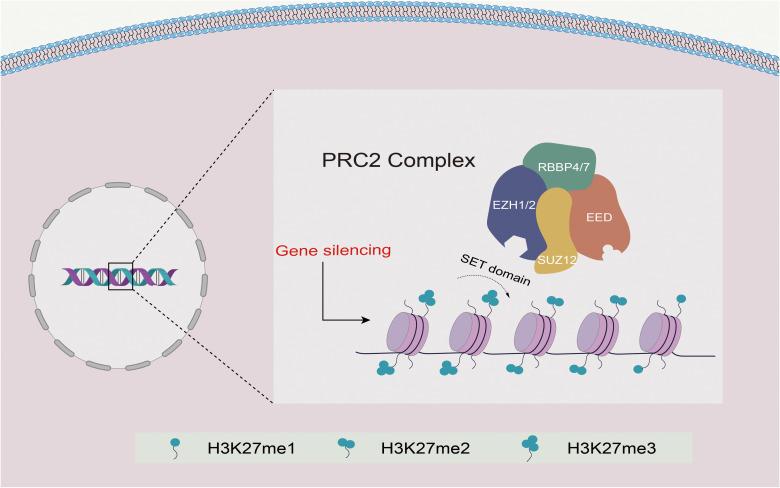
The pathogenesis of lung cancer (LC) is a multifaceted process that is influenced by a variety of factors. Alongside genetic mutations and environmental influences, there is increasing evidence that epigenetic mechanisms play a significant role in the development and progression of LC. The Polycomb repressive complex 2 (PRC2), composed of EZH1/2, SUZ12, and EED, is an epigenetic silencer that controls the expression of target genes and is crucial for cell identity in multicellular organisms. Abnormal expression of PRC2 has been shown to contribute to the progression of LC through several pathways. Although targeted inhibition of EZH2 has demonstrated potential in delaying the progression of LC and improving chemotherapy sensitivity, the effectiveness of enzymatic inhibitors of PRC2 in LC is limited, and a more comprehensive understanding of PRC2's role is necessary. This paper reviews the core subunits of PRC2 and their interactions, and outlines the mechanisms of aberrant PRC2 expression in cancer and its role in tumor immunity. We also summarize the important role of PRC2 in regulating biological behaviors such as epithelial mesenchymal transition, invasive metastasis, apoptosis, cell cycle regulation, autophagy, and PRC2-mediated resistance to LC chemotherapeutic agents in LC cells. Lastly, we explored the latest breakthroughs in the research and evaluation of medications that target PRC2, as well as the latest findings from clinical studies investigating the efficacy of these drugs in the treatment of various human cancers.
肺癌(LC)的发病机制是一个多方面的过程,受多种因素影响。除了基因突变和环境影响外,越来越多的证据表明表观遗传机制在肺癌的发生和发展中起重要作用。由EZH1/2、SUZ12和EED组成的多梳抑制复合物2(PRC2)是一种表观遗传沉默因子,可控制靶基因的表达,对多细胞生物中的细胞特性至关重要。已表明PRC2的异常表达通过多种途径促进肺癌进展。尽管靶向抑制EZH2已显示出延缓肺癌进展和提高化疗敏感性的潜力,但PRC2酶抑制剂在肺癌中的有效性有限,因此有必要更全面地了解PRC2的作用。本文综述了PRC2的核心亚基及其相互作用,概述了PRC2在癌症中异常表达的机制及其在肿瘤免疫中的作用。我们还总结了PRC2在调节肺癌细胞的上皮间质转化、侵袭转移、凋亡、细胞周期调控、自噬等生物学行为以及PRC2介导的肺癌细胞对化疗药物耐药性方面的重要作用。最后,我们探讨了靶向PRC2药物研究和评估的最新突破,以及调查这些药物治疗各种人类癌症疗效的临床研究的最新发现。
 Zotero 插件