
天然油的质量标准与药理干预:现状与未来展望
Quality Standards and Pharmacological Interventions of Natural Oils: Current Scenario and Future Perspectives.
作者信息
Ali Shadab, Ekbbal Rustam, Salar Sapna, Ali Sayad Ahad, Jaiswal Aakash Kumar, Singh Mhaveer, Yadav Dinesh Kumar, Kumar Santosh
机构信息
IIMT College of Medical Sciences, IIMT University, O Pocket, Ganga Nagar, Meerut, Uttar Pradesh 250001, India.
BBDIT College of Pharmacy, Ghaziabad, Uttar Pradesh 201206, India.
出版信息
ACS Omega. 2023 Oct 17;8(43):39945-39963. doi: 10.1021/acsomega.3c05241. eCollection 2023 Oct 31.
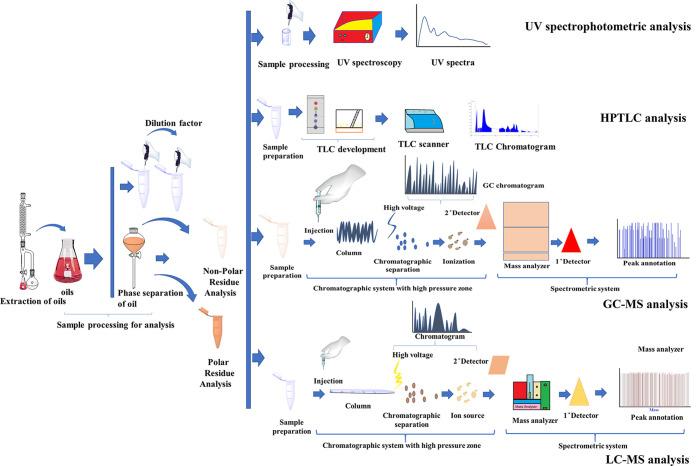
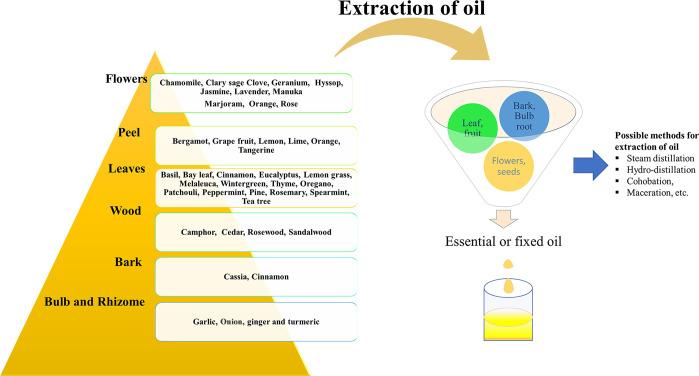
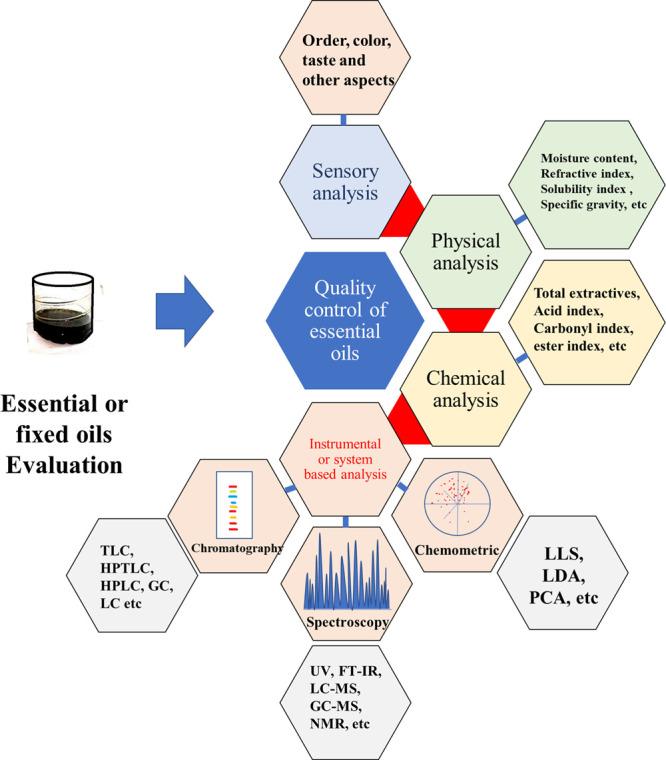
Medicinal plants are rich sources of natural oils such as essential and fixed oils used traditionally for nutritive as well as medicinal purposes. Most of the traditional formulations or phytopharmaceutical formulations contain oil as the main ingredient due to their own therapeutic applications and thus mitigating several pathogeneses such as fungal/bacterial/viral infection, gout, psoriasis, analgesic, antioxidant, skin infection, etc. Due to the lack of quality standards and progressive adulteration in the natural oils, their therapeutic efficacy is continuously deteriorated. To develop quality standards and validate scientific aspects on essential oils, several chromatographic and spectroscopic techniques such as HPTLC, HPLC, NMR, LC-MS, and GC-MS have been termed as the choices of techniques for better exploration of metabolites, hence sustaining the authenticity of the essential oils. In this review, chemical profiling and quality control aspects of essential or fixed oils have been explored from previously reported literature in reputed journals. Methods of chemical profiling, possible identified metabolites in essential oils, and their therapeutic applications have been described. The outcome of the review reveals that GC-MS/MS, LC-MS/MS, and NMR-based chromatographic and spectroscopic techniques are the most liable, economic, precise, and accurate techniques for determining the spuriousness or adulteration of oils based on their qualitative and quantitative chemical profiling studies. This review occupies the extensive information about the quality standards of several oils obtained from natural sources for their regulatory aspects via providing the detailed methods used in chemoprofiling techniques. Hence, this review helps researchers in further therapeutic exploration as well as quality-based standardization for their regulatory purpose.
药用植物是天然油的丰富来源,如传统上用于营养和药用目的的香精油和固定油。大多数传统配方或植物药物配方都以油为主要成分,这是由于其自身的治疗应用,因此可以减轻多种病症,如真菌/细菌/病毒感染、痛风、牛皮癣、止痛、抗氧化、皮肤感染等。由于天然油缺乏质量标准且掺假现象不断增加,其治疗效果不断下降。为了制定质量标准并验证香精油的科学特性,几种色谱和光谱技术,如高效薄层色谱法(HPTLC)、高效液相色谱法(HPLC)、核磁共振(NMR)、液相色谱-质谱联用(LC-MS)和气相色谱-质谱联用(GC-MS),已被视为更好地探索代谢物的技术选择,从而确保香精油的真实性。在这篇综述中,从著名期刊上先前报道的文献中探索了香精油或固定油的化学分析和质量控制方面。描述了化学分析方法、香精油中可能鉴定出的代谢物及其治疗应用。综述结果表明,基于气相色谱-串联质谱(GC-MS/MS)、液相色谱-串联质谱(LC-MS/MS)和核磁共振的色谱和光谱技术是基于定性和定量化学分析研究来确定油的掺假或杂质的最可靠、经济、精确和准确的技术。这篇综述通过提供化学分析技术中使用的详细方法,涵盖了从天然来源获得的几种油的质量标准的广泛信息,以用于其监管方面。因此,这篇综述有助于研究人员进行进一步的治疗探索以及基于质量的标准化以达到监管目的。
 Zotero 插件