
使用等离子体银/氧化亚铁纳米颗粒进行高效氰化物传感。
Efficient cyanide sensing using plasmonic Ag/FeO nanoparticles.
作者信息
Moosavi Razieh, Zibaseresht Ramin
机构信息
Nano Electronic Center of Excellence, Nano Bio Electronic Devices Lab, School of Electrical and Computer Engineering, University of Tehran Tehran Iran.
Biomaterials and Medicinal Chemistry Research Centre, Aja University of Medical Sciences Tehran Iran
出版信息
RSC Adv. 2023 Nov 9;13(47):33120-33128. doi: 10.1039/d3ra06654a. eCollection 2023 Nov 7.
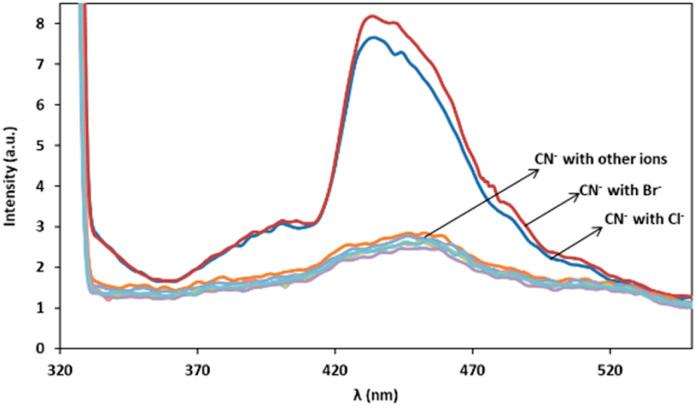
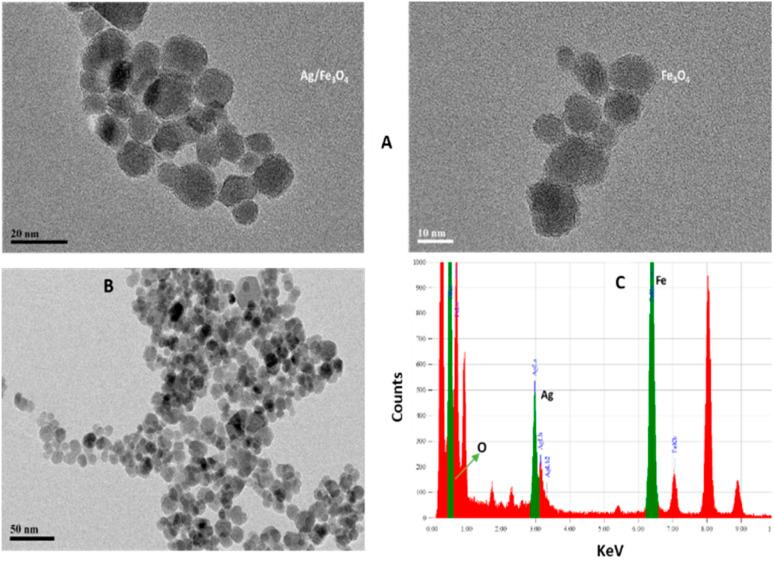
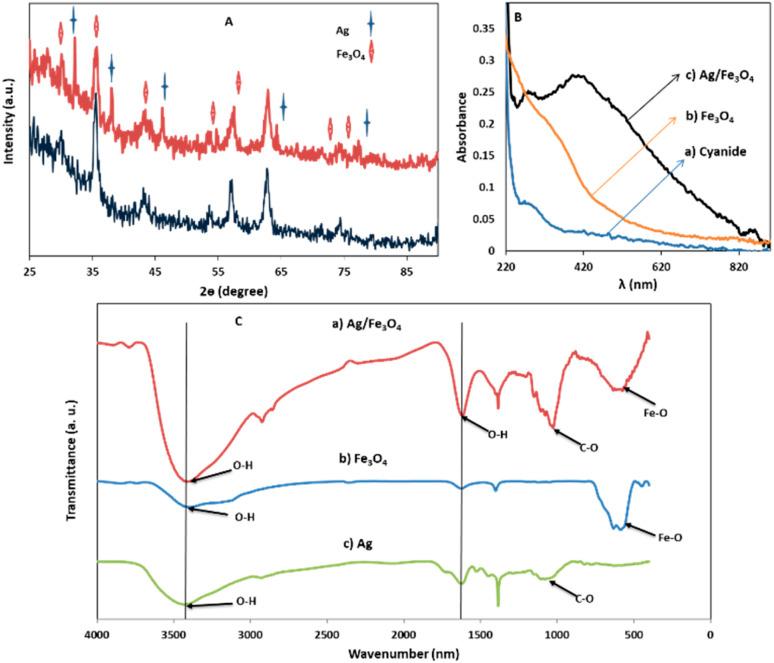
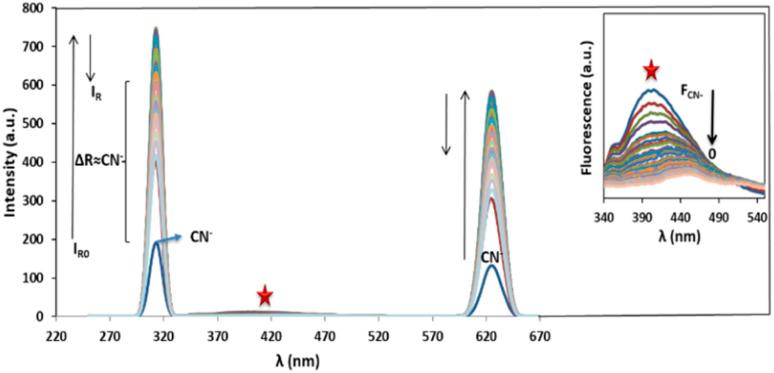
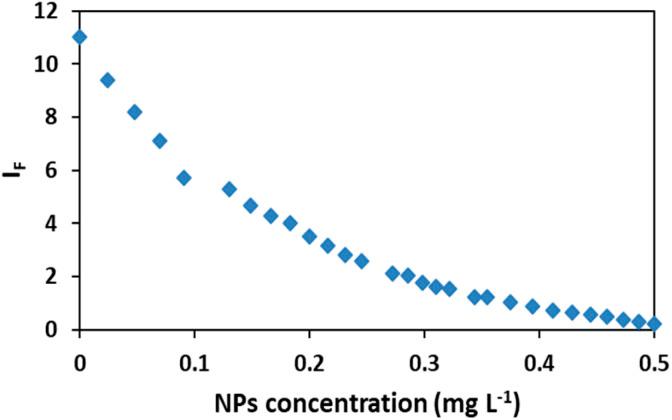
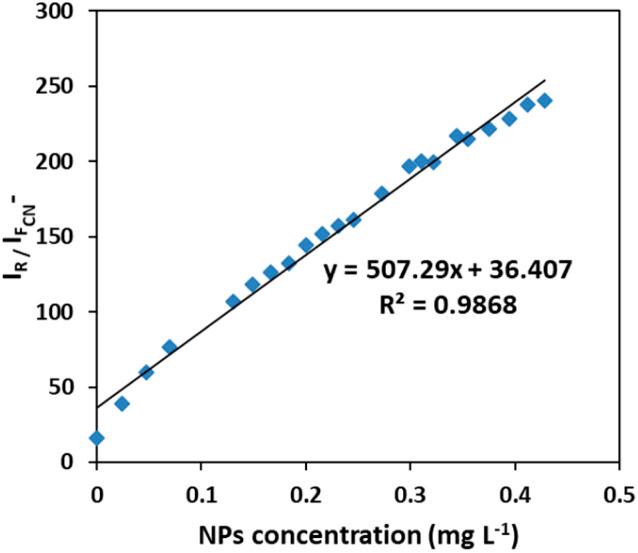
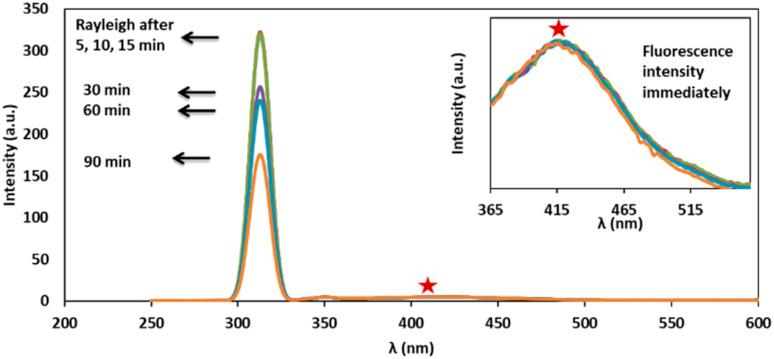
In the line of our previous studies, we have reported a developed sensitive and selective probe for cyanide detection based on Ag/FeO nanoparticles (NPs) with an extremely low limit of detection at the level of ng per milliliter. Herein, we report the improvement of the easy-to-make magnetic silver nanoparticle-based sensor system for cyanide determination in an extended calibration range with higher selectivity and precision. As far as our knowledge is concerned, the detectable linear range from 1.0 nM to 160 μM (0.026 ng mL to 4.16 μg mL) of the improved simple highly precise technique represents the widest assay that has been reported so far. The method is based on strong enhancement of scattered light of the plasmonic nanoparticles and simultaneously cyanide fluorescence quenching. Although the fluorescence of cyanide is highly selective and precise, its intensity is poor. On the other hand, the strongly enhanced Rayleigh signal has a low repeatability. We proposed a method to remove the interference and obtained an effective factor that is directly proportional to cyanide concentration utilizing both above signals simultaneously. In this work, Ag/FeO NPs have been synthesized easily using a green preparation method and the NPs were consequently characterized using powder XRD, UV-Vis absorption spectroscopy, transmission electron microscopy (TEM) and energy dispersive X-ray spectroscopy (EDX). A combination of absorption, Rayleigh and fluorescence characteristics were used for detection of cyanide in real samples and an overview of recently reported sensors for cyanide was also provided.
在我们之前的研究中,我们报道了一种基于银/氧化亚铁纳米颗粒(NPs)开发的用于氰化物检测的灵敏且选择性的探针,其检测限极低,达到每毫升纳克级别。在此,我们报告了一种易于制备的基于磁性银纳米颗粒的传感器系统的改进,该系统用于在扩展的校准范围内以更高的选择性和精度测定氰化物。就我们所知,改进后的简单高精度技术的可检测线性范围为1.0 nM至160 μM(0.026 ng/mL至4.16 μg/mL),这代表了迄今为止报道的最宽的检测范围。该方法基于等离子体纳米颗粒散射光的强烈增强以及同时的氰化物荧光猝灭。虽然氰化物的荧光具有高度选择性和精确性,但其强度较弱。另一方面,强烈增强的瑞利信号重复性较差。我们提出了一种消除干扰的方法,并利用上述两种信号同时获得了一个与氰化物浓度成正比的有效因子。在这项工作中,采用绿色制备方法轻松合成了银/氧化亚铁纳米颗粒,并随后使用粉末X射线衍射(XRD)、紫外可见吸收光谱、透射电子显微镜(TEM)和能量色散X射线光谱(EDX)对纳米颗粒进行了表征。利用吸收、瑞利和荧光特性的组合对实际样品中的氰化物进行检测,并提供了最近报道的氰化物传感器的概述。
 Zotero 插件