
截短的肌联蛋白在结构上整合到人类扩张型心肌病的肌节中。
Truncated titin is structurally integrated into the human dilated cardiomyopathic sarcomere.
作者信息
Kellermayer Dalma, Tordai Hedvig, Kiss Balázs, Török György, Péter Dániel M, Sayour Alex Ali, Pólos Miklós, Hartyánszky István, Szilveszter Bálint, Labeit Siegfried, Gángó Ambrus, Bedics Gábor, Bödör Csaba, Radovits Tamás, Merkely Béla, Kellermayer Miklós Sz
机构信息
Heart and Vascular Center.
Department of Biophysics and Radiation Biology, and.
出版信息
J Clin Invest. 2024 Jan 16;134(2):e169753. doi: 10.1172/JCI169753.
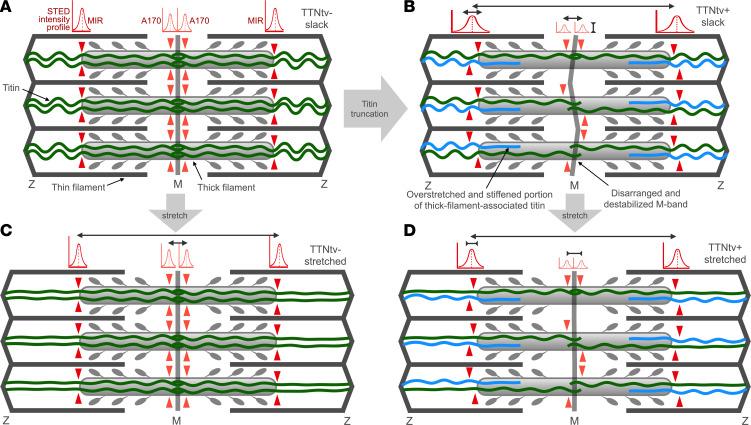
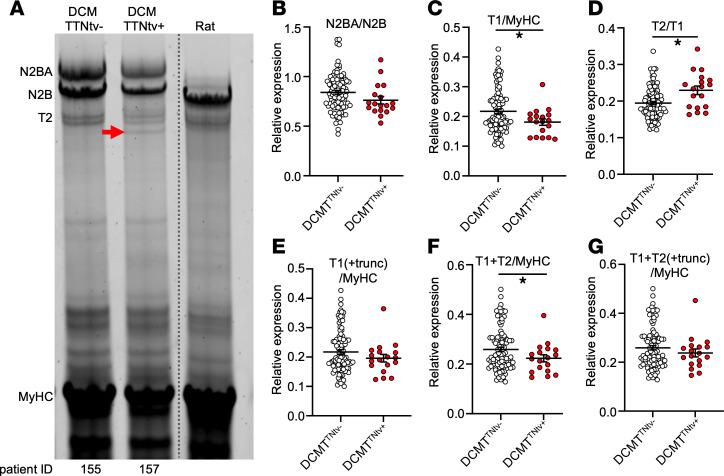
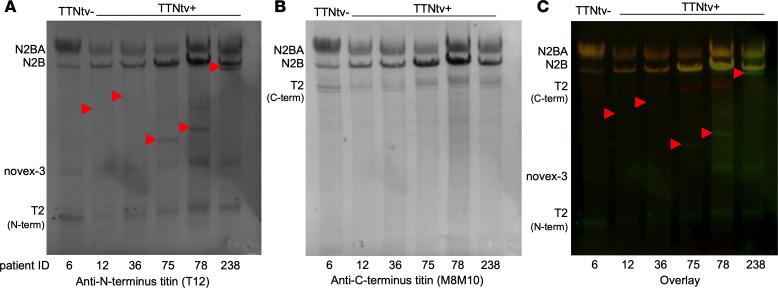
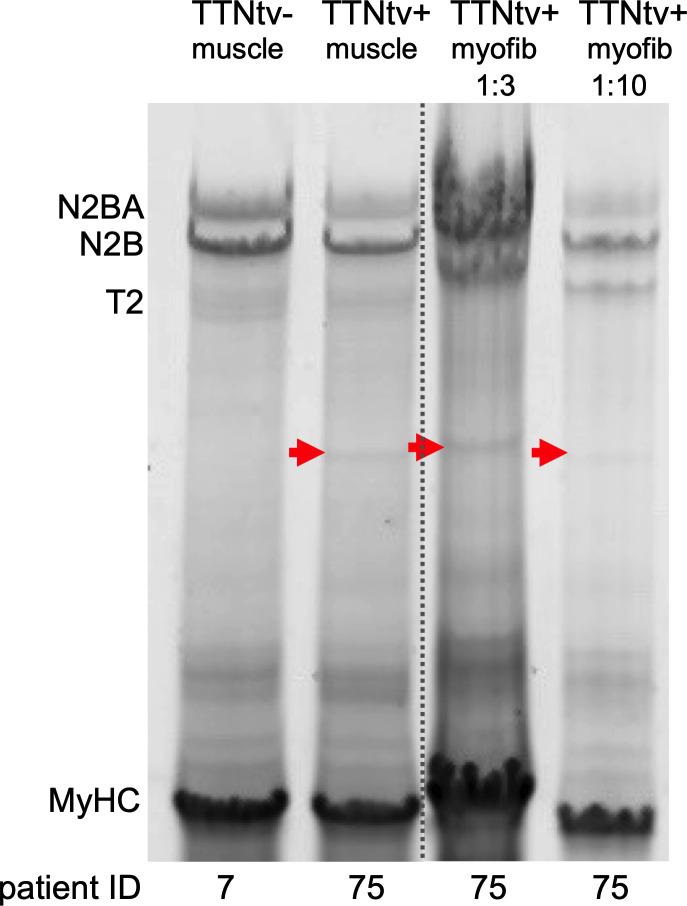
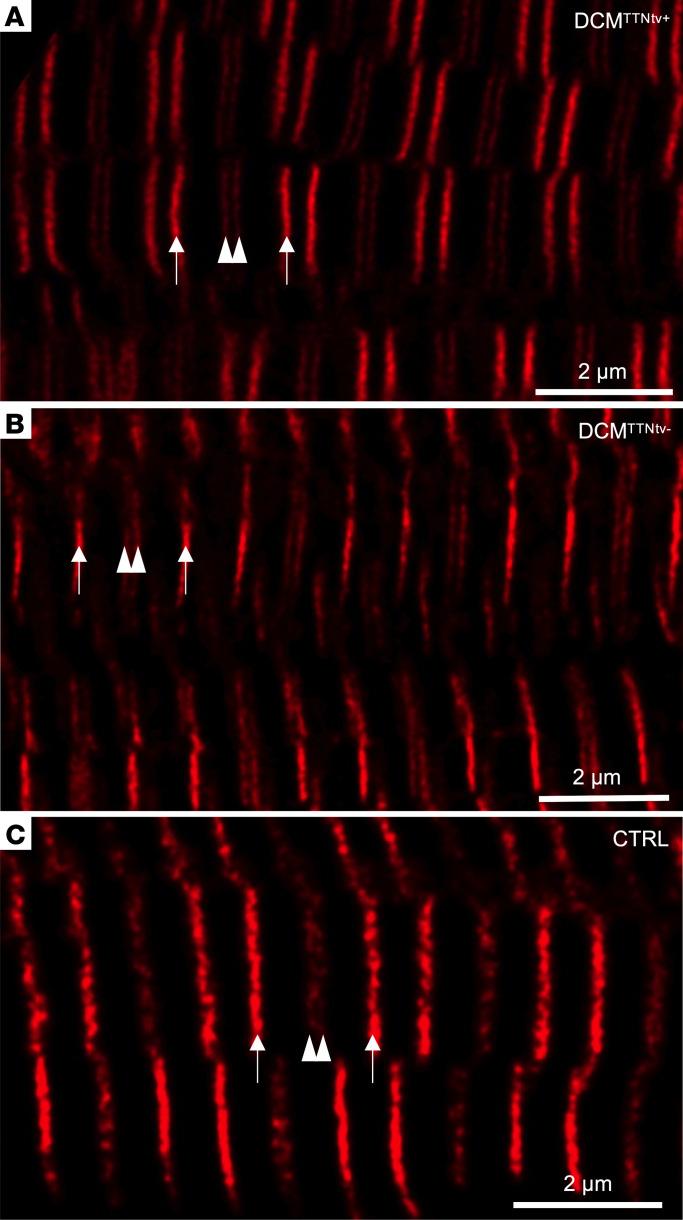
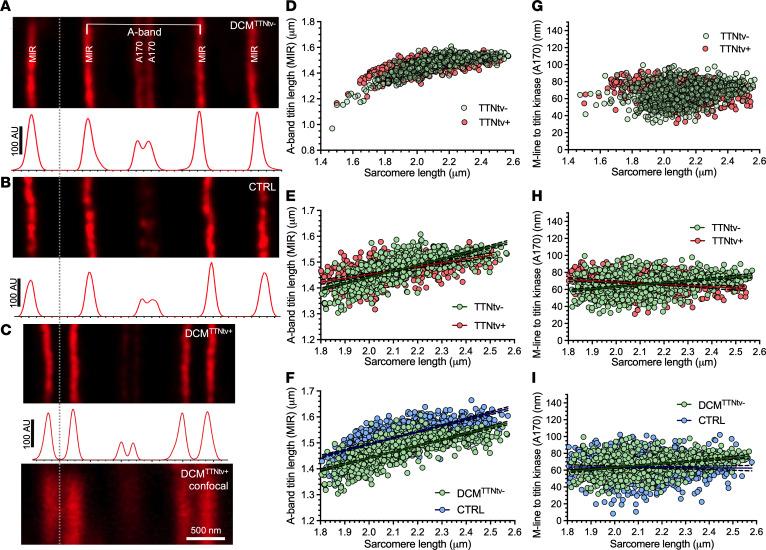
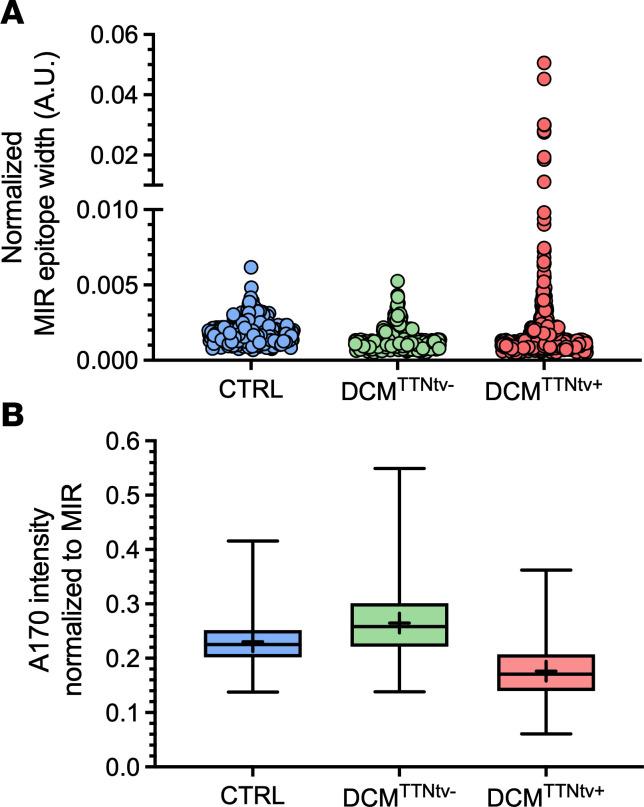
Heterozygous (HET) truncating variant mutations in the TTN gene (TTNtvs), encoding the giant titin protein, are the most common genetic cause of dilated cardiomyopathy (DCM). However, the molecular mechanisms by which TTNtv mutations induce DCM are controversial. Here, we studied 127 clinically identified DCM human cardiac samples with next-generation sequencing (NGS), high-resolution gel electrophoresis, Western blot analysis, and super-resolution microscopy in order to dissect the structural and functional consequences of TTNtv mutations. The occurrence of TTNtv was found to be 15% in the DCM cohort. Truncated titin proteins matching, by molecular weight, the gene sequence predictions were detected in the majority of the TTNtv+ samples. Full-length titin was reduced in TTNtv+ compared with TTNtv- samples. Proteomics analysis of washed myofibrils and stimulated emission depletion (STED) super-resolution microscopy of myocardial sarcomeres labeled with sequence-specific anti-titin antibodies revealed that truncated titin was structurally integrated into the sarcomere. Sarcomere length-dependent anti-titin epitope position, shape, and intensity analyses pointed at possible structural defects in the I/A junction and the M-band of TTNtv+ sarcomeres, which probably contribute, possibly via faulty mechanosensor function, to the development of manifest DCM.
编码巨大肌联蛋白的TTN基因中的杂合(HET)截短变异突变(TTNtvs)是扩张型心肌病(DCM)最常见的遗传病因。然而,TTNtv突变诱发DCM的分子机制仍存在争议。在此,我们运用下一代测序(NGS)、高分辨率凝胶电泳、蛋白质免疫印迹分析和超分辨率显微镜技术,研究了127例经临床确诊的DCM人类心脏样本,以剖析TTNtv突变的结构和功能后果。我们发现DCM队列中TTNtv的发生率为15%。在大多数TTNtv阳性样本中检测到了分子量与基因序列预测相符的截短肌联蛋白。与TTNtv阴性样本相比,TTNtv阳性样本中的全长肌联蛋白减少。对洗涤后的肌原纤维进行蛋白质组学分析,并使用序列特异性抗肌联蛋白抗体标记心肌肌节,通过受激发射损耗(STED)超分辨率显微镜观察发现,截短的肌联蛋白在结构上整合到了肌节中。肌节长度依赖性抗肌联蛋白表位位置、形状和强度分析表明,TTNtv阳性肌节的I/A连接处和M带可能存在结构缺陷,这可能通过机械传感器功能异常,导致明显DCM的发生。

 Zotero 插件