
甲状腺激素增加胎羊心肌细胞脂肪酸的利用。
Thyroid hormone increases fatty acid use in fetal ovine cardiac myocytes.
机构信息
Center for Developmental Health, Knight Cardiovascular Institute, Oregon Health & Science University, Portland, Oregon, USA.
出版信息
Physiol Rep. 2023 Nov;11(22):e15865. doi: 10.14814/phy2.15865.
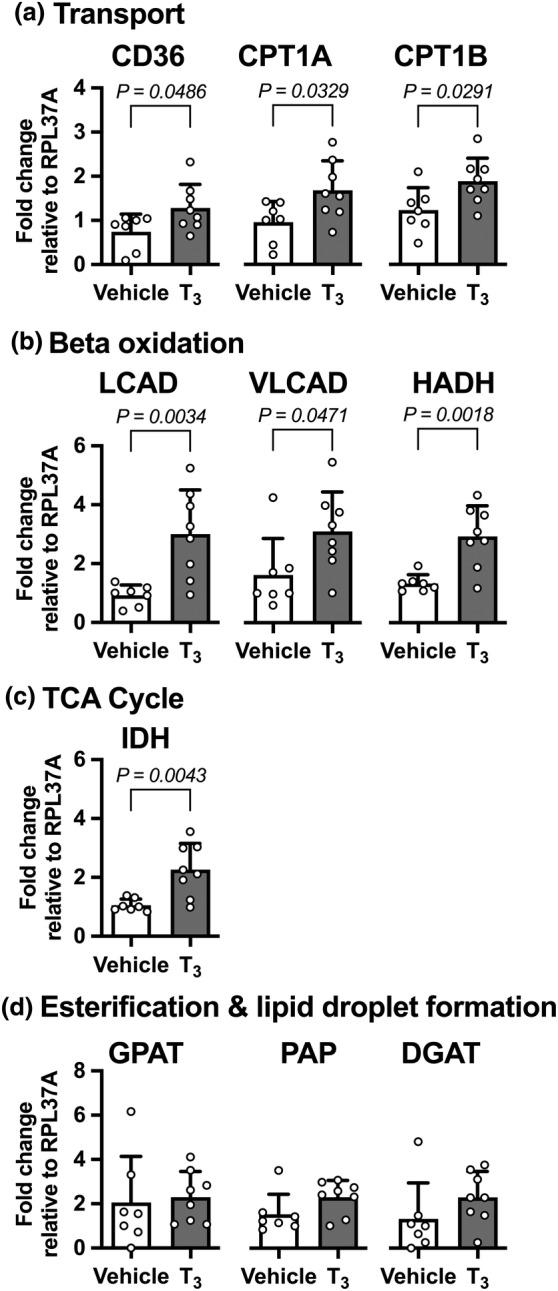
Cardiac metabolic substrate preference shifts at parturition from carbohydrates to fatty acids. We hypothesized that thyroid hormone (T ) and palmitic acid (PA) stimulate fetal cardiomyocyte oxidative metabolism capacity. T was infused into fetal sheep to a target of 1.5 nM. Dispersed cardiomyocytes were assessed for lipid uptake and droplet formation with BODIPY-labeled fatty acids. Myocardial expression levels were assessed PCR. Cardiomyocytes from naïve fetuses were exposed to T and PA, and oxygen consumption was measured with the Seahorse Bioanalyzer. Cardiomyocytes (130-day gestational age) exposed to elevated T in utero accumulated 42% more long-chain fatty acid droplets than did cells from vehicle-infused fetuses. In utero T increased myocardial mRNA levels of CD36, CPT1A, CPT1B, LCAD, VLCAD, HADH, IDH, PDK4, and caspase 9. In vitro exposure to T increased maximal oxygen consumption rate in cultured cardiomyocytes in the absence of fatty acids, and when PA was provided as an acute (30 min) supply of cellular energy. Longer-term exposure (24 and 48 h) to PA abrogated increased oxygen consumption rates stimulated by elevated levels of T in cultured cardiomyocytes. T contributes to metabolic maturation of fetal cardiomyocytes. Prolonged exposure of fetal cardiomyocytes to PA, however, may impair oxidative capacity.
分娩时,心脏代谢底物的偏好从碳水化合物转变为脂肪酸。我们假设甲状腺激素 (T) 和棕榈酸 (PA) 能刺激胎儿心肌细胞的氧化代谢能力。将 T 输注到胎儿羊中,使其达到 1.5nM 的目标浓度。用 BODIPY 标记的脂肪酸评估分离的心肌细胞的脂质摄取和液滴形成。通过 PCR 评估心肌表达水平。将来自未处理胎儿的心肌细胞暴露于 T 和 PA 中,并使用 Seahorse Bioanalyzer 测量耗氧量。与来自输注载体胎儿的细胞相比,在子宫内暴露于 T 的 130 天胎龄的心肌细胞积累了 42%更多的长链脂肪酸液滴。在子宫内 T 增加了心肌中 CD36、CPT1A、CPT1B、LCAD、VLCAD、HADH、IDH、PDK4 和 caspase 9 的 mRNA 水平。在体外,T 增加了培养的心肌细胞在没有脂肪酸的情况下以及在提供 PA 作为急性(30 分钟)细胞能量供应时的最大耗氧率。在培养的心肌细胞中,长时间(24 和 48 小时)暴露于 PA 会破坏由 T 水平升高引起的耗氧率增加。T 有助于胎儿心肌细胞的代谢成熟。然而,胎儿心肌细胞长时间暴露于 PA 可能会损害其氧化能力。




 Zotero 插件