
FBXW7与人类肿瘤:耐药机制及潜在治疗策略
FBXW7 and human tumors: mechanisms of drug resistance and potential therapeutic strategies.
作者信息
Wang Wanqing, Jiang Kaipeng, Liu Xue, Li Ju, Zhou Wenshuo, Wang Chang, Cui Jiuwei, Liang Tingting
机构信息
Cancer Center, The First Hospital of Jilin University, Changchun, Jilin, China.
出版信息
Front Pharmacol. 2023 Nov 13;14:1278056. doi: 10.3389/fphar.2023.1278056. eCollection 2023.
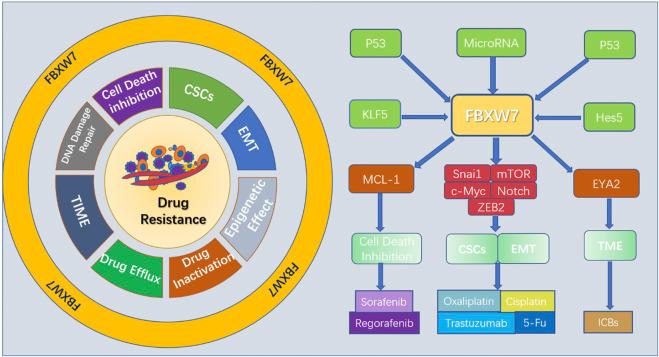
Drug therapy, including chemotherapy, targeted therapy, immunotherapy, and endocrine therapy, stands as the foremost therapeutic approach for contemporary human malignancies. However, increasing drug resistance during antineoplastic therapy has become a substantial barrier to favorable outcomes in cancer patients. To enhance the effectiveness of different cancer therapies, an in-depth understanding of the unique mechanisms underlying tumor drug resistance and the subsequent surmounting of antitumor drug resistance is required. Recently, F-box and WD Repeat Domain-containing-7 (FBXW7), a recognized tumor suppressor, has been found to be highly associated with tumor therapy resistance. This review provides a comprehensive summary of the underlying mechanisms through which FBXW7 facilitates the development of drug resistance in cancer. Additionally, this review elucidates the role of FBXW7 in therapeutic resistance of various types of human tumors. The strategies and challenges implicated in overcoming tumor therapy resistance by targeting FBXW7 are also discussed.
药物治疗,包括化疗、靶向治疗、免疫治疗和内分泌治疗,是当代人类恶性肿瘤的首要治疗方法。然而,抗肿瘤治疗期间耐药性的增加已成为癌症患者获得良好预后的重大障碍。为提高不同癌症治疗的有效性,需要深入了解肿瘤耐药的独特机制并随后克服抗肿瘤药物耐药性。最近,一种公认的肿瘤抑制因子——含F盒和WD重复结构域7(FBXW7),已被发现与肿瘤治疗耐药性高度相关。本综述全面总结了FBXW7促进癌症耐药性发展的潜在机制。此外,本综述还阐明了FBXW7在各类人类肿瘤治疗耐药中的作用。还讨论了通过靶向FBXW7克服肿瘤治疗耐药性所涉及的策略和挑战。


 Zotero 插件