
ICE是热门事物吗?一项基因组比较研究揭示,整合性接合元件是抗生素抗性基因传播的“热门”载体。
Is ICE hot? A genomic comparative study reveals integrative and conjugative elements as "hot" vectors for the dissemination of antibiotic resistance genes.
作者信息
Zheng Qi, Li Liguan, Yin Xiaole, Che You, Zhang Tong
机构信息
Department of Civil Engineering, Environmental Microbiome Engineering and Biotechnology Laboratory, Center for Environmental Engineering Research,The University of Hong Kong, Hong Kong, China.
出版信息
mSystems. 2023 Dec 21;8(6):e0017823. doi: 10.1128/msystems.00178-23. Epub 2023 Nov 30.
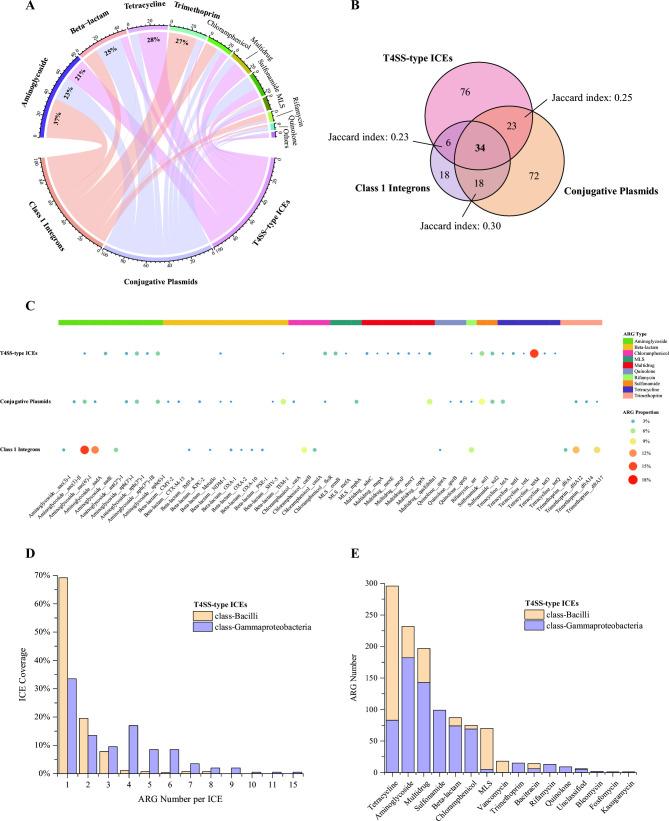
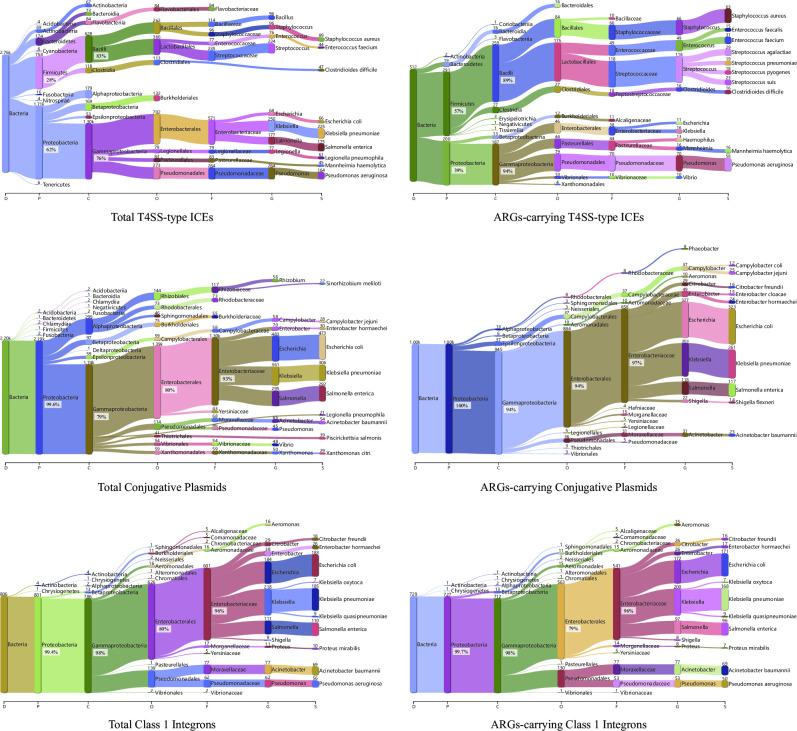
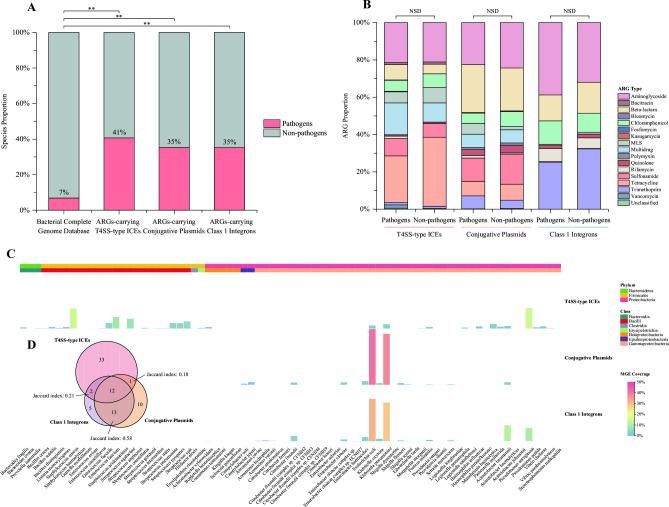
Different from other extensively studied mobile genetic elements (MGEs) whose discoveries were initiated decades ago (1950s-1980s), integrative and conjugative elements (ICEs), a diverse array of more recently identified elements that were formally termed in 2002, have aroused increasing concern for their crucial contribution to the dissemination of antibiotic resistance genes (ARGs). However, the comprehensive understanding on ICEs' ARG profile across the bacterial tree of life is still blurred. Through a genomic study by comparison with two key MGEs, we, for the first time, systematically investigated the ARG profile as well as the host range of ICEs and also explored the MGE-specific potential to facilitate ARG propagation across phylogenetic barriers. These findings could serve as a theoretical foundation for risk assessment of ARGs mediated by distinct MGEs and further to optimize therapeutic strategies aimed at restraining antibiotic resistance crises.
与其他在几十年前(20世纪50年代至80年代)就已开始研究的广泛研究的移动遗传元件(MGEs)不同,整合和接合元件(ICEs)是一类在2002年才正式命名的最近才被鉴定出来的多样元件,因其对抗生素抗性基因(ARGs)传播的关键贡献而引起了越来越多的关注。然而,对于整个生命细菌树中ICEs的ARG谱的全面了解仍然模糊不清。通过与两个关键MGEs进行比较的基因组研究,我们首次系统地研究了ICEs的ARG谱以及宿主范围,并探索了MGEs促进ARG跨越系统发育障碍传播的特定潜力。这些发现可为由不同MGEs介导的ARGs的风险评估提供理论基础,并进一步优化旨在抑制抗生素抗性危机的治疗策略。

 Zotero 插件