
从加拿大一个研究农场分离出的猪肠道细菌中抗菌药物耐药性和可移动遗传元件的基因组特征分析
Genomic characterization of antimicrobial resistance and mobile genetic elements in swine gut bacteria isolated from a Canadian research farm.
作者信息
Rahman Nahidur, McCullough Taylor, Orozco Daniel Flores, Walkowiak Sean, Farzan Abdolvahab, Shekarriz Shahrokh, Surette Michael G, Cicek Nazim, Derakhshani Hooman
机构信息
Department of Animal Sciences, Faculty of Agricultural and Food Sciences, University of Manitoba, Winnipeg, MB, Canada.
Grain Research Laboratory, Canadian Grain Commission, Winnipeg, MB, Canada.
出版信息
Anim Microbiome. 2025 Jun 18;7(1):66. doi: 10.1186/s42523-025-00432-w.
INTRODUCTION
The widespread use of antimicrobials in the livestock industry has raised global concerns regarding the emergence and spread of antimicrobial resistance genes (ARGs). Comprehensive databases of ARGs specific to different farm animal species can greatly improve the surveillance of ARGs within the agri-food sector and beyond. In particular, defining the association of ARGs with mobile genetic elements (MGEs)-the primary agents responsible for the spread and acquisition of resistant phenotypes among bacterial populations-could help assess the transmissibility potential of clinically relevant ARGs. Recognizing the gut microbiota as a vast reservoir of ARGs, we aimed to generate a representative isolate collection and genome database of the swine gut microbiome, enabling high-resolution characterization of ARGs in relation to bacterial host range and their association with MGEs.
RESULTS
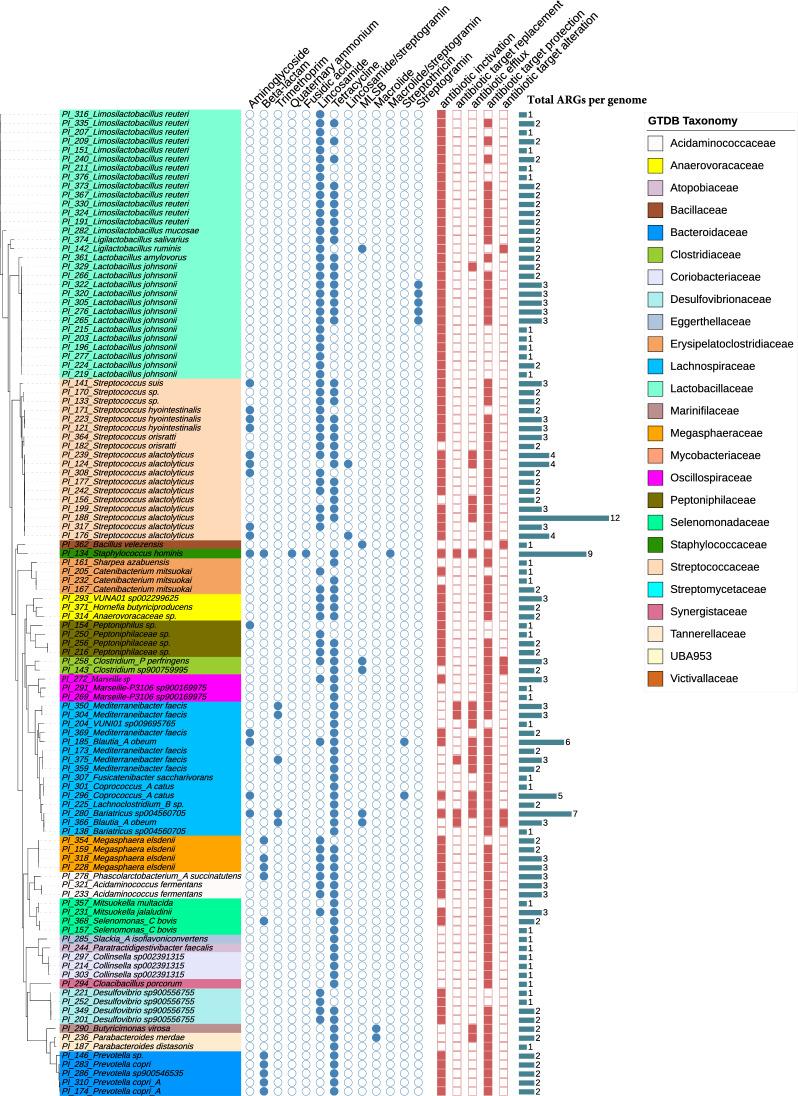
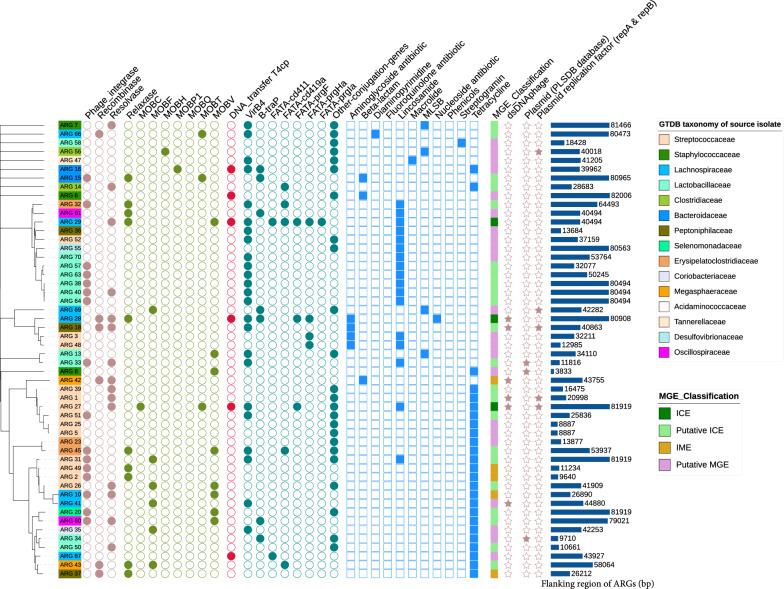
We generated a biobank of bacteria from different sections of the gastrointestinal tracts of four clinically healthy pigs housed at a research farm in Ontario, Canada. The culturing was performed under anaerobic conditions using both selective and general enrichment media to ensure the capture of a diverse range of bacterial families within the swine gut microbiota. We sequenced the genomes of 129 unique isolates encompassing 44 genera and 25 distinct families of the swine gut microbiome. Approximately 85.3% (110 isolates) contained one or more ARGs, with a total of 246 ARGs identified across 38 resistance gene families. Tetracycline and macrolide resistance genes were the most prevalent across different lineages of the swine gut microbiota. Additionally, we observed a wide range of MGEs, including integrative conjugative elements, plasmids, and phages, frequently associated with ARGs, indicating that the swine gut ecosystem is conducive to the horizontal transfer of ARGs. High-throughput alignment of the identified ARG-MGE complexes to large-scale metagenomics datasets of the swine gut microbiome suggests the presence of highly prevalent and conserved resistome sequences across diverse pig populations.
CONCLUSION
Our findings reveal a highly diverse and relatively conserved reservoir of ARGs and MGEs within the gut microbiome of pigs. A deeper understanding of the microbial host range and potential transmissibility of prevalent ARGs in the swine microbiome can inform development of targeted antimicrobial resistance surveillance and disease control programs.
引言
抗菌药物在畜牧业中的广泛使用引发了全球对抗菌药物耐药基因(ARGs)出现和传播的担忧。针对不同农场动物物种的ARGs综合数据库能够极大地改善农业食品领域及其他领域内ARGs的监测。特别是,明确ARGs与移动遗传元件(MGEs)之间的关联(MGEs是细菌群体中耐药表型传播和获得的主要媒介)有助于评估临床相关ARGs的传播潜力。鉴于肠道微生物群是ARGs的巨大储存库,我们旨在构建一个具有代表性的猪肠道微生物组分离株集合和基因组数据库,以便对ARGs进行高分辨率表征,了解其与细菌宿主范围的关系及其与MGEs的关联。
结果
我们从加拿大安大略省一个研究农场饲养的4头临床健康猪的胃肠道不同部位采集细菌,建立了一个生物样本库。培养在厌氧条件下进行,使用选择性和通用富集培养基,以确保捕获猪肠道微生物群中各种不同的细菌家族。我们对129个独特分离株的基因组进行了测序,这些分离株涵盖猪肠道微生物组的44个属和25个不同家族。约85.3%(110个分离株)含有一个或多个ARGs,在38个耐药基因家族中总共鉴定出246个ARGs。四环素和大环内酯类耐药基因在猪肠道微生物群的不同谱系中最为普遍。此外,我们观察到多种MGEs,包括整合接合元件、质粒和噬菌体,它们经常与ARGs相关联,这表明猪肠道生态系统有利于ARGs的水平转移。将鉴定出的ARG-MGE复合物与猪肠道微生物组的大规模宏基因组数据集进行高通量比对,结果表明不同猪群中存在高度普遍且保守的耐药基因组序列。
结论
我们的研究结果揭示了猪肠道微生物组中ARGs和MGEs的高度多样性及相对保守性。深入了解猪微生物组中常见ARGs的微生物宿主范围和潜在传播性,可为制定有针对性的抗菌药物耐药监测和疾病控制计划提供依据。


 Zotero 插件