
嵌合抗原受体自然杀伤细胞:一种有前景的抗肿瘤免疫疗法。
Chimeric antigen receptor natural killer cells: a promising antitumor immunotherapy.
作者信息
Wang Yan, Jin Shengjie, Zhuang Qiqi, Liu Na, Chen Ruyi, Adam Sofia Abdulkadir, Jin Jie, Sun Jie
机构信息
Department of Hematology The First Affiliated Hospital Zhejiang University School of Medicine Hangzhou Zhejiang China.
Key Laboratory of Hematologic Malignancies Diagnosis, and Treatment Hangzhou Zhejiang China.
出版信息
MedComm (2020). 2023 Dec 1;4(6):e422. doi: 10.1002/mco2.422. eCollection 2023 Dec.
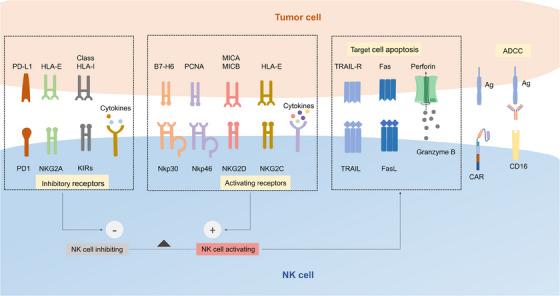
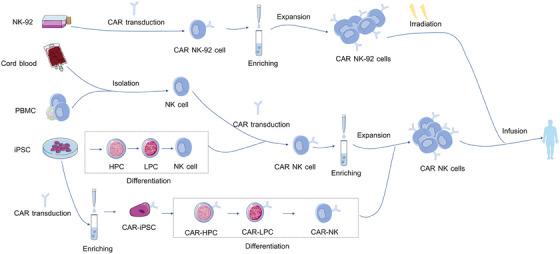
Chimeric antigen receptor (CAR) T cells have been successfully used in adoptive cell therapy for malignancies. However, some obstacles, including side effects such as graft-versus-host disease and cytokine release syndrome, therapy resistance, limited sources, as well as high cost, limited the application of CAR T cells. Recently, CAR natural killer (NK) cells have been pursued as the effector cells for adoptive immunotherapy for their attractive merits of strong intrinsic antitumor activity and relatively mild side effects. Additionally, CAR NK cells can be available from various sources and do not require strict human leukocyte antigen matching, which suggests them as promising "off-the-shelf" products for clinical application. Although the use of CAR NK cells is restrained by the limited proliferation and impaired efficiency within the immunosuppressive tumor microenvironment, further investigation in optimizing CAR structure and combination therapies will overcome these challenges. This review will summarize the advancement of CAR NK cells, CAR NK cell manufacture, the clinical outcomes of CAR NK therapy, the challenges in the field, and prospective solutions. Besides, we will discuss the emerging application of other immune cells for CAR engineering. Collectively, this comprehensive review will provide a valuable and informative summary of current progress and evaluate challenges and future opportunities of CAR NK cells in tumor treatment.
嵌合抗原受体(CAR)T细胞已成功应用于恶性肿瘤的过继性细胞治疗。然而,一些障碍,包括移植物抗宿主病和细胞因子释放综合征等副作用、治疗抗性、来源有限以及成本高昂,限制了CAR T细胞的应用。近年来,CAR自然杀伤(NK)细胞因其具有强大的内在抗肿瘤活性和相对较轻的副作用等诱人优点,而被作为过继性免疫治疗的效应细胞加以研究。此外,CAR NK细胞可以从多种来源获得,并且不需要严格的人类白细胞抗原匹配,这表明它们有望成为临床应用中“现货供应”的产品。尽管CAR NK细胞的使用受到免疫抑制性肿瘤微环境中增殖受限和效率受损的限制,但在优化CAR结构和联合治疗方面的进一步研究将克服这些挑战。本综述将总结CAR NK细胞的进展、CAR NK细胞的制备、CAR NK细胞治疗的临床结果、该领域面临的挑战以及潜在的解决方案。此外,我们还将讨论其他免疫细胞在CAR工程中的新兴应用。总的来说,这篇全面的综述将为当前的进展提供有价值且信息丰富的总结,并评估CAR NK细胞在肿瘤治疗中的挑战和未来机遇。



 Zotero 插件