
心肺运动试验与肺癌切除术患者术后结局的相关性:系统评价和荟萃分析。
The association between cardiopulmonary exercise testing and postoperative outcomes in patients with lung cancer undergoing lung resection surgery: A systematic review and meta-analysis.
机构信息
Department of Anaesthesiology, Faculty of Health Sciences, University of the Witwatersrand, Johannesburg, South Africa.
出版信息
PLoS One. 2023 Dec 7;18(12):e0295430. doi: 10.1371/journal.pone.0295430. eCollection 2023.
BACKGROUND
Exercise capacity should be determined in all patients undergoing lung resection for lung cancer surgery and cardiopulmonary exercise testing (CPET) remains the gold standard. The purpose of this study was to investigate associations between preoperative CPET and postoperative outcomes in patients undergoing lung resection surgery for lung cancer through a review of the existing literature.
METHODS
A search was conducted on PubMed, Scopus, Cochrane Library and CINAHL from inception until December 2022. Studies investigating associations between preoperative CPET and postoperative outcomes were included. Risk of bias was assessed using the QUIPS tool. A random effect model meta-analysis was performed. I2 > 40% indicated a high level of heterogeneity.
RESULTS
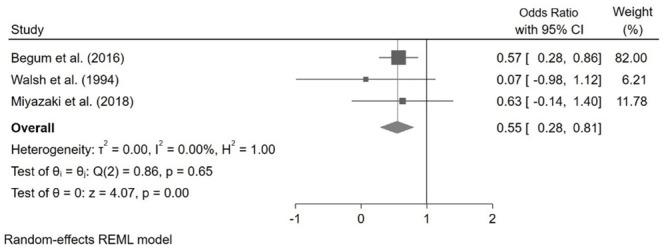
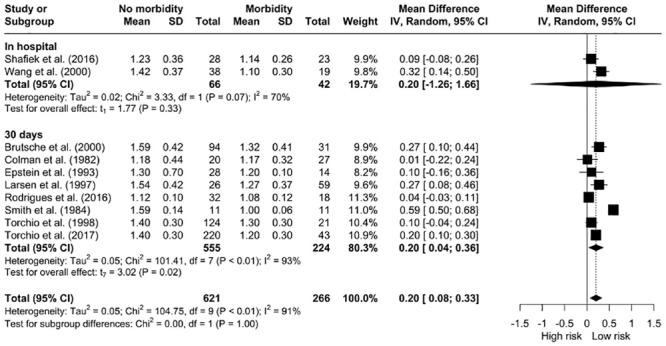
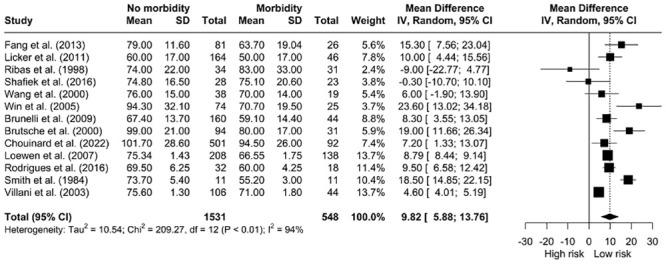
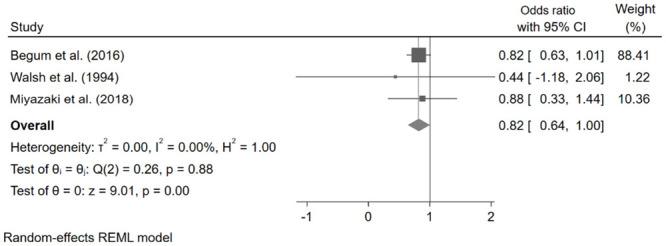
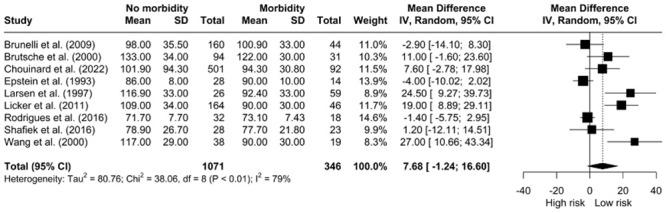
Thirty-seven studies were included with 6450 patients. Twenty-eight studies had low risk of bias. [Formula: see text] peak is the oxygen consumption at peak exercise and serves as a marker of cardiopulmonary fitness. Higher estimates of [Formula: see text] peak, measured and as a percentagege of predicted, showed significant associations with a lower risk of mortality [MD: 3.66, 95% CI: 0.88; 6.43 and MD: 16.49, 95% CI: 6.92; 26.07] and fewer complications [MD: 2.06, 95% CI: 1.12; 3.00 and MD: 9.82, 95% CI: 5.88; 13.76]. Using a previously defined cutoff value of > 15mL/kg/min for [Formula: see text] peak, showed evidence of decreased odds of mortality [OR: 0.55, 95% CI: 0.28-0.81] and but not decreased odds of postoperative morbidity [OR: 0.82, 95% CI: 0.64-1.00]. There was no relationship between [Formula: see text] slope, which depicts ventilatory efficiency, with mortality [MD: -9.60, 95% CI: -27.74; 8.54] however, patients without postoperative complications had a lower preoperative [Formula: see text] [MD: -2.36, 95% CI: -3.01; -1.71]. Exercise load and anaerobic threshold did not correlate with morbidity or mortality. There was significant heterogeneity between studies.
CONCLUSIONS
Estimates of cardiopulmonary fitness as evidenced by higher [Formula: see text] peak, measured and as a percentage of predicted, were associated with decreased morbidity and mortality. A cutoff value of [Formula: see text] peak > 15mL/kg/min was consistent with improved survival but not with fewer complications. Ventilatory efficiency was associated with decreased postoperative morbidity but not with improved survival. The heterogeneity in literature could be remedied with large scale, prospective, blinded, standardised research to improve preoperative risk stratification in patients with lung cancer scheduled for lung resection surgery.
背景
在接受肺癌手术的所有患者中都应确定运动能力,心肺运动测试(CPET)仍然是金标准。本研究的目的是通过回顾现有文献,研究接受肺癌切除术的患者术前 CPET 与术后结局之间的关系。
方法
从开始到 2022 年 12 月,在 PubMed、Scopus、Cochrane Library 和 CINAHL 上进行了搜索。纳入了研究术前 CPET 与术后结局之间关系的研究。使用 QUIPS 工具评估偏倚风险。进行随机效应模型荟萃分析。I²>40% 表示存在高度异质性。
结果
共纳入 37 项研究,涉及 6450 名患者。28 项研究的偏倚风险较低。[公式:见文本]峰值是峰值运动时的耗氧量,是心肺健康的标志物。[公式:见文本]峰值的较高估计值,以实测值和预测值的百分比表示,与较低的死亡率风险[MD:3.66,95%CI:0.88;6.43 和 MD:16.49,95%CI:6.92;26.07]和较少的并发症[MD:2.06,95%CI:1.12;3.00 和 MD:9.82,95%CI:5.88;13.76]相关。使用先前定义的[公式:见文本]峰值>15mL/kg/min 的截断值,显示死亡率降低的证据[OR:0.55,95%CI:0.28-0.81],但术后发病率无降低的证据[OR:0.82,95%CI:0.64-1.00]。[公式:见文本]斜率与死亡率之间没有关系,[公式:见文本]斜率描绘了通气效率[MD:-9.60,95%CI:-27.74;8.54],但是没有术后并发症的患者术前[公式:见文本] [MD:-2.36,95%CI:-3.01;-1.71]较低。运动负荷和无氧阈值与发病率或死亡率无关。研究之间存在显著的异质性。
结论
心肺健康的估计值,表现为[公式:见文本]峰值较高,以实测值和预测值的百分比表示,与降低的发病率和死亡率相关。[公式:见文本]峰值>15mL/kg/min 的截断值与生存率提高一致,但与并发症减少无关。通气效率与术后发病率降低相关,但与生存率提高无关。文献中的异质性可以通过大规模、前瞻性、盲法、标准化研究来解决,以改善接受肺癌切除术的肺癌患者的术前风险分层。





 Zotero 插件