
缺氧激活前药依沃福酰胺(TH-302)对犬胶质瘤糖酵解代谢的影响:癌症代谢的潜在改善
Influence of the Hypoxia-Activated Prodrug Evofosfamide (TH-302) on Glycolytic Metabolism of Canine Glioma: A Potential Improvement in Cancer Metabolism.
作者信息
Yamazaki Hiroki, Onoyama Seio, Gotani Shunichi, Deguchi Tatsuya, Tamura Masahiro, Ohta Hiroshi, Iwano Hidetomo, Nishida Hidetaka, Dickinson Peter J, Akiyoshi Hideo
机构信息
Laboratory of Veterinary Internal Medicine, Companion Animal Internal Medicine, Department of Companion Animal Clinical Sciences, School of Veterinary Medicine, Rakuno Gakuen University, 582-1 Bunkyodai-Midorimachi, Ebetsu 069-0836, Japan.
Laboratory of Veterinary Biochemistry, Department of Veterinary Medicine, School of Veterinary Medicine, Rakuno Gakuen University, 582-1 Bunkyodai-Midorimachi, Ebetsu 069-0836, Japan.
出版信息
Cancers (Basel). 2023 Nov 22;15(23):5537. doi: 10.3390/cancers15235537.
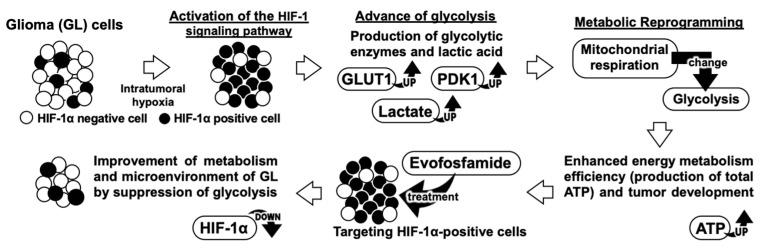
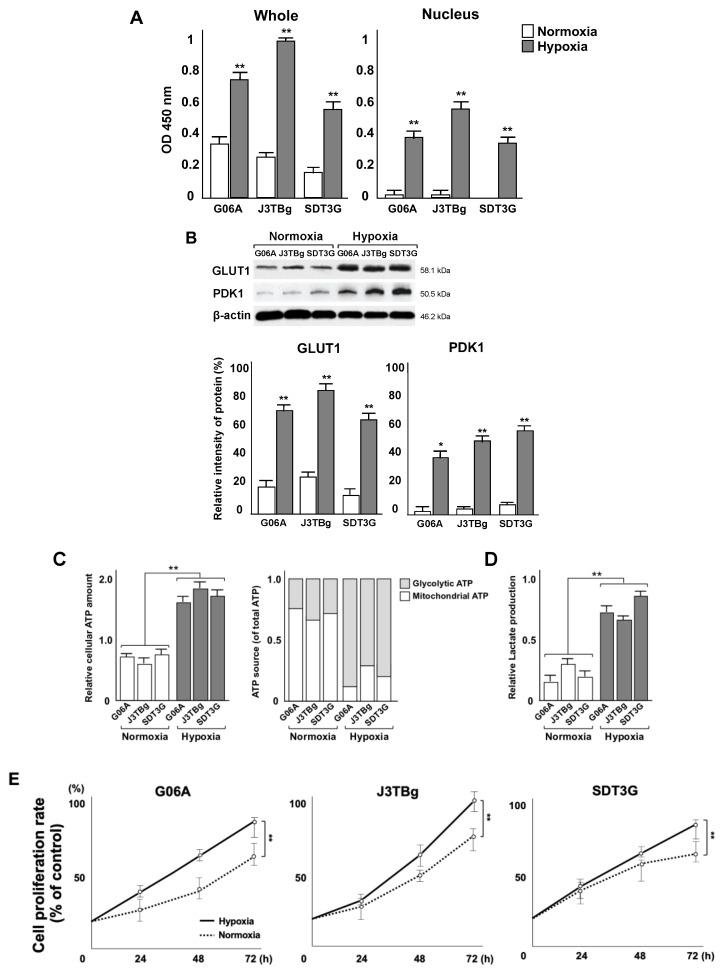
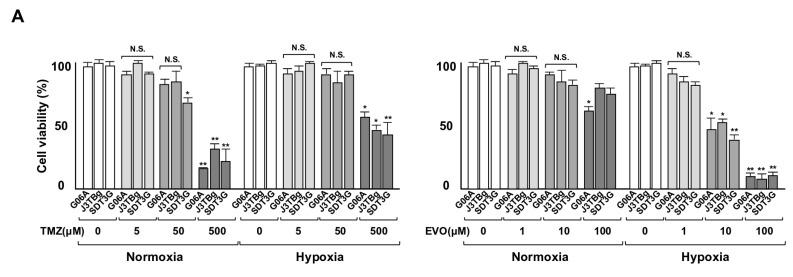
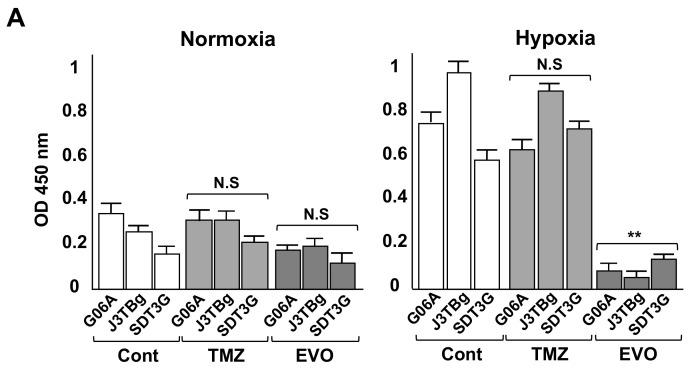
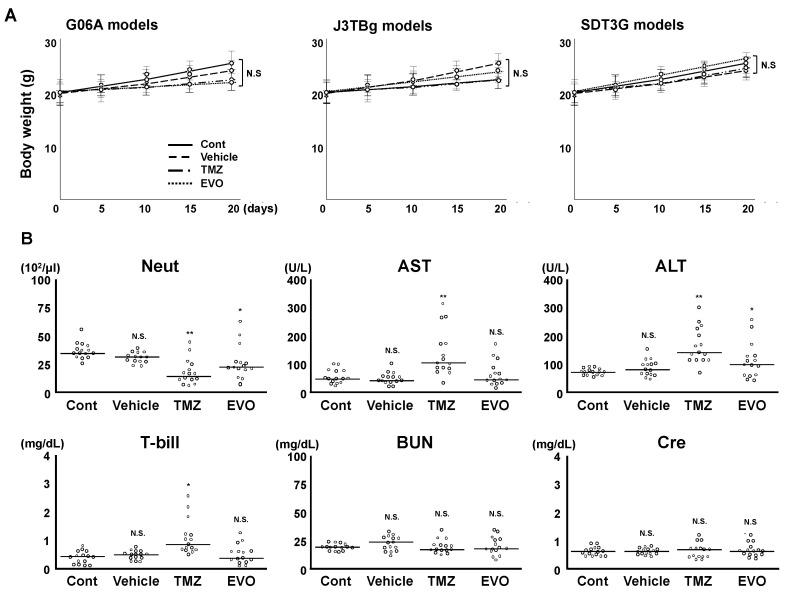
The transcription factor hypoxia-inducible factor 1α (HIF-1α) drives metabolic reprogramming in gliomas (GLs) under hypoxic conditions, promoting glycolysis for tumor development. Evofosfamide (EVO) releases a DNA-alkylating agent within hypoxic regions, indicating that it may serve as a hypoxia-targeted therapy. The aim of this study was to investigate the glycolytic metabolism and antitumor effects of EVO in a canine GL model. Our clinical data showed that overall survival was significantly decreased in GL dog patients with higher HIF-1α expression compared to that of those with lower HIF-1α expression, and there was a positive correlation between HIF-1α and pyruvate dehydrogenase kinase 1 (PDK1) expression, suggesting that glycolytic activity under hypoxia conditions may contribute to poor outcomes in canine GL. Our glycolysis assay tests showed that the glycolytic ATP level was higher than the mitochondrial ATP level in three types of canine GL cell lines by activating the HIF-1 signal pathway under hypoxia conditions, resulting in an overall increase in total cellular ATP production. However, treatment with EVO inhibited the glycolytic ATP level in the GL cell lines under hypoxia conditions by targeting HIF-1α-positive cells, leading to decrease in total cellular ATP production. Our in vivo tests showed that EVO significantly reduced tumor development compared to controls and temozolomide in murine GL models. A metabolic analysis demonstrated that EVO effectively suppressed glycolytic metabolism by eliminating HIF-1α-positive cells, suggesting that it may restore metabolism in canine GLs. The evidence presented here supports the favorable preclinical evaluation of EVO as a potential improvement in cancer metabolism.
转录因子缺氧诱导因子1α(HIF-1α)在缺氧条件下驱动胶质瘤(GLs)的代谢重编程,促进糖酵解以支持肿瘤发展。依沃福酰胺(EVO)在缺氧区域释放一种DNA烷化剂,表明它可能作为一种缺氧靶向治疗药物。本研究的目的是在犬GL模型中研究EVO的糖酵解代谢和抗肿瘤作用。我们的临床数据显示,与HIF-1α表达较低的GL犬患者相比,HIF-1α表达较高的患者总生存期显著缩短,且HIF-1α与丙酮酸脱氢酶激酶1(PDK1)表达呈正相关,提示缺氧条件下的糖酵解活性可能导致犬GL预后不良。我们的糖酵解检测试验表明,在缺氧条件下,通过激活HIF-1信号通路,三种犬GL细胞系中的糖酵解ATP水平高于线粒体ATP水平,导致细胞总ATP产量总体增加。然而,EVO处理通过靶向HIF-1α阳性细胞抑制了缺氧条件下GL细胞系中的糖酵解ATP水平,导致细胞总ATP产量下降。我们的体内试验表明,在小鼠GL模型中,与对照组和替莫唑胺相比,EVO显著减少了肿瘤发展。代谢分析表明,EVO通过消除HIF-1α阳性细胞有效抑制了糖酵解代谢,提示它可能恢复犬GLs的代谢。本文提供的证据支持对EVO进行良好的临床前评估,将其作为癌症代谢方面的潜在改善措施。



 Zotero 插件