
缺氧诱导因子1(HIF1)、原癌基因c-Myc和抑癌基因p53在胶质瘤细胞中的代谢作用
Metabolic Roles of HIF1, c-Myc, and p53 in Glioma Cells.
作者信息
Trejo-Solís Cristina, Castillo-Rodríguez Rosa Angélica, Serrano-García Norma, Silva-Adaya Daniela, Vargas-Cruz Salvador, Chávez-Cortéz Elda Georgina, Gallardo-Pérez Juan Carlos, Zavala-Vega Sergio, Cruz-Salgado Arturo, Magaña-Maldonado Roxana
机构信息
Laboratorio Experimental de Enfermedades Neurodegenerativas, Departamento de Neurofisiología, Laboratorio Clínico y Banco de Sangre y Laboratorio de Reprogramación Celular, Instituto Nacional de Neurología y Neurocirugía, Ciudad de Mexico 14269, Mexico.
CICATA Unidad Morelos, Instituto Politécnico Nacional, Boulevard de la Tecnología, 1036 Z-1, P 2/2, Atlacholoaya 62790, Mexico.
出版信息
Metabolites. 2024 Apr 25;14(5):249. doi: 10.3390/metabo14050249.
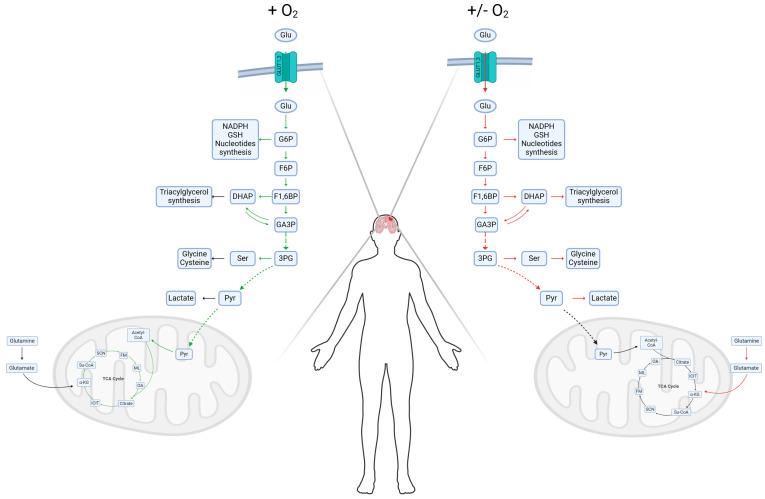
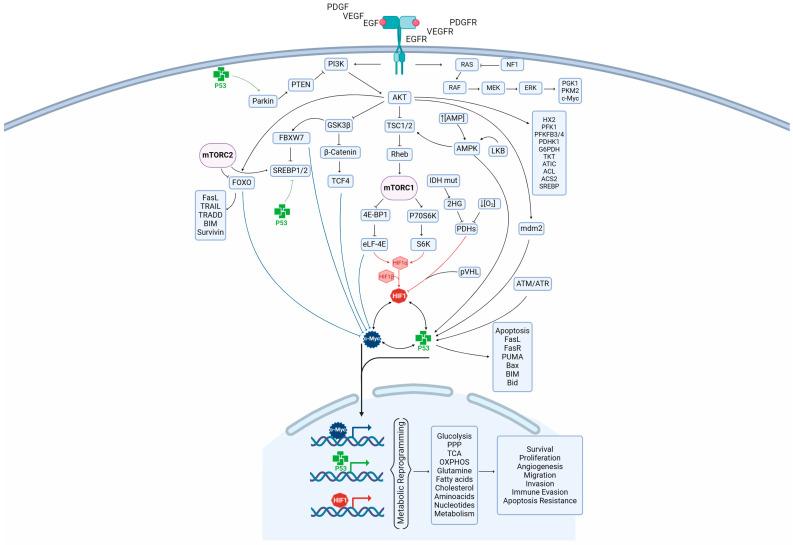
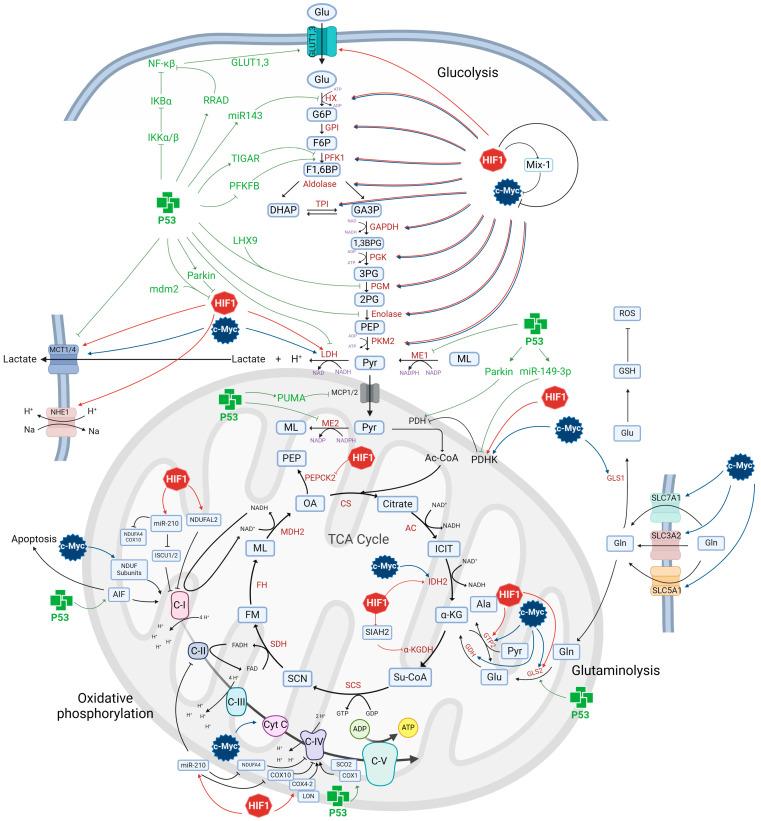
The metabolic reprogramming that promotes tumorigenesis in glioblastoma is induced by dynamic alterations in the hypoxic tumor microenvironment, as well as in transcriptional and signaling networks, which result in changes in global genetic expression. The signaling pathways PI3K/AKT/mTOR and RAS/RAF/MEK/ERK stimulate cell metabolism, either directly or indirectly, by modulating the transcriptional factors p53, HIF1, and c-Myc. The overexpression of HIF1 and c-Myc, master regulators of cellular metabolism, is a key contributor to the synthesis of bioenergetic molecules that mediate glioma cell transformation, proliferation, survival, migration, and invasion by modifying the transcription levels of key gene groups involved in metabolism. Meanwhile, the tumor-suppressing protein p53, which negatively regulates HIF1 and c-Myc, is often lost in glioblastoma. Alterations in this triad of transcriptional factors induce a metabolic shift in glioma cells that allows them to adapt and survive changes such as mutations, hypoxia, acidosis, the presence of reactive oxygen species, and nutrient deprivation, by modulating the activity and expression of signaling molecules, enzymes, metabolites, transporters, and regulators involved in glycolysis and glutamine metabolism, the pentose phosphate cycle, the tricarboxylic acid cycle, and oxidative phosphorylation, as well as the synthesis and degradation of fatty acids and nucleic acids. This review summarizes our current knowledge on the role of HIF1, c-Myc, and p53 in the genic regulatory network for metabolism in glioma cells, as well as potential therapeutic inhibitors of these factors.
促进胶质母细胞瘤发生的代谢重编程是由缺氧肿瘤微环境以及转录和信号网络的动态变化诱导的,这些变化导致整体基因表达的改变。PI3K/AKT/mTOR和RAS/RAF/MEK/ERK信号通路通过调节转录因子p53、HIF1和c-Myc直接或间接刺激细胞代谢。HIF1和c-Myc作为细胞代谢的主要调节因子,其过表达是生物能量分子合成的关键因素,这些分子通过改变参与代谢的关键基因组的转录水平来介导胶质瘤细胞的转化、增殖、存活、迁移和侵袭。同时,对HIF1和c-Myc起负调节作用的肿瘤抑制蛋白p53在胶质母细胞瘤中常常缺失。这三种转录因子的改变会诱导胶质瘤细胞发生代谢转变,使其能够通过调节参与糖酵解和谷氨酰胺代谢、磷酸戊糖循环、三羧酸循环和氧化磷酸化以及脂肪酸和核酸合成与降解的信号分子、酶、代谢物、转运体和调节因子的活性和表达,来适应和抵御诸如突变、缺氧、酸中毒、活性氧的存在和营养剥夺等变化。本综述总结了我们目前对HIF1、c-Myc和p53在胶质瘤细胞代谢基因调控网络中的作用以及这些因子潜在治疗抑制剂的认识。


 Zotero 插件