
抗唾液酸结合免疫球蛋白样凝集素15抗体可预防大鼠急性脊髓损伤诱导制动后的明显骨质流失。
Anti-Siglec-15 Antibody Prevents Marked Bone Loss after Acute Spinal Cord Injury-Induced Immobilization in Rats.
作者信息
Peng Yuanzhen, Langermann Solomon, Kothari Priyanka, Liu Linda, Zhao Wei, Hu Yizhong, Chen Zihao, Moraes de Lima Perini Mariana, Li Jiliang, Cao Jay, Guo X Edward, Chen Lieping, Bauman William A, Qin Weiping
机构信息
Spinal Cord Damage Research Center, James J. Peters Veteran Affairs Medical Center Bronx New York USA.
NextCure, Inc Beltsville Maryland USA.
出版信息
JBMR Plus. 2023 Sep 27;7(12):e10825. doi: 10.1002/jbm4.10825. eCollection 2023 Dec.
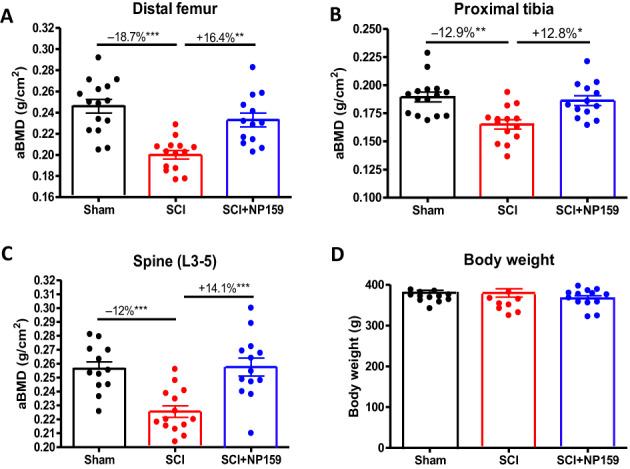
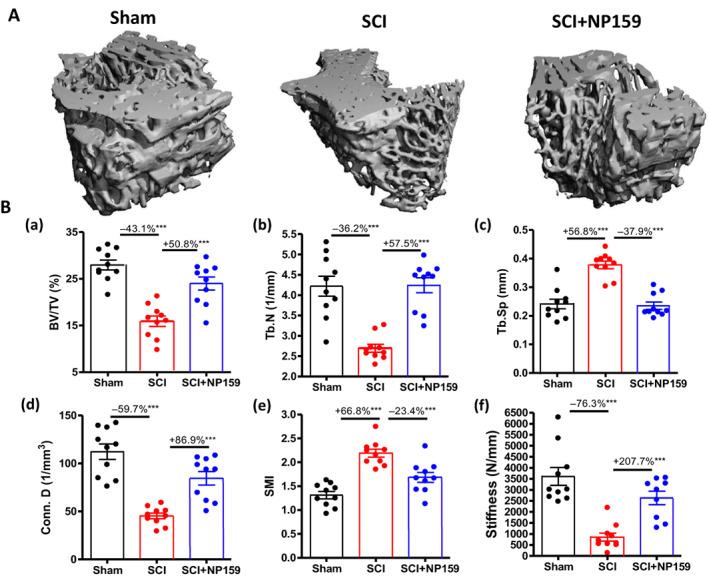
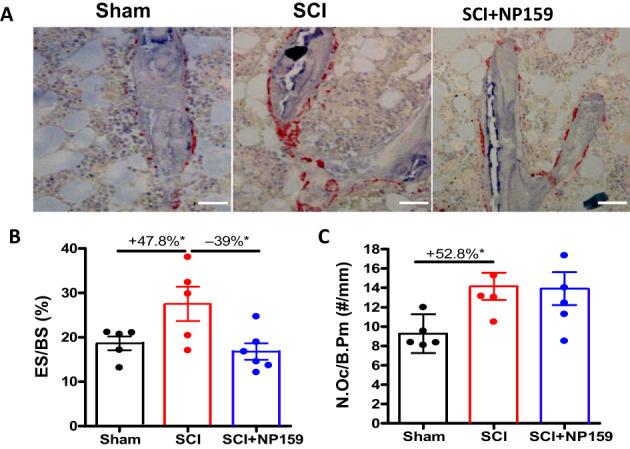
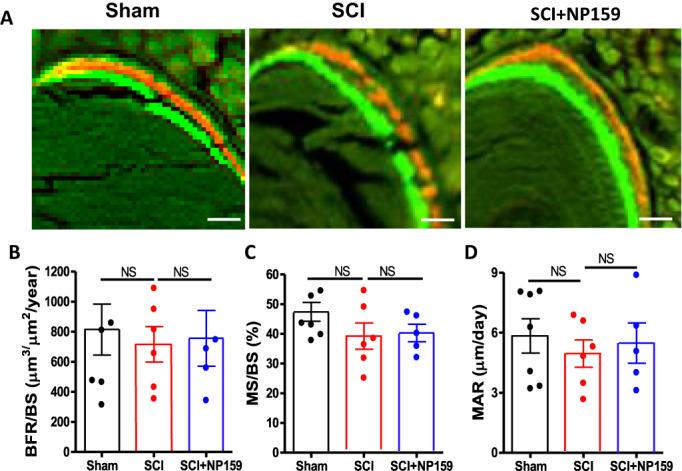
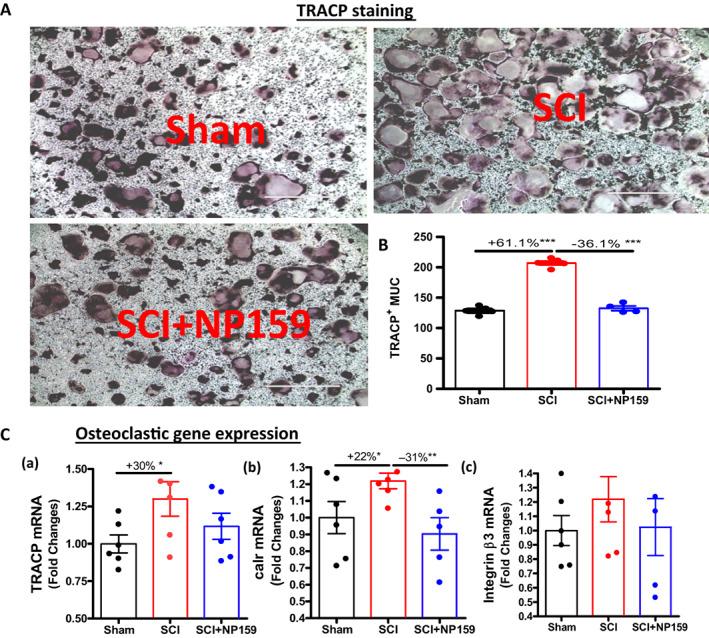
Rapid and extensive sublesional bone loss after spinal cord injury (SCI) is a difficult medical problem that has been refractory to available interventions except the antiresorptive agent denosumab (DMAB). While DMAB has shown some efficacy in inhibiting bone loss, its concurrent inhibition of bone formation limits its use. Sialic acid-binding immunoglobulin-like lectin (Siglec)-15 is expressed on the cell surface of mature osteoclasts. Anti-Siglec-15 antibody (Ab) has been shown to inhibit osteoclast maturation and bone resorption while maintaining osteoblast activity, which is distinct from current antiresorptive agents that inhibit the activity of both osteoclasts and osteoblasts. The goal of the present study is to test a Siglec-15 Ab (NP159) as a new treatment option to prevent bone loss in an acute SCI model. To this end, 4-month-old male Wistar rats underwent complete spinal cord transection and were treated with either vehicle or NP159 at 20 mg/kg once every 2 weeks for 8 weeks. SCI results in significant decreases in bone mineral density (BMD, -18.7%), trabecular bone volume (-43.1%), trabecular connectivity (-59.7%), and bone stiffness (-76.3%) at the distal femur. Treatment with NP159 almost completely prevents the aforementioned deterioration of bone after SCI. Blood and histomorphometric analyses revealed that NP159 is able to greatly inhibit bone resorption while maintaining bone formation after acute SCI. In ex vivo cultures of bone marrow cells, NP159 reduces osteoclastogenesis while increasing osteoblastogenesis. In summary, treatment with NP159 almost fully prevents sublesional loss of BMD and metaphysis trabecular bone volume and preserves bone strength in a rat model of acute SCI. Because of its unique ability to reduce osteoclastogenesis and bone resorption while promoting osteoblastogenesis to maintain bone formation, Siglec-15 Ab may hold greater promise as a therapeutic agent, compared with the exclusively antiresorptive or anabolic agents that are currently used, in mitigating the striking bone loss that occurs after SCI or other conditions associated with severe immobilization. © 2023 The Authors. published by Wiley Periodicals LLC on behalf of American Society for Bone and Mineral Research. This article has been contributed to by U.S. Government employees and their work is in the public domain in the USA.
脊髓损伤(SCI)后迅速而广泛的损伤部位以下骨质流失是一个棘手的医学问题,除了抗吸收药物地诺单抗(DMAB)外,现有干预措施对此均难以奏效。虽然DMAB在抑制骨质流失方面已显示出一定疗效,但其对骨形成的同时抑制作用限制了其应用。唾液酸结合免疫球蛋白样凝集素(Siglec)-15在成熟破骨细胞的细胞表面表达。抗Siglec-15抗体(Ab)已被证明可抑制破骨细胞成熟和骨吸收,同时维持成骨细胞活性,这与目前抑制破骨细胞和成骨细胞活性的抗吸收药物不同。本研究的目的是在急性SCI模型中测试Siglec-15 Ab(NP159)作为预防骨质流失的新治疗选择。为此,对4月龄雄性Wistar大鼠进行完全脊髓横断,并以载体或20mg/kg的NP159每2周治疗1次,共治疗8周。SCI导致股骨远端骨矿物质密度(BMD,-18.7%)、小梁骨体积(-43.1%)、小梁连接性(-59.7%)和骨硬度(-76.3%)显著降低。NP159治疗几乎完全防止了SCI后上述骨质的恶化。血液和组织形态计量学分析表明,NP159能够在急性SCI后极大地抑制骨吸收,同时维持骨形成。在骨髓细胞的体外培养中,NP159减少破骨细胞生成,同时增加成骨细胞生成。总之,在急性SCI大鼠模型中,NP159治疗几乎完全防止了损伤部位以下BMD和干骺端小梁骨体积的丢失,并保留了骨强度。由于其具有独特的减少破骨细胞生成和骨吸收、同时促进成骨细胞生成以维持骨形成的能力,与目前使用纯抗吸收或促合成代谢药物相比,Siglec-15 Ab在减轻SCI或其他与严重制动相关疾病后发生的显著骨质流失方面可能更有希望成为一种治疗药物。© 2023作者。由Wiley Periodicals LLC代表美国骨与矿物质研究学会出版。本文由美国政府雇员贡献,在美国其作品属于公共领域。


 Zotero 插件