
参与异生物质解毒和抗氧化保护的基因单核苷酸多态性与有机氯农药对阿拉木图地区人群长期影响之间关联的病例对照研究。
Case-Control Study of the Association between Single Nucleotide Polymorphisms of Genes Involved in Xenobiotic Detoxification and Antioxidant Protection with the Long-Term Influence of Organochlorine Pesticides on the Population of the Almaty Region.
作者信息
Altynova Nazym, Khamdiyeva Ozada, Garshin Aleksandr, Baratzhanova Gulminyam, Amirgaliyeva Almira, Seisenbayeva Akerke, Abylkassymova Gulnar, Yergali Kanagat, Tolebaeva Anar, Skvortsova Liliya, Zhunussova Gulnur, Bekmanov Bakhytzhan, Cakir-Kiefer Céline, Djansugurova Leyla
机构信息
Institute of Genetics and Physiology, Al-Farabi Avenue 93, Almaty 050060, Kazakhstan.
Faculty of Biology and Biotechnology, Al-Farabi Kazakh National University, Al-Farabi Avenue 71, Almaty 050040, Kazakhstan.
出版信息
Toxics. 2023 Nov 21;11(12):948. doi: 10.3390/toxics11120948.
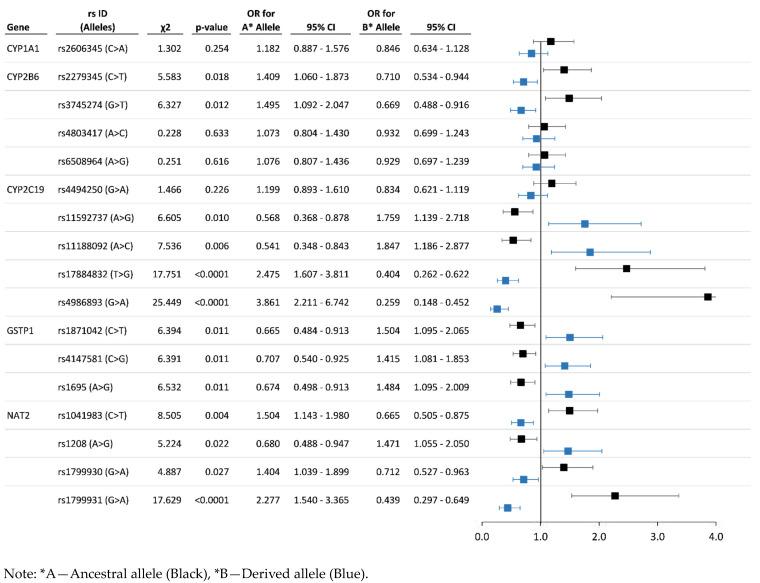
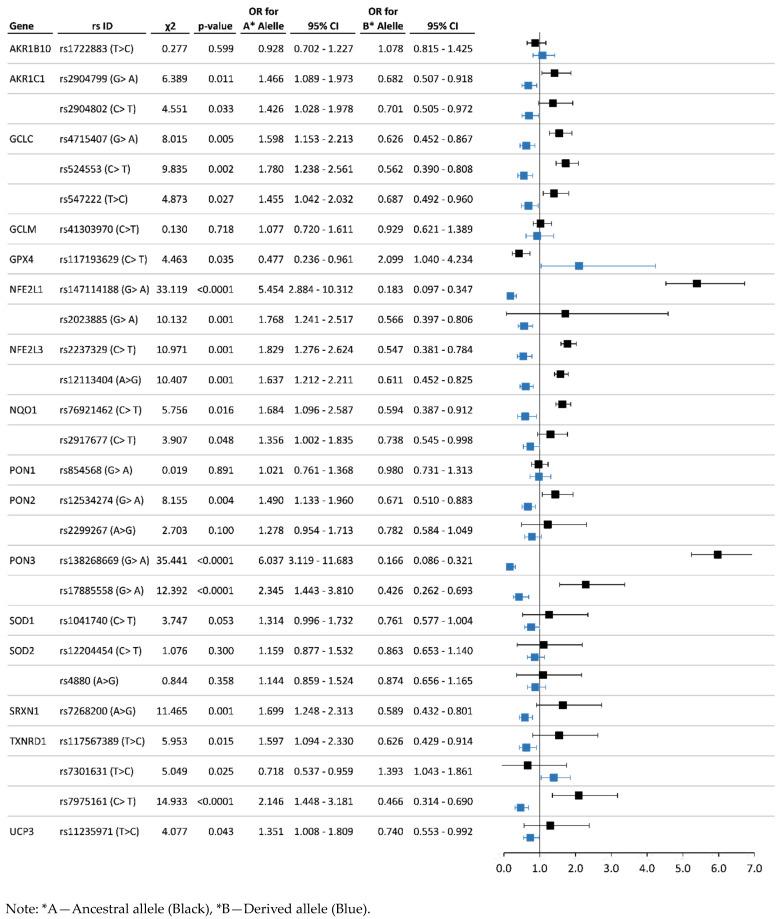
The association of genetic polymorphisms with the individual sensitivity of humans to the action of pesticide pollution is being actively studied in the world. The aim of this study was a molecular epidemiological analysis of candidate polymorphisms of genes involved in pesticide metabolism, detoxification, and antioxidant protection. Some of the selected polymorphisms also relate to susceptibility to cancer and cardiovascular, respiratory, and immune system diseases in individuals exposed to pesticides for a long time. For a case-control study of a unique cohort of people exposed to organochlorine pesticides for 10 years or more were chosen, a control cohort was selected that matched with the experimental group by the main population characteristics. PCR-PRLF and genome-wide microarray genotyping (GWAS) methods were used. We identified 17 polymorphisms of xenobiotic detoxification genes and 27 polymorphisms of antioxidant defense genes, which had a significantly high statistical association with the negative impact of chronic pesticide intoxication on human health. We also found 17 polymorphisms of xenobiotic detoxification genes and 12 polymorphisms of antioxidant defense genes that have a protective effect. Data obtained added to the list of potential polymorphisms that define a group at high risk or resistant to the negative effects of pesticides.
世界各国正在积极研究基因多态性与人类对农药污染作用的个体敏感性之间的关联。本研究的目的是对参与农药代谢、解毒和抗氧化保护的基因的候选多态性进行分子流行病学分析。一些选定的多态性也与长期接触农药的个体对癌症、心血管疾病、呼吸系统疾病和免疫系统疾病的易感性有关。对于一项病例对照研究,选取了一组接触有机氯农药达10年或更长时间的独特人群,选择了一个在主要人群特征上与实验组相匹配的对照队列。使用了PCR-PRLF和全基因组微阵列基因分型(GWAS)方法。我们鉴定出17种外源性解毒基因多态性和27种抗氧化防御基因多态性,它们与慢性农药中毒对人类健康的负面影响具有显著高度的统计学关联。我们还发现17种外源性解毒基因多态性和12种抗氧化防御基因多态性具有保护作用。所获得的数据补充了潜在多态性的清单,这些多态性定义了对农药负面影响高风险或有抗性的群体。



 Zotero 插件