
AKR1B10,引发严重急性呼吸综合征冠状病毒 2 型细胞因子风暴的因素之一。
AKR1B10, One of the Triggers of Cytokine Storm in SARS-CoV2 Severe Acute Respiratory Syndrome.
机构信息
Institute for Advanced Biosciences-UGA-INSERM U1209-CNRS UMR 5309, 38700 La Tronche, France.
Laboratoire BEP (Biochimie des Enzymes et les Protéines), Institut de Biologie et de Pathologie, CHU Grenoble Alpes, 38700 La Tronche, France.
出版信息
Int J Mol Sci. 2022 Feb 8;23(3):1911. doi: 10.3390/ijms23031911.
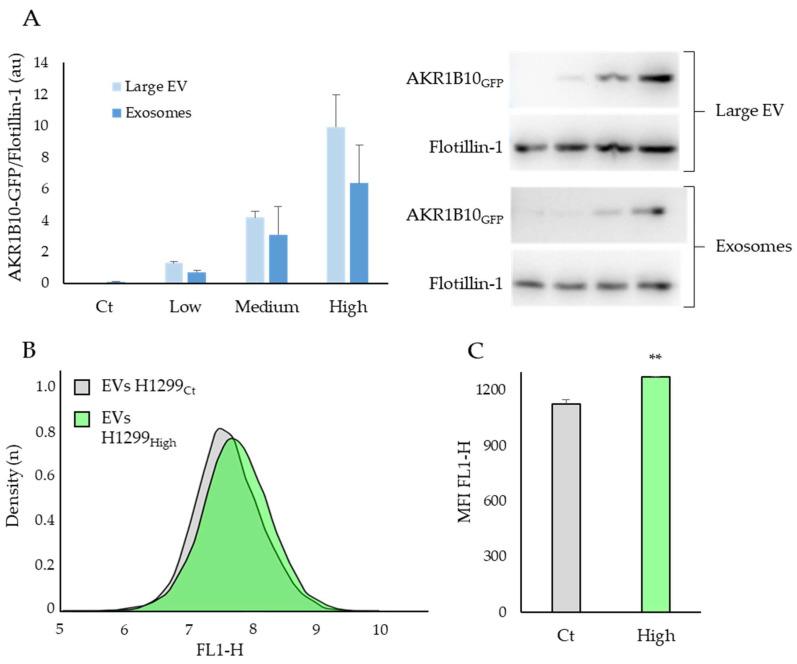
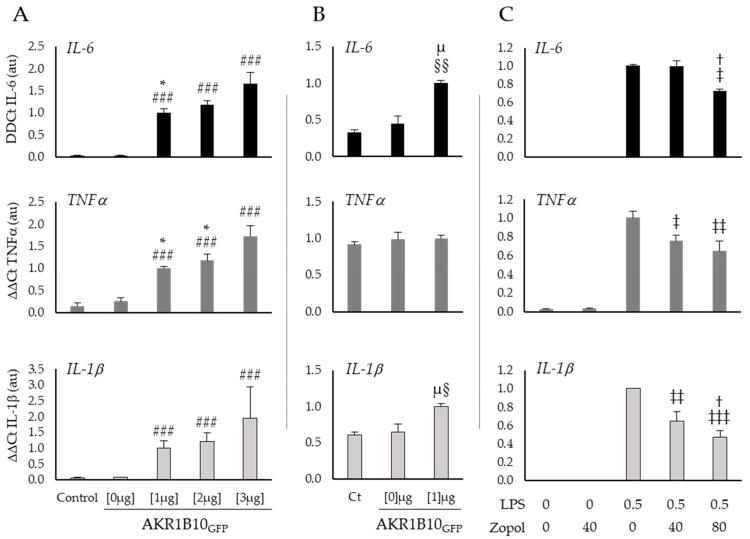
Preventing the cytokine storm observed in COVID-19 is a crucial goal for reducing the occurrence of severe acute respiratory failure and improving outcomes. Here, we identify Aldo-Keto Reductase 1B10 (AKR1B10) as a key enzyme involved in the expression of pro-inflammatory cytokines. The analysis of transcriptomic data from lung samples of patients who died from COVID-19 demonstrates an increased expression of the gene encoding AKR1B10. Measurements of the AKR1B10 protein in sera from hospitalised COVID-19 patients suggests a significant link between AKR1B10 levels and the severity of the disease. In macrophages and lung cells, the over-expression of AKR1B10 induces the expression of the pro-inflammatory cytokines Interleukin-6 (, Interleukin-1β () and Tumor Necrosis Factor a (), supporting the biological plausibility of an AKR1B10 involvement in the COVID-19-related cytokine storm. When macrophages were stressed by lipopolysaccharides (LPS) exposure and treated by Zopolrestat, an AKR1B10 inhibitor, the LPS-induced production of , , and is significantly reduced, reinforcing the hypothesis that the pro-inflammatory expression of cytokines is AKR1B10-dependant. Finally, we also show that AKR1B10 can be secreted and transferred via extracellular vesicles between different cell types, suggesting that this protein may also contribute to the multi-organ systemic impact of COVID-19. These experiments highlight a relationship between AKR1B10 production and severe forms of COVID-19. Our data indicate that AKR1B10 participates in the activation of cytokines production and suggest that modulation of AKR1B10 activity might be an actionable pharmacological target in COVID-19 management.
预防 COVID-19 中观察到的细胞因子风暴是降低严重急性呼吸衰竭发生率和改善预后的关键目标。在这里,我们鉴定出醛酮还原酶 1B10(AKR1B10)是参与促炎细胞因子表达的关键酶。对死于 COVID-19 的患者肺组织样本的转录组数据分析表明,编码 AKR1B10 的基因表达增加。对住院 COVID-19 患者血清中 AKR1B10 蛋白的测量表明,AKR1B10 水平与疾病严重程度之间存在显著关联。在巨噬细胞和肺细胞中,AKR1B10 的过表达诱导促炎细胞因子白细胞介素 6 (IL-6)、白细胞介素 1β (IL-1β) 和肿瘤坏死因子 a (TNF-a) 的表达,支持 AKR1B10 参与 COVID-19 相关细胞因子风暴的生物学合理性。当巨噬细胞受到脂多糖 (LPS) 暴露的刺激并被 AKR1B10 抑制剂 Zopolrestat 处理时,LPS 诱导的 IL-6、IL-1β 和 TNF-a 的产生显著减少,这强化了这样一种假设,即细胞因子的促炎表达依赖于 AKR1B10。最后,我们还表明 AKR1B10 可以通过细胞外囊泡在不同细胞类型之间分泌和转移,表明该蛋白也可能导致 COVID-19 的多器官系统性影响。这些实验强调了 AKR1B10 产生与 COVID-19 严重形式之间的关系。我们的数据表明 AKR1B10 参与了细胞因子产生的激活,并表明 AKR1B10 活性的调节可能是 COVID-19 管理中的一个可行的药物靶点。


 Zotero 插件