
炎症诱导的上皮-间充质转化与肺癌进展的关联:五环三萜类化合物治疗的路线图。
The Nexus of Inflammation-Induced Epithelial-Mesenchymal Transition and Lung Cancer Progression: A Roadmap to Pentacyclic Triterpenoid-Based Therapies.
机构信息
Institute of Chemical Biology and Fundamental Medicine, Siberian Branch of the Russian Academy of Sciences, 630090 Novosibirsk, Russia.
Faculty of Natural Sciences, Novosibirsk State University, 630090 Novosibirsk, Russia.
出版信息
Int J Mol Sci. 2023 Dec 10;24(24):17325. doi: 10.3390/ijms242417325.
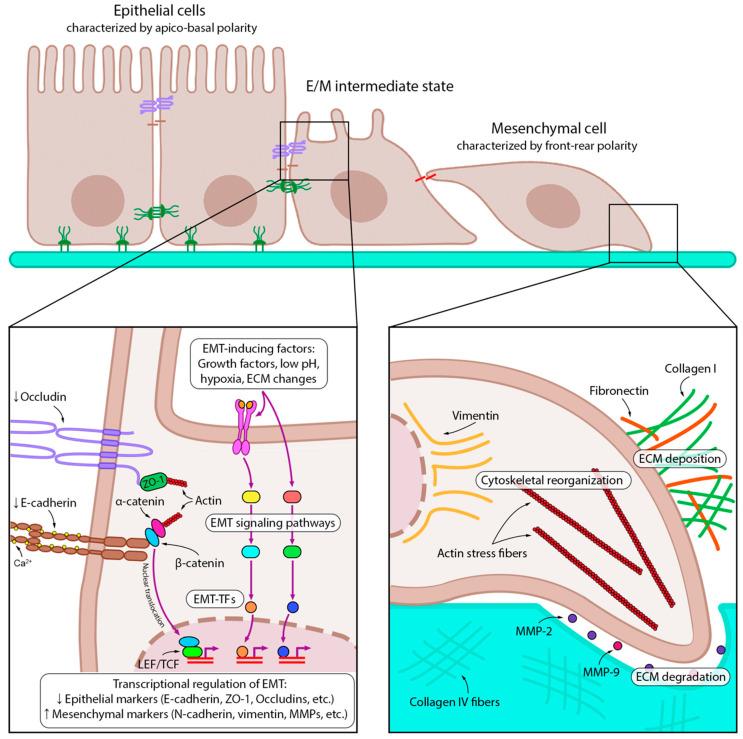
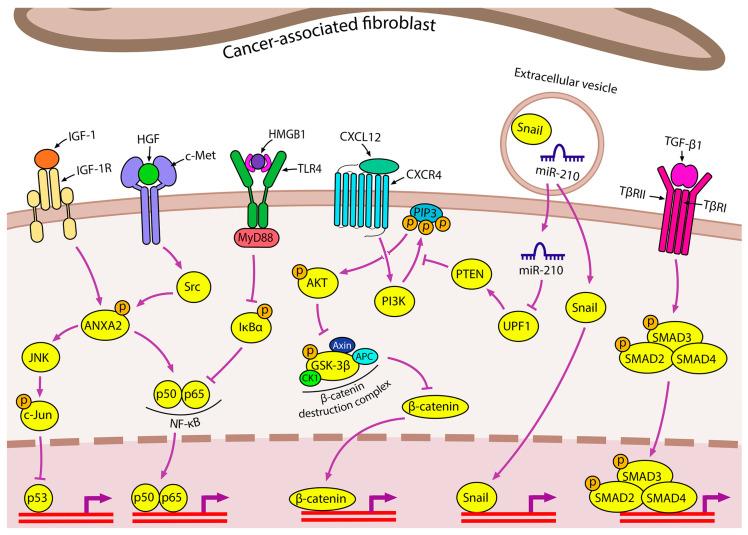
Lung cancer is the leading cause of cancer-related death worldwide. Its high mortality is partly due to chronic inflammation that accompanies the disease and stimulates cancer progression. In this review, we analyzed recent studies and highlighted the role of the epithelial-mesenchymal transition (EMT) as a link between inflammation and lung cancer. In the inflammatory tumor microenvironment (iTME), fibroblasts, macrophages, granulocytes, and lymphocytes produce inflammatory mediators, some of which can induce EMT. This leads to increased invasiveness of tumor cells and self-renewal of cancer stem cells (CSCs), which are associated with metastasis and tumor recurrence, respectively. Based on published data, we propose that inflammation-induced EMT may be a potential therapeutic target for the treatment of lung cancer. This prospect is partially realized in the development of EMT inhibitors based on pentacyclic triterpenoids (PTs), described in the second part of our study. PTs reduce the metastatic potential and stemness of tumor cells, making PTs promising candidates for lung cancer therapy. We emphasize that the high diversity of molecular mechanisms underlying inflammation-induced EMT far exceeds those that have been implicated in drug development. Therefore, analysis of information on the relationship between the iTME and EMT is of great interest and may provide ideas for novel treatment approaches for lung cancer.
肺癌是全球癌症相关死亡的主要原因。其高死亡率部分归因于伴随疾病发生的慢性炎症,这种炎症刺激了癌症的进展。在这篇综述中,我们分析了最近的研究,并强调了上皮-间充质转化(EMT)作为炎症和肺癌之间联系的作用。在炎症肿瘤微环境(iTME)中,成纤维细胞、巨噬细胞、粒细胞和淋巴细胞产生炎症介质,其中一些可以诱导 EMT。这导致肿瘤细胞侵袭性增加和癌症干细胞(CSC)自我更新,分别与转移和肿瘤复发相关。基于已发表的数据,我们提出炎症诱导的 EMT 可能是治疗肺癌的潜在治疗靶点。这一前景在我们研究的第二部分中描述的基于五环三萜(PTs)的 EMT 抑制剂的开发中部分得到实现。PTs 降低了肿瘤细胞的转移潜力和干细胞特性,使 PTs 成为治疗肺癌的有前途的候选药物。我们强调,炎症诱导的 EMT 的分子机制多样性远远超过了那些已经被牵连到药物开发中的机制。因此,分析 iTME 和 EMT 之间关系的信息具有重要意义,并可能为肺癌的新治疗方法提供思路。




 Zotero 插件