
通过靶向昼夜节律钟系统改善中风预后。
Towards improving the prognosis of stroke through targeting the circadian clock system.
机构信息
Department of Cerebrovascular Diseases, The Second Affiliated Hospital of Zhengzhou University, Zhengzhou, China.
Hotchkiss Brain Institute and Department of Clinical Neurosciences, University of Calgary, Calgary, Alberta, Canada.
出版信息
Int J Biol Sci. 2024 Jan 1;20(2):403-413. doi: 10.7150/ijbs.88370. eCollection 2024.
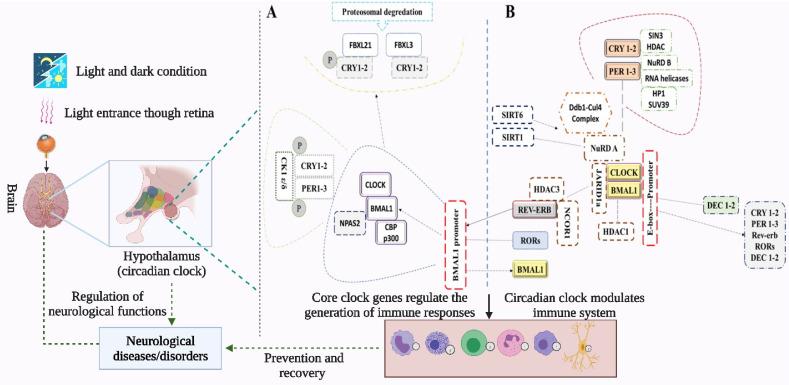
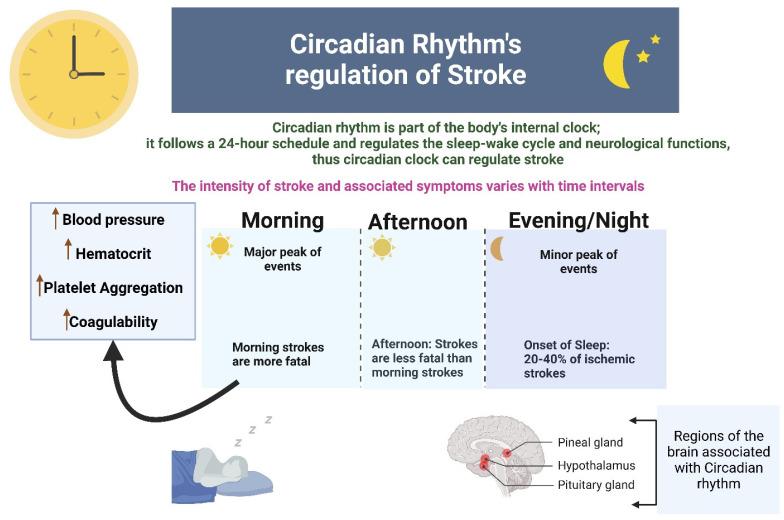
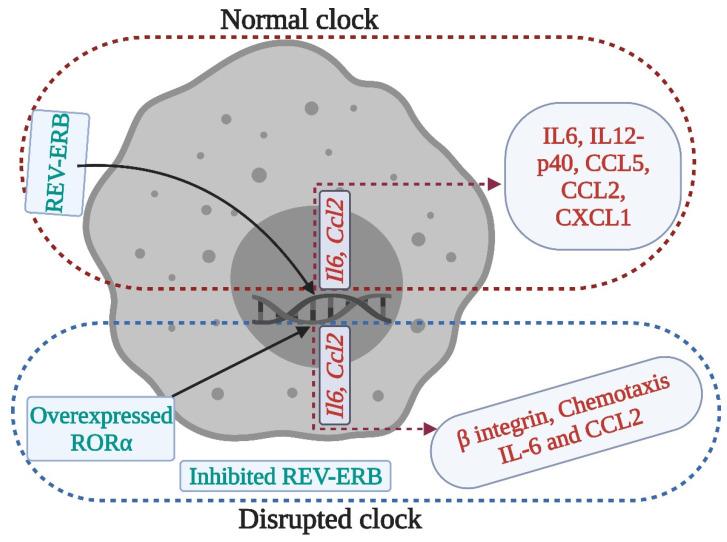
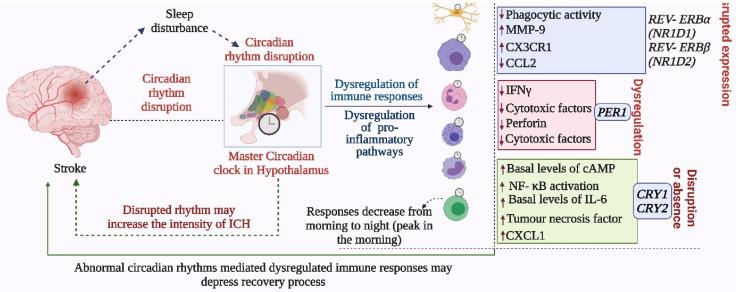
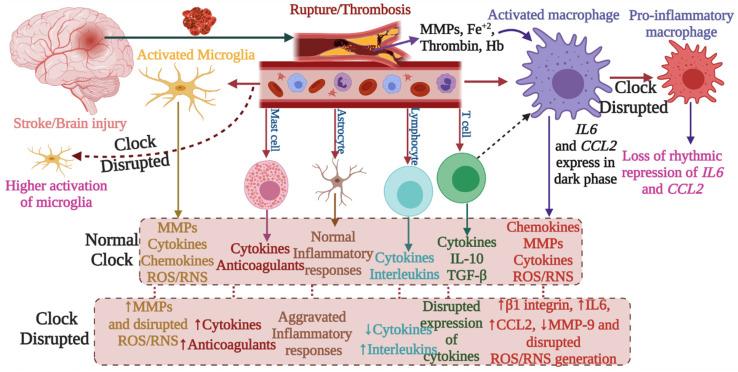
Rhythmicity of the circadian system is a 24-hour period, driven by transcription-translation feedback loops of circadian clock genes. The central circadian pacemaker in mammals is located in the hypothalamic suprachiasmatic nucleus (SCN), which controls peripheral circadian clocks. In general, most physiological processes are regulated by the circadian system, which is modulated by environmental cues such as exposure to light and/or dark, temperature, and the timing of sleep/wake and food intake. The chronic circadian disruption caused by shift work, jetlag, and/or irregular sleep-wake cycles has long-term health consequences. Its dysregulation contributes to the risk of psychiatric disorders, sleep abnormalities, hypothyroidism and hyperthyroidism, cancer, and obesity. A number of neurological conditions may be worsened by changes in the circadian clock via the SCN pacemaker. For stroke, different physiological activities such as sleep/wake cycles are disrupted due to alterations in circadian rhythms. Moreover, the immunological processes that affect the evolution and recovery processes of stroke are regulated by the circadian clock or core-clock genes. Thus, disrupted circadian rhythms may increase the severity and consequences of stroke, while readjustment of circadian clock machinery may accelerate recovery from stroke. In this manuscript, we discuss the relationship between stroke and circadian rhythms, particularly on stroke development and its recovery process. We focus on immunological and/or molecular processes linking stroke and the circadian system and suggest the circadian rhythm as a target for designing effective therapeutic strategies in stroke.
昼夜节律系统的节律是 24 小时周期,由昼夜节律钟基因的转录-翻译反馈环驱动。哺乳动物的中枢昼夜节律起搏器位于下丘脑视交叉上核(SCN),它控制着外周昼夜节律钟。一般来说,大多数生理过程都受昼夜节律系统的调节,该系统受环境线索的调节,如暴露在光和/或暗、温度、睡眠/觉醒和进食时间。轮班工作、时差和/或不规则的睡眠-觉醒周期引起的慢性昼夜节律紊乱会对长期健康产生影响。其失调会增加患精神障碍、睡眠异常、甲状腺功能减退症和甲状腺功能亢进症、癌症和肥胖症的风险。通过 SCN 起搏器,许多神经疾病的状况可能会因昼夜节律时钟的变化而恶化。对于中风,由于昼夜节律的改变,不同的生理活动,如睡眠/觉醒周期被打乱。此外,影响中风演变和恢复过程的免疫过程受昼夜节律钟或核心钟基因的调节。因此,昼夜节律紊乱可能会增加中风的严重程度和后果,而昼夜节律钟机制的调整可能会加速中风的恢复。在本文中,我们讨论了中风与昼夜节律之间的关系,特别是在中风的发展及其恢复过程中。我们关注将中风与昼夜节律系统联系起来的免疫和/或分子过程,并提出将昼夜节律作为设计中风有效治疗策略的靶点。

 Zotero 插件