
人类寿命和性别特异性疾病抵御能力模式:一项回顾性的全人群队列研究。
Human lifespan and sex-specific patterns of resilience to disease: a retrospective population-wide cohort study.
机构信息
Catalan Health Institute (ICS), Lleida Research Support Unit (USR), Fundació Institut Universitari per a la Recerca en Atenció Primària de Salut Jordi Gol i Gurina (IDIAP JGol), Lleida, Spain.
Department of Experimental Medicine, University of Lleida-Lleida Biomedical Research Institute (UdL-IRBLleida), Lleida, Spain.
出版信息
BMC Med. 2024 Jan 8;22(1):17. doi: 10.1186/s12916-023-03206-w.
BACKGROUND
Slower paces of aging are related to lower risk of developing diseases and premature death. Therefore, the greatest challenge of modern societies is to ensure that the increase in lifespan is accompanied by an increase in health span. To better understand the differences in human lifespan, new insight concerning the relationship between lifespan and the age of onset of diseases, and the ability to avoid them is needed. We aimed to comprehensively study, at a population-wide level, the sex-specific disease patterns associated with human lifespan.
METHODS
Observational data from the SIDIAP database of a cohort of 482,058 individuals that died in Catalonia (Spain) at ages over 50 years old between the 1st of January 2006 and the 30th of June 2022 were included. The time to the onset of the first disease in multiple organ systems, the prevalence of escapers, the percentage of life free of disease, and their relationship with lifespan were evaluated considering sex-specific traits.
RESULTS
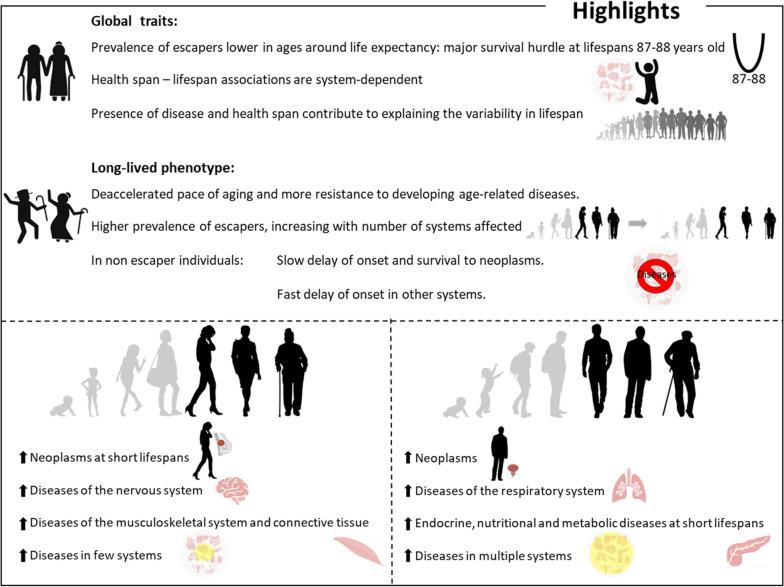
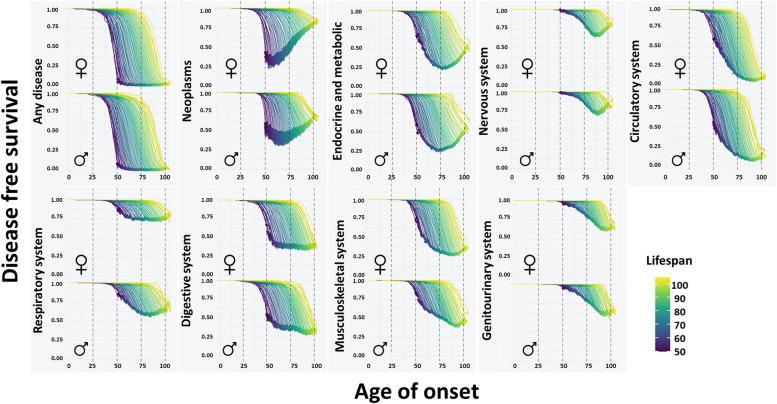
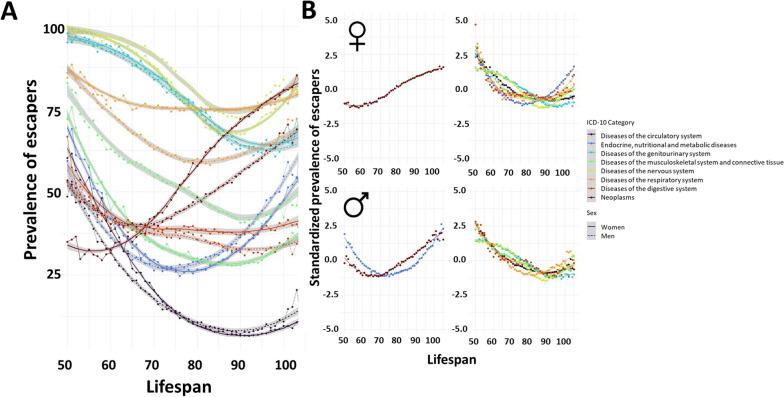
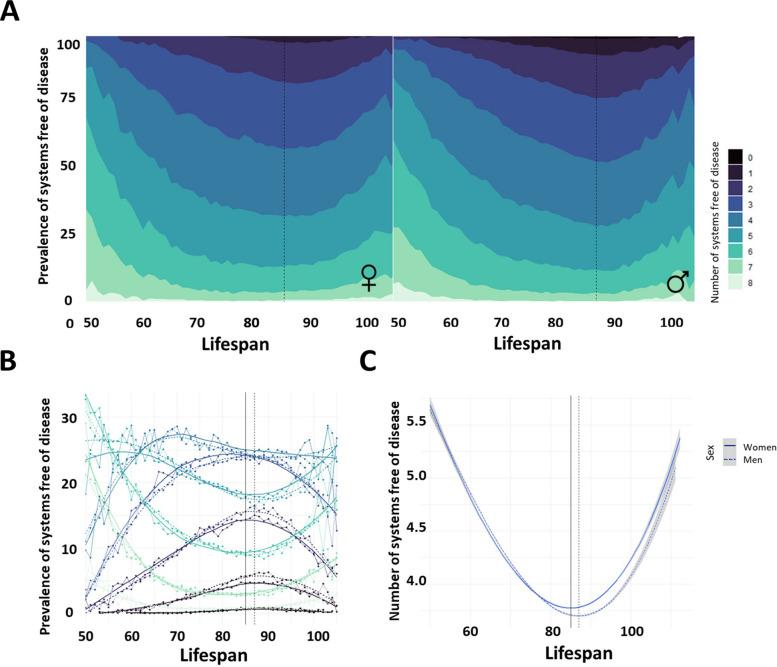
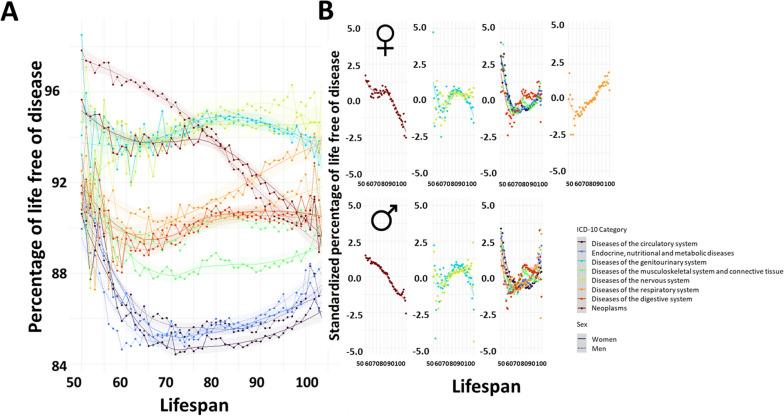
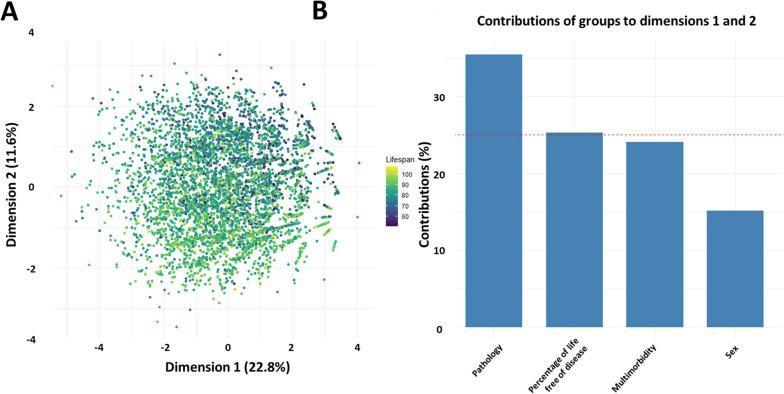
In the study cohort, 50.4% of the participants were women and the mean lifespan was 83 years. The results show novel relationships between the age of onset of disease, health span, and lifespan. The key findings include: Firstly, the onset of both single and multisystem diseases is progressively delayed as lifespan increases. Secondly, the prevalence of escapers is lower in lifespans around life expectancy. Thirdly, the number of disease-free systems decreases until individuals reach lifespans around 87-88 years old, at which point it starts to increase. Furthermore, long-lived women are less susceptible to multisystem diseases. The associations between health span and lifespan are system-dependent, and disease onset and the percentage of life spent free of disease at the time of death contribute to explaining lifespan variability. Lastly, the study highlights significant system-specific disparities between women and men.
CONCLUSIONS
Health interventions focused on delaying aging and age-related diseases should be the most effective in increasing not only lifespan but also health span. The findings of this research highlight the relevance of Electronic Health Records in studying the aging process and open up new possibilities in age-related disease prevention that should assist primary care professionals in devising individualized care and treatment plans.
背景
衰老速度较慢与降低患病和早逝风险有关。因此,现代社会面临的最大挑战是确保寿命的延长伴随着健康寿命的延长。为了更好地理解人类寿命的差异,我们需要新的视角来理解寿命与疾病发病年龄之间的关系,以及避免这些疾病的能力。我们旨在全面研究人口范围内与人类寿命相关的性别特异性疾病模式。
方法
本研究纳入了西班牙加泰罗尼亚地区年龄在 50 岁以上、2006 年 1 月 1 日至 2022 年 6 月 30 日期间在该地区死亡的 482058 名个体的 SIDIAP 数据库的观察性数据。考虑到性别特异性特征,评估了多个器官系统中首次发病的时间、逃逸者的患病率、无疾病生命的百分比及其与寿命的关系。
结果
在研究队列中,50.4%的参与者为女性,平均寿命为 83 岁。研究结果揭示了疾病发病年龄、健康寿命和寿命之间的新关系。主要发现包括:首先,随着寿命的增加,单一和多系统疾病的发病年龄逐渐推迟。其次,在接近预期寿命的寿命中,逃逸者的患病率较低。第三,无疾病系统的数量减少,直到个体达到 87-88 岁左右的寿命,此时开始增加。此外,长寿女性较少患多系统疾病。健康寿命与寿命之间的关联是系统依赖性的,疾病发病和死亡时无疾病生命的百分比有助于解释寿命的可变性。最后,该研究强调了女性和男性之间存在显著的系统特异性差异。
结论
专注于延缓衰老和与年龄相关疾病的健康干预措施应该是最有效的,不仅可以延长寿命,还可以延长健康寿命。本研究的结果强调了电子健康记录在研究衰老过程中的重要性,并为预防与年龄相关的疾病开辟了新的可能性,这应该有助于初级保健专业人员制定个性化的护理和治疗计划。
 Zotero 插件