
在重新供应磷酸盐的悬浮细胞和幼苗中胞质葡萄糖-6-磷酸脱氢酶同工酶G6PD6的体内磷酸化作用
In Vivo Phosphorylation of the Cytosolic Glucose-6-Phosphate Dehydrogenase Isozyme G6PD6 in Phosphate-Resupplied Suspension Cells and Seedlings.
作者信息
Smith Milena A, Benidickson Kirsten H, Plaxton William C
机构信息
Department of Biology, Queen's University, Kingston, ON K7L 3N6, Canada.
出版信息
Plants (Basel). 2023 Dec 21;13(1):31. doi: 10.3390/plants13010031.
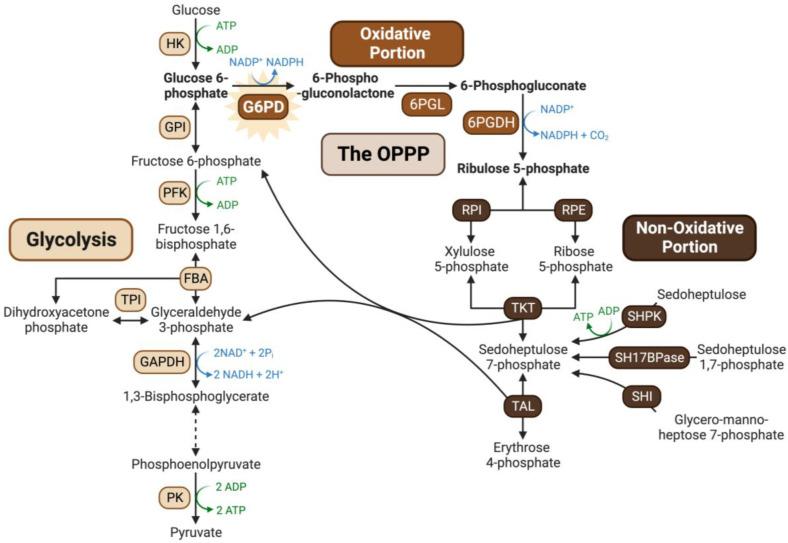
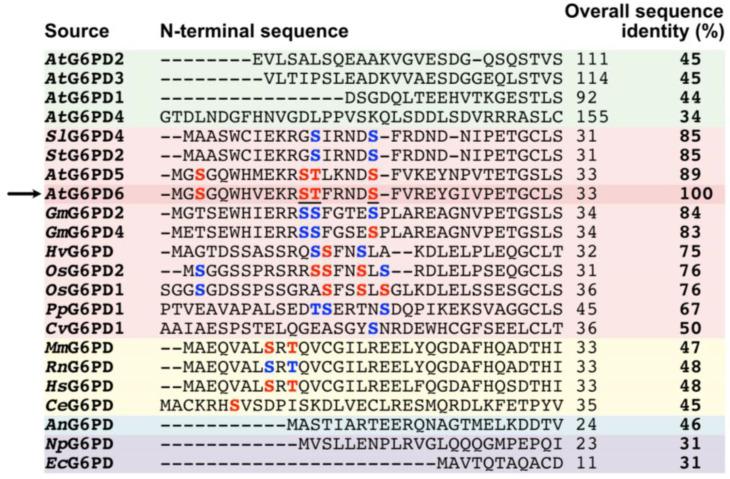
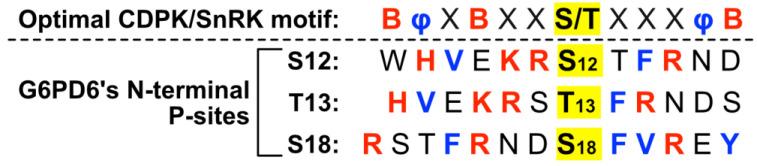
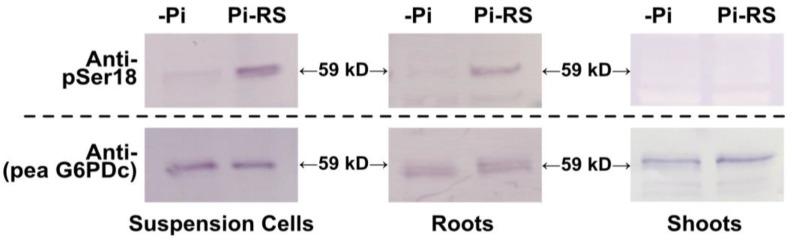
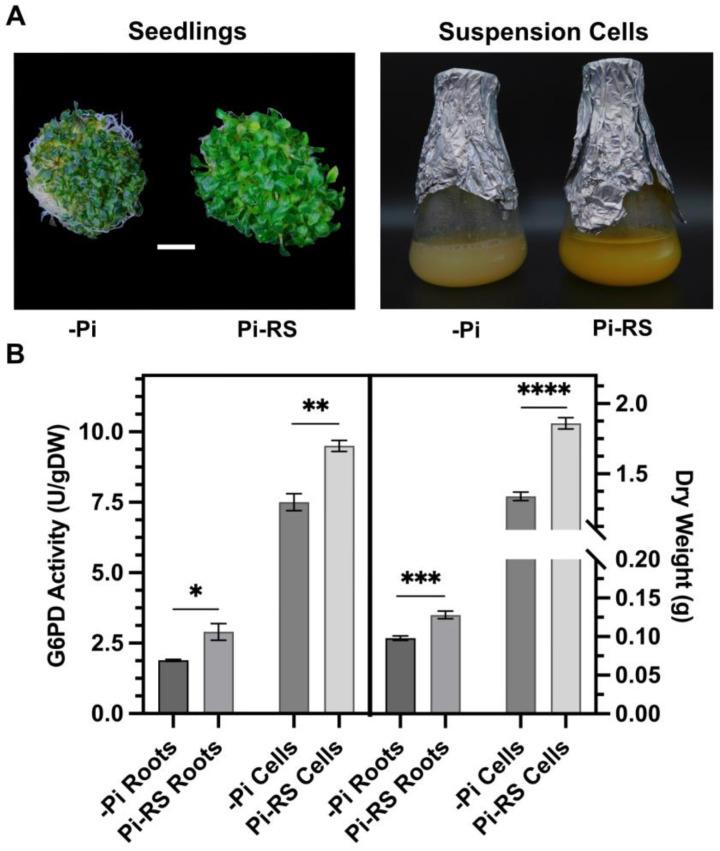
Glucose-6-phosphate dehydrogenase (G6PD) catalyzes the first committed step of the oxidative pentose phosphate pathway (OPPP). Our recent phosphoproteomics study revealed that the cytosolic G6PD6 isozyme became hyperphosphorylated at Ser12, Thr13 and Ser18, 48 h following phosphate (Pi) resupply to Pi-starved (-Pi) cell cultures. The aim of the present study was to assess whether G6PD6 phosphorylation also occurs in shoots or roots following Pi resupply to -Pi seedlings, and to investigate its relationship with G6PD activity. Interrogation of phosphoproteomic databases indicated that N-terminal, multi-site phosphorylation of G6PD6 and its orthologs is quite prevalent. However, the functions of these phosphorylation events remain unknown. Immunoblotting with an anti-(pSer18 phosphosite-specific G6PD6) antibody confirmed that G6PD6 from Pi-resupplied, but not -Pi, cell cultures or seedlings (i.e., roots) was phosphorylated at Ser18; this correlated with a significant increase in extractable G6PD activity, and biomass accumulation. Peptide kinase assays of Pi-resupplied cell culture extracts indicated that G6PD6 phosphorylation at Ser18 is catalyzed by a Ca-dependent protein kinase (CDPK), which correlates with the 'CDPK-like' targeting motif that flanks Ser18. Our results support the hypothesis that N-terminal phosphorylation activates G6PD6 to enhance OPPP flux and thus the production of reducing power (i.e., NADPH) and C-skeletons needed to establish the rapid resumption of growth that ensures Pi-resupply to -Pi .
葡萄糖-6-磷酸脱氢酶(G6PD)催化氧化戊糖磷酸途径(OPPP)的首个关键步骤。我们最近的磷酸化蛋白质组学研究表明,在向缺磷(-Pi)的细胞培养物重新供应磷酸盐(Pi)48小时后,胞质G6PD6同工酶在Ser12、Thr13和Ser18位点发生了过度磷酸化。本研究的目的是评估在向缺磷(-Pi)的幼苗重新供应Pi后,G6PD6磷酸化是否也会在地上部或根部发生,并研究其与G6PD活性的关系。对磷酸化蛋白质组数据库的查询表明,G6PD6及其直系同源物的N端多位点磷酸化相当普遍。然而,这些磷酸化事件的功能仍然未知。用抗(pSer18磷酸位点特异性G6PD6)抗体进行免疫印迹证实,重新供应Pi的细胞培养物或幼苗(即根部)中的G6PD6在Ser18位点发生了磷酸化,而缺磷(-Pi)的则没有;这与可提取的G6PD活性和生物量积累的显著增加相关。对重新供应Pi的细胞培养物提取物进行的肽激酶测定表明,Ser18位点的G6PD6磷酸化由钙依赖性蛋白激酶(CDPK)催化,这与Ser18两侧的“类CDPK”靶向基序相关。我们的结果支持这样的假设,即N端磷酸化激活G6PD6以增强OPPP通量,从而产生确保向缺磷(-Pi)的植物重新供应Pi后快速恢复生长所需的还原力(即NADPH)和碳骨架。



 Zotero 插件