
聚乙二醇-壳聚糖(神经聚乙二醇)可使猪脊髓背侧完全横断后运动功能得以恢复。一项初步研究。
PEG-chitosan (Neuro-PEG) induced restoration of motor function after complete transection of the dorsal spinal cord in swine. A pilot study.
作者信息
Lebenstein-Gumovski Michael, Zharchenko Alexander, Rasueva Tanzila, Bashahanov Robert, Kovalev Dmitry A, Zhirov Andrey, Shatokhin Anton, Grin Andrey
机构信息
Department of Neurology and Neurosurgery, Stavropol State Medical University, Stavropol, Russian Federation.
Department of General Medicine, Stavropol State Medical University, Stavropol, Russian Federation.
出版信息
Surg Neurol Int. 2023 Dec 13;14:424. doi: 10.25259/SNI_928_2023. eCollection 2023.
BACKGROUND
Spinal cord injury (SCI) remains an unmet medical need. Recently, fusogens, such as polyethylene glycol (PEG), have been proven effective in restoring sensorimotor function after complete transection of the spinal cord at different levels and in different species. Here, we report on the use of a PEG-chitosan combo in a different animal model (swine).
METHODS
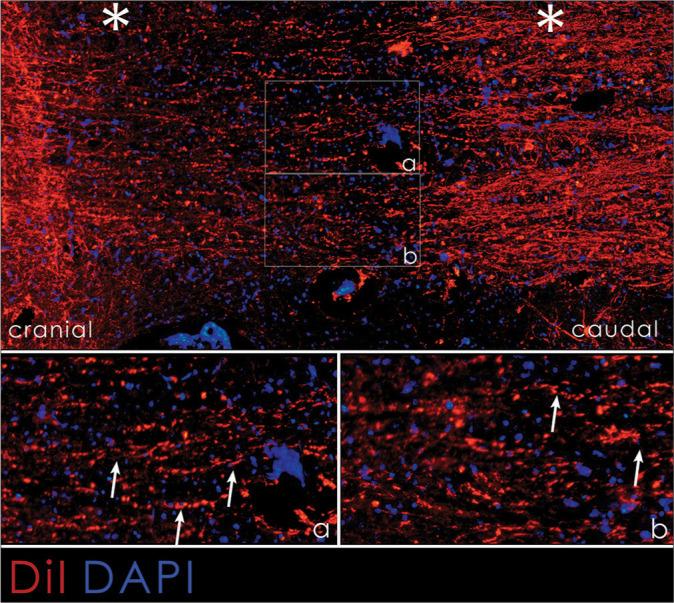
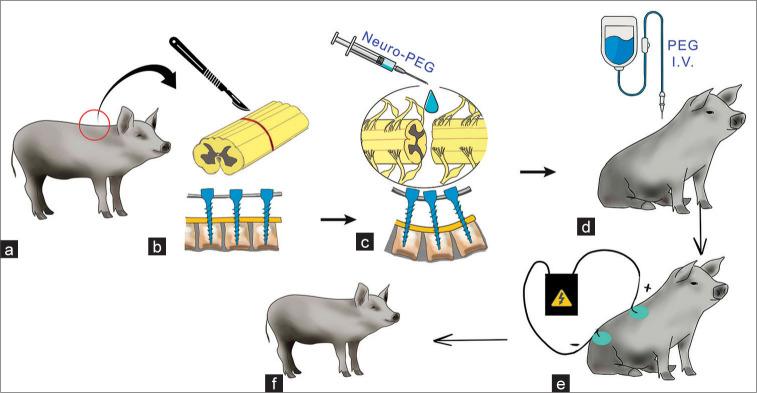
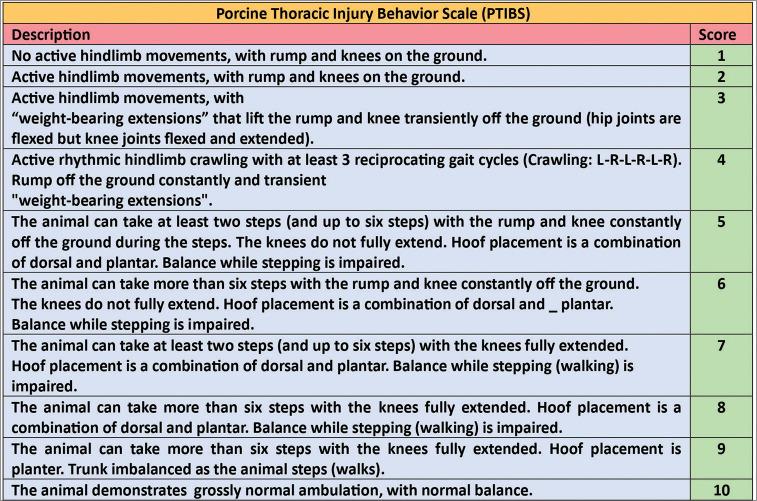
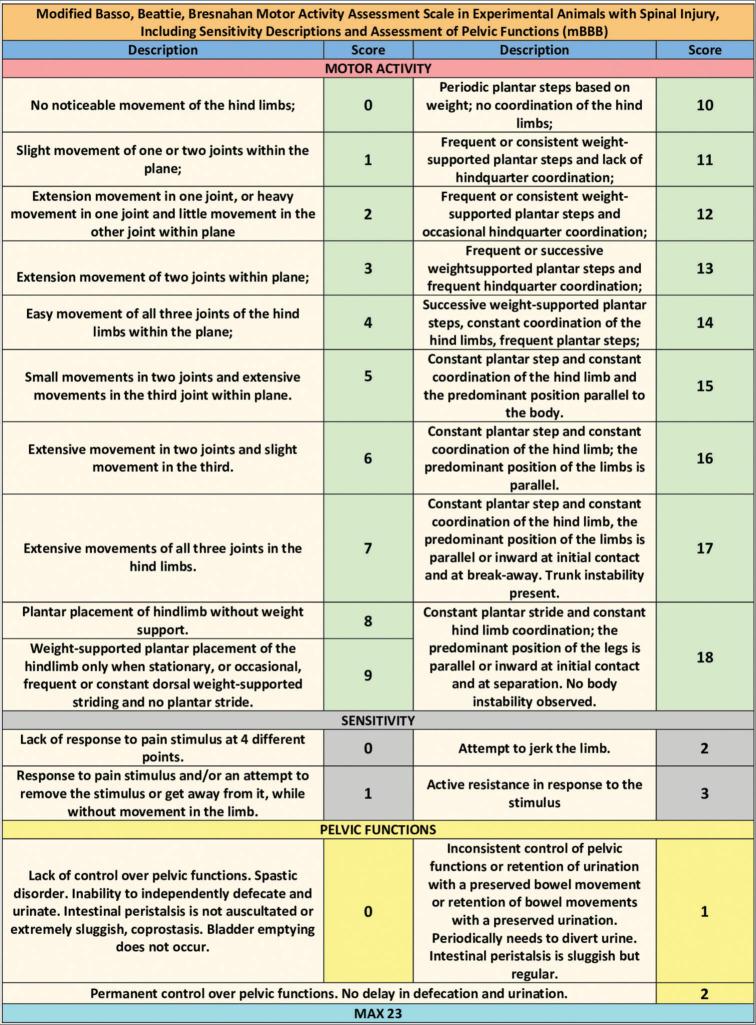
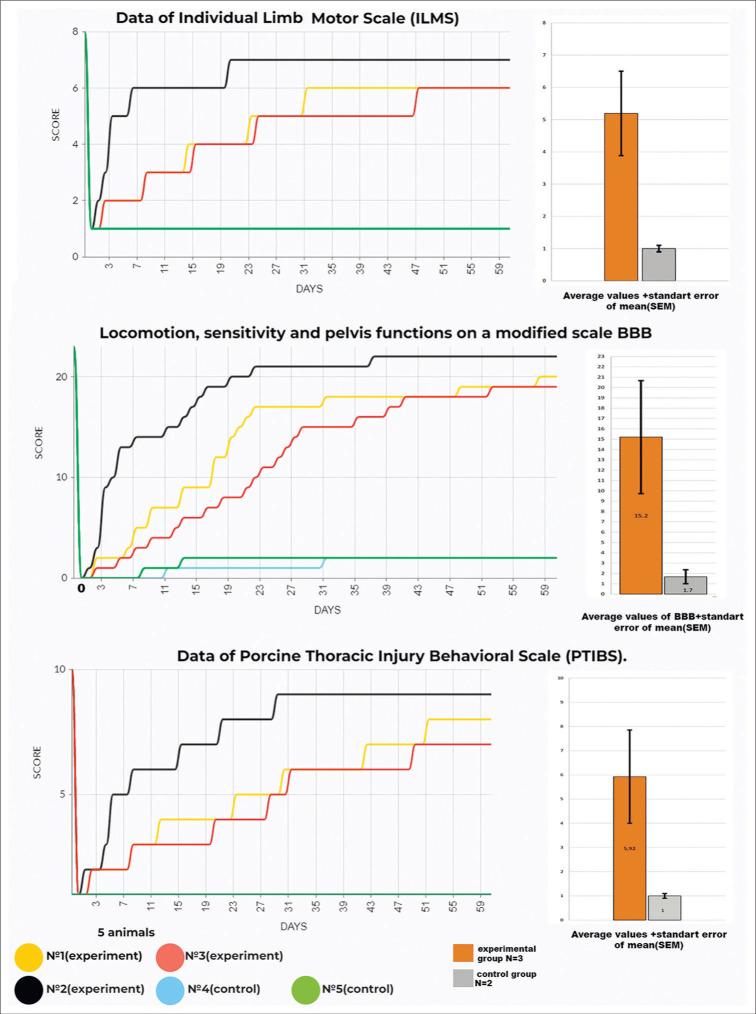
Five Hungarian Mangalica pigs were subjected to complete transection of the thoracic cord (T7-9). Three animals were treated with locally injected PEG-chitosan (Neuro-PEG) gel; two acted as controls. PEG-600 was also injected intra- and post-operatively intravenously. Animals were submitted to rehabilitation, including electrical myostimulation. Results were assessed after 60 days using the Individual Limb Motor Score, the Porcine Thoracic Spinal Cord Injured Behavioral Scale, and the modified motor Basso, Beattie, and Bresnahan scale; sensory and sphincter functions were also assessed. Animals underwent spinal cord tracing with DiI. Immunofluorescence histology included NF-200, DAPI, and a fluorochrome-conjugated secondary antibody.
RESULTS
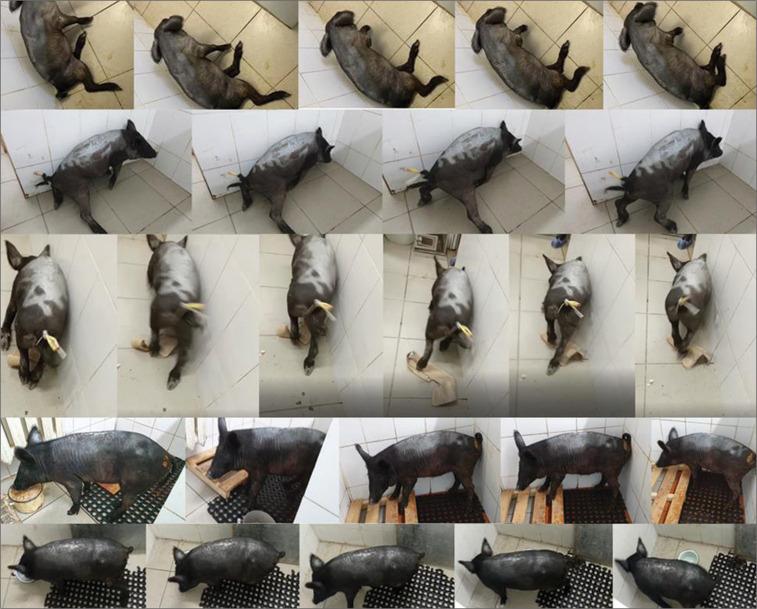
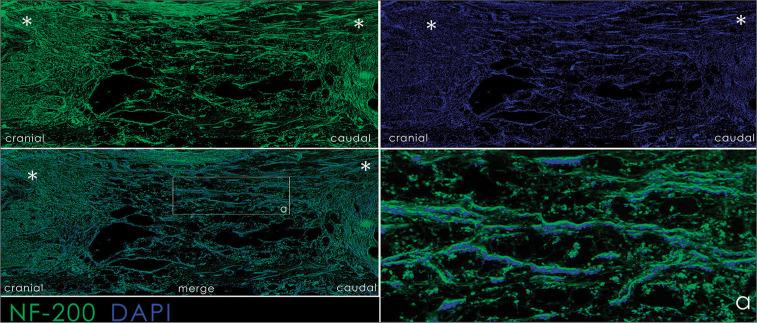
Starting on postoperative day (POD) 2, neuro-PEG-treated animals evinced the first signs of recovery, and on POD 60, they could all support their weight and were mobile. Controls never recovered any useful function. Fluorescence microscopy in the experimental group revealed axons passing through the site of injury, while degenerative post-traumatic changes were noted in controls.
CONCLUSION
Neuro-PEG affords sensorimotor recovery after complete spinal cord transection. This opens the door to human experimentation, including trials of spinal cord transplantation.
背景
脊髓损伤(SCI)仍然是尚未满足的医疗需求。最近,诸如聚乙二醇(PEG)之类的融合剂已被证明在不同水平和不同物种的脊髓完全横断后恢复感觉运动功能方面有效。在此,我们报告在一种不同的动物模型(猪)中使用PEG-壳聚糖组合的情况。
方法
对5只匈牙利曼加利察猪进行胸段脊髓(T7-9)完全横断。3只动物接受局部注射PEG-壳聚糖(Neuro-PEG)凝胶治疗;2只作为对照。术中及术后还静脉注射了PEG-600。动物接受康复治疗,包括电肌刺激。60天后使用个体肢体运动评分、猪胸段脊髓损伤行为量表以及改良的运动Basso、Beattie和Bresnahan量表评估结果;还评估了感觉和括约肌功能。用DiI对动物进行脊髓追踪。免疫荧光组织学包括NF-200、DAPI和荧光染料偶联的二抗。
结果
从术后第2天(POD)开始,接受Neuro-PEG治疗的动物出现了恢复的最初迹象,在POD 60时,它们都能够支撑体重并活动。对照组从未恢复任何有用功能。实验组的荧光显微镜检查显示轴突穿过损伤部位,而对照组则出现创伤后退行性变化。
结论
Neuro-PEG可使脊髓完全横断后实现感觉运动恢复。这为人体实验,包括脊髓移植试验打开了大门。



 Zotero 插件