
了解腰椎间盘突出症的发病机制:从临床证据到基础科学研究。
Understanding the etiopathogenesis of lumbar intervertebral disc herniation: From clinical evidence to basic scientific research.
作者信息
Zhou Minhao, Theologis Alekos A, O'Connell Grace D
机构信息
Department of Mechanical Engineering University of California, Berkeley (UC Berkeley) Berkeley California USA.
Department of Orthopaedic Surgery University of California, San Francisco (UCSF) San Francisco California USA.
出版信息
JOR Spine. 2023 Oct 18;7(1):e1289. doi: 10.1002/jsp2.1289. eCollection 2024 Mar.
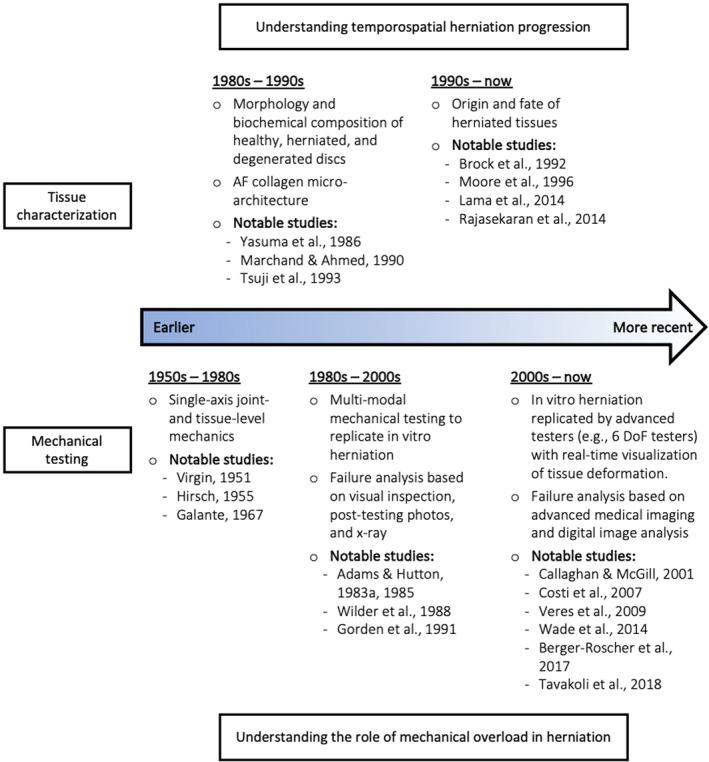
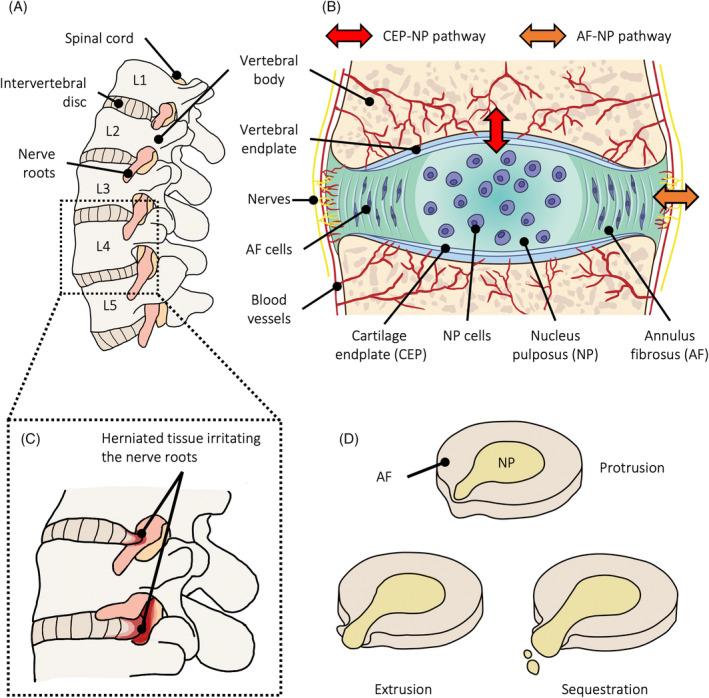
Lumbar intervertebral disc herniation, as a leading cause of low back pain, productivity loss, and disability, is a common musculoskeletal disorder that results in significant socioeconomic burdens. Despite extensive clinical and basic scientific research efforts, herniation etiopathogenesis, particularly its initiation and progression, is not well understood. Understanding herniation etiopathogenesis is essential for developing effective preventive measures and therapeutic interventions. Thus, this review seeks to provide a thorough overview of the advances in herniation-oriented research, with a discussion on ongoing challenges and potential future directions for clinical, translational, and basic scientific investigations to facilitate innovative interdisciplinary research aimed at understanding herniation etiopathogenesis. Specifically, risk factors for herniation are identified and summarized, including familial predisposition, obesity, diabetes mellitus, smoking tobacco, selected cardiovascular diseases, disc degeneration, and occupational risks. Basic scientific experimental and computational research that aims to understand the link between excessive mechanical load, catabolic tissue remodeling due to inflammation or insufficient nutrient supply, and herniation, are also reviewed. Potential future directions to address the current challenges in herniation-oriented research are explored by combining known progressive development in existing research techniques with ongoing technological advances. More research on the relationship between occupational risk factors and herniation, as well as the relationship between degeneration and herniation, is needed to develop preventive measures for working-age individuals. Notably, researchers should explore using or modifying existing degeneration animal models to study herniation etiopathogenesis, as such models may allow for a better understanding of how to prevent mild-to-moderately degenerated discs from herniating.
腰椎间盘突出症是导致腰痛、生产力丧失和残疾的主要原因,是一种常见的肌肉骨骼疾病,会造成重大的社会经济负担。尽管进行了广泛的临床和基础科学研究,但椎间盘突出症的病因发病机制,尤其是其起始和进展过程,仍未得到充分了解。了解椎间盘突出症的病因发病机制对于制定有效的预防措施和治疗干预至关重要。因此,本综述旨在全面概述椎间盘突出症相关研究的进展,讨论当前面临的挑战以及临床、转化和基础科学研究未来可能的方向,以促进旨在理解椎间盘突出症病因发病机制的创新性跨学科研究。具体而言,确定并总结了椎间盘突出症的危险因素,包括家族易感性、肥胖、糖尿病、吸烟、某些心血管疾病、椎间盘退变和职业风险。还综述了旨在理解过度机械负荷、炎症或营养供应不足导致的分解代谢组织重塑与椎间盘突出症之间联系的基础科学实验和计算研究。通过将现有研究技术中已知的渐进发展与当前的技术进步相结合,探索了应对椎间盘突出症相关研究当前挑战的潜在未来方向。为了制定针对工作年龄个体的预防措施,需要对职业危险因素与椎间盘突出症之间的关系以及退变与椎间盘突出症之间的关系进行更多研究。值得注意的是,研究人员应探索使用或改进现有的退变动物模型来研究椎间盘突出症的病因发病机制,因为此类模型可能有助于更好地理解如何预防轻度至中度退变的椎间盘发生突出。

 Zotero 插件