
解析与瑞士艾滋病毒队列研究中降低严重急性呼吸综合征冠状病毒 2 易感性相关的因素。
Deciphering Factors Linked With Reduced Severe Acute Respiratory Syndrome Coronavirus 2 Susceptibility in the Swiss HIV Cohort Study.
机构信息
Department of Infectious Diseases and Hospital Epidemiology, University Hospital Zurich and University of Zurich, Zurich, Switzerland.
Institute of Medical Virology, University of Zurich, Zurich, Switzerland.
出版信息
J Infect Dis. 2024 Aug 16;230(2):e292-e304. doi: 10.1093/infdis/jiae002.
BACKGROUND
Factors influencing susceptibility to severe acute respiratory syndrome coronavirus 2 (SARS-CoV-2) remain to be resolved. Using data from the Swiss HIV Cohort Study on 6270 people with human immunodeficiency virus (HIV) and serologic assessment for SARS-CoV-2 and circulating human coronavirus (HCoV) antibodies, we investigated the association of HIV-related and general parameters with SARS-CoV-2 infection.
METHODS
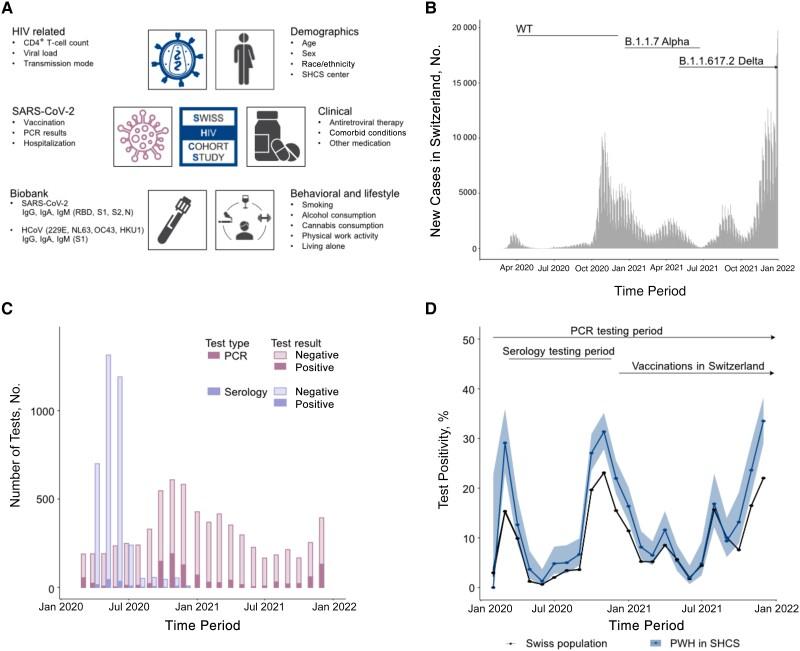
We analyzed SARS-CoV-2 polymerase chain reaction test results, COVID-19-related hospitalizations, and deaths reported to the Swiss HIV Cohort Study between 1 January 2020 and 31 December 2021. Antibodies to SARS-CoV-2 and HCoVs were determined in prepandemic (2019) and pandemic (2020) biobanked plasma samples and compared with findings in HIV-negative individuals. We applied logistic regression, conditional logistic regression, and bayesian multivariate regression to identify determinants of SARS-CoV-2 infection and antibody responses to SARS-CoV-2 in people with HIV.
RESULTS
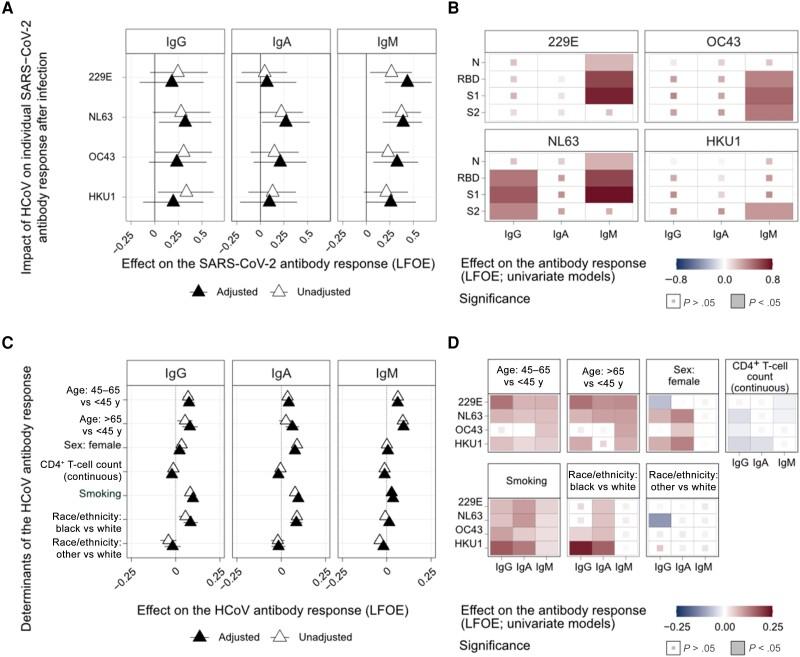
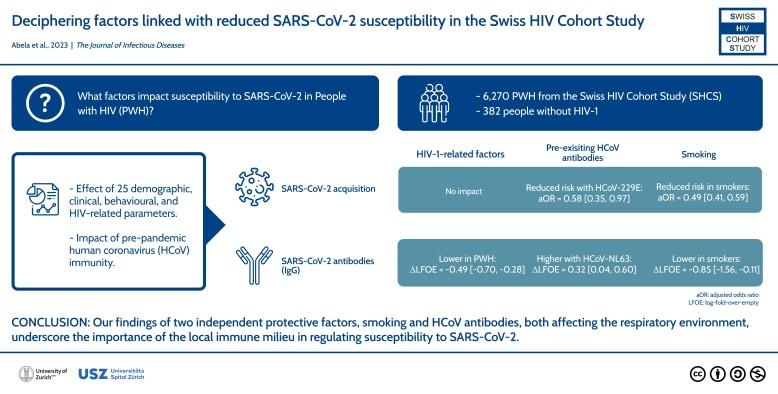
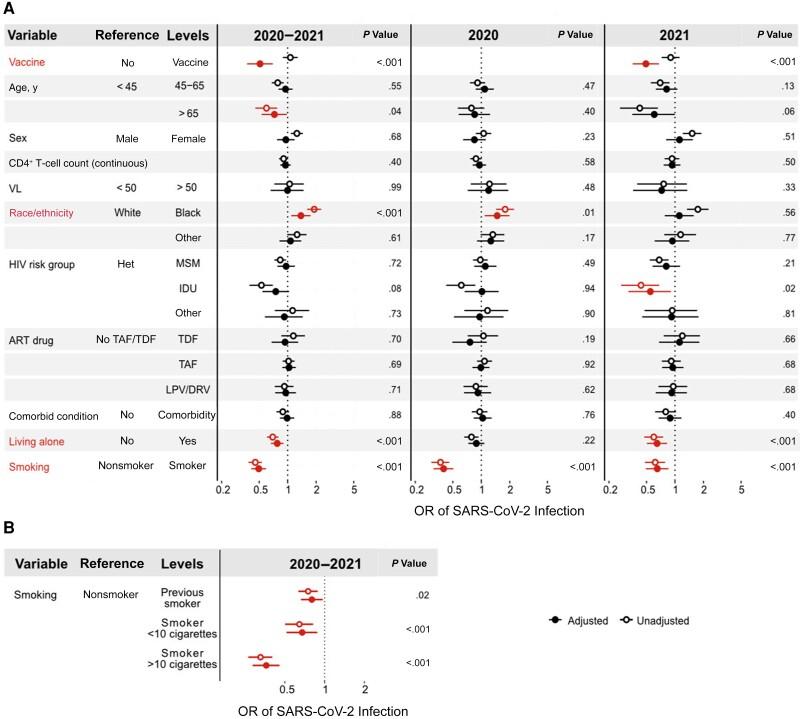
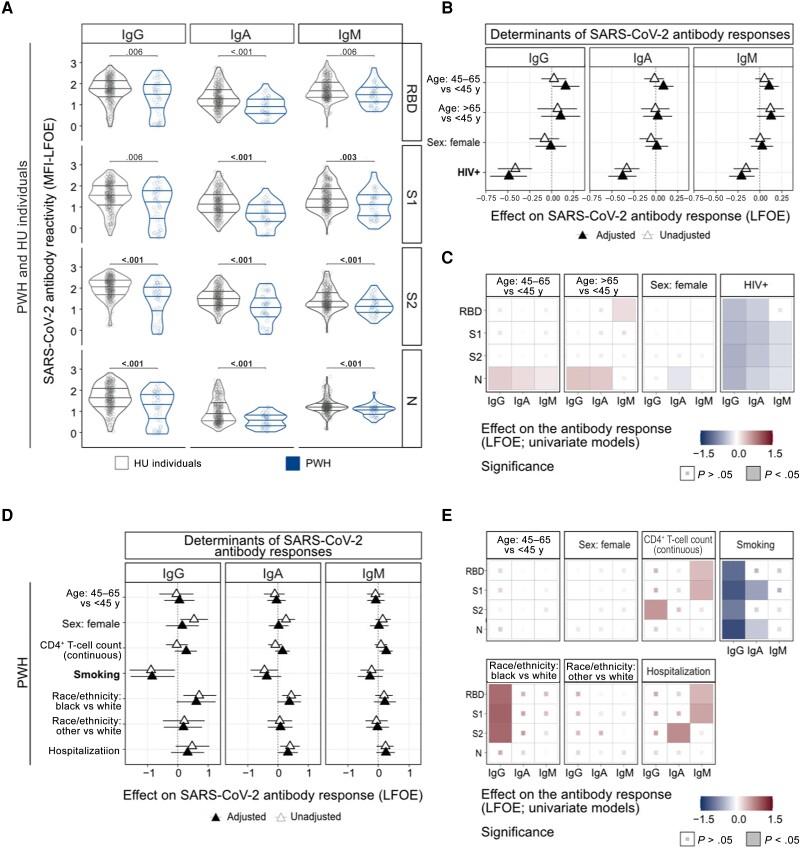
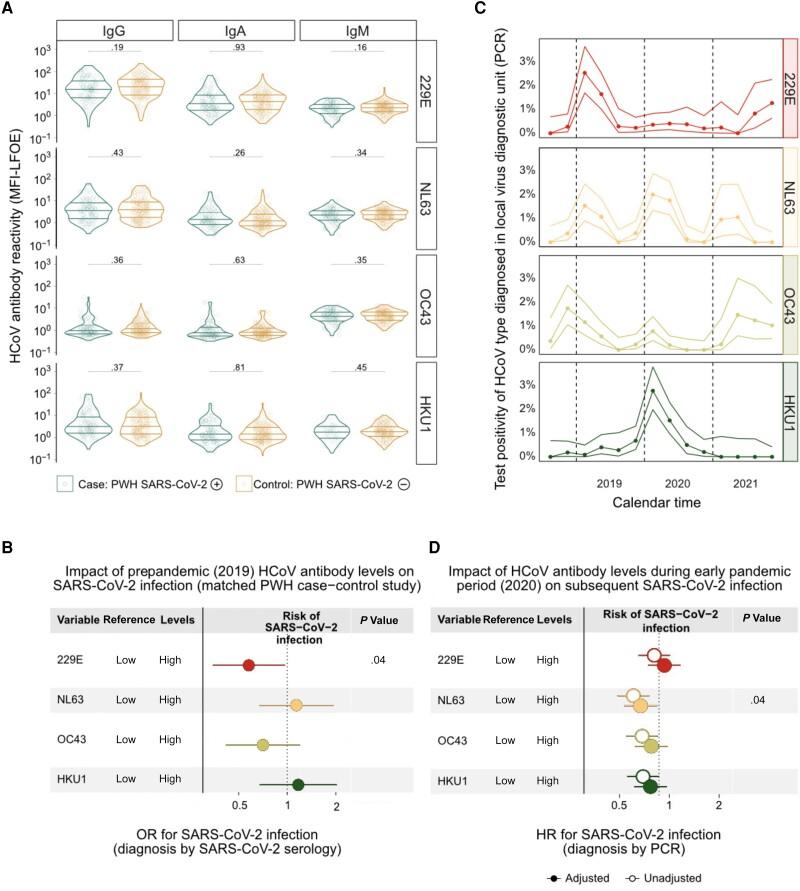
No HIV-1-related factors were associated with SARS-CoV-2 acquisition. High prepandemic HCoV antibodies were associated with a lower risk of subsequent SARS-CoV-2 infection and with higher SARS-CoV-2 antibody responses on infection. We observed a robust protective effect of smoking on SARS-CoV-2 infection risk (adjusted odds ratio, 0.46 [95% confidence interval, .38-.56]; P < .001), which occurred even in previous smokers and was highest for heavy smokers.
CONCLUSIONS
Our findings of 2 independent protective factors, smoking and HCoV antibodies, both affecting the respiratory environment, underscore the importance of the local immune milieu in regulating susceptibility to SARS-CoV-2.
背景
影响严重急性呼吸综合征冠状病毒 2(SARS-CoV-2)易感性的因素仍有待解决。利用来自瑞士艾滋病毒队列研究的 6270 名艾滋病毒感染者的数据,以及针对 SARS-CoV-2 和循环人类冠状病毒(HCoV)抗体的血清学评估,我们研究了与艾滋病毒相关的参数和一般参数与 SARS-CoV-2 感染的关系。
方法
我们分析了瑞士艾滋病毒队列研究在 2020 年 1 月 1 日至 2021 年 12 月 31 日期间报告的 SARS-CoV-2 聚合酶链反应检测结果、与 COVID-19 相关的住院治疗和死亡病例。在大流行前(2019 年)和大流行期间(2020 年)采集的生物银行血浆样本中测定了针对 SARS-CoV-2 和 HCoVs 的抗体,并与 HIV 阴性个体的结果进行了比较。我们应用逻辑回归、条件逻辑回归和贝叶斯多变量回归来确定 HIV 感染者中 SARS-CoV-2 感染和 SARS-CoV-2 抗体反应的决定因素。
结果
没有与 HIV-1 相关的因素与 SARS-CoV-2 获得有关。大流行前 HCoV 抗体水平较高与随后 SARS-CoV-2 感染的风险较低以及感染后 SARS-CoV-2 抗体反应较高有关。我们观察到吸烟对 SARS-CoV-2 感染风险具有强大的保护作用(调整后的优势比,0.46 [95%置信区间,0.38-0.56];P<0.001),这种作用甚至在曾经吸烟者和重度吸烟者中更为明显。
结论
我们发现了 2 个独立的保护因素,即吸烟和 HCoV 抗体,它们都影响呼吸环境,这突显了局部免疫环境在调节 SARS-CoV-2 易感性方面的重要性。
 Zotero 插件