
基于患者特异性信号特征预测三阴性乳腺癌的最佳治疗组合。
Patient-specific signaling signatures predict optimal therapeutic combinations for triple negative breast cancer.
机构信息
The Institute of Biomedical and Oral Research, The Hebrew University of Jerusalem, 9103401, Jerusalem, Israel.
Department of Biological Engineering, Massachusetts Institute of Technology, Cambridge, MA, 02139, USA.
出版信息
Mol Cancer. 2024 Jan 16;23(1):17. doi: 10.1186/s12943-023-01921-9.
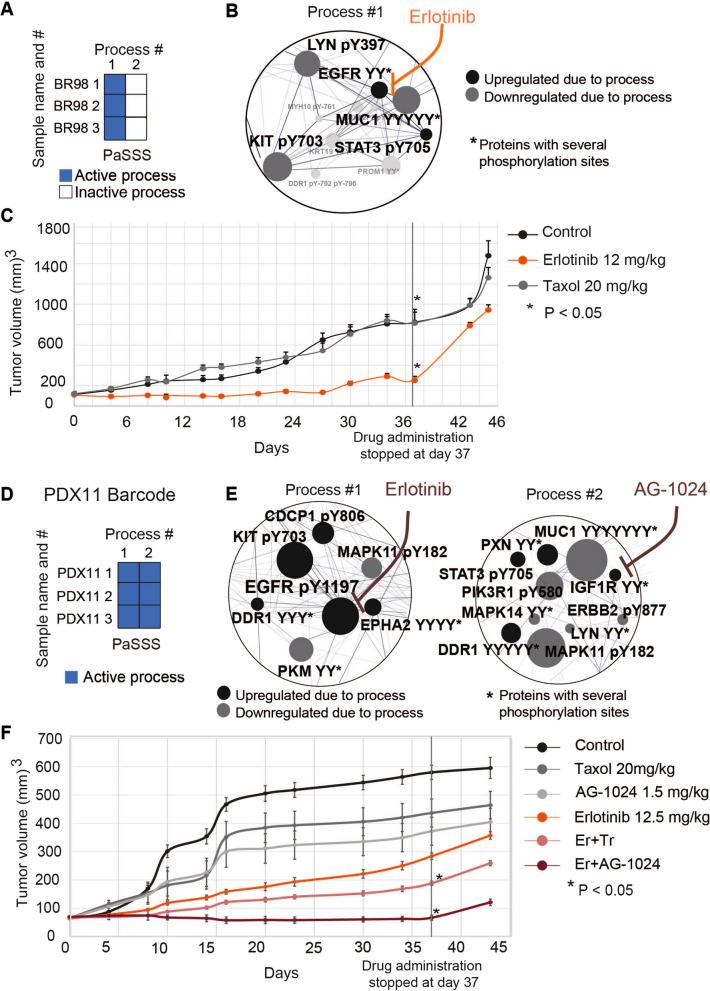
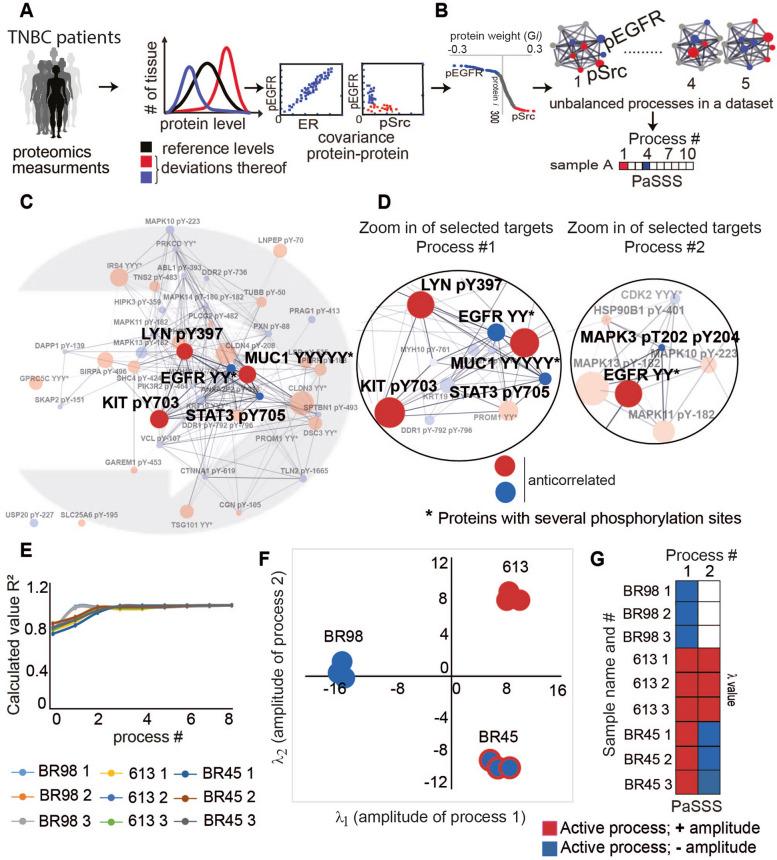
Triple negative breast cancer (TNBC) is a heterogeneous group of tumors which lack estrogen receptor, progesterone receptor, and HER2 expression. Targeted therapies have limited success in treating TNBC, thus a strategy enabling effective targeted combinations is an unmet need. To tackle these challenges and discover individualized targeted combination therapies for TNBC, we integrated phosphoproteomic analysis of altered signaling networks with patient-specific signaling signature (PaSSS) analysis using an information-theoretic, thermodynamic-based approach. Using this method on a large number of TNBC patient-derived tumors (PDX), we were able to thoroughly characterize each PDX by computing a patient-specific set of unbalanced signaling processes and assigning a personalized therapy based on them. We discovered that each tumor has an average of two separate processes, and that, consistent with prior research, EGFR is a major core target in at least one of them in half of the tumors analyzed. However, anti-EGFR monotherapies were predicted to be ineffective, thus we developed personalized combination treatments based on PaSSS. These were predicted to induce anti-EGFR responses or to be used to develop an alternative therapy if EGFR was not present.In-vivo experimental validation of the predicted therapy showed that PaSSS predictions were more accurate than other therapies. Thus, we suggest that a detailed identification of molecular imbalances is necessary to tailor therapy for each TNBC. In summary, we propose a new strategy to design personalized therapy for TNBC using pY proteomics and PaSSS analysis. This method can be applied to different cancer types to improve response to the biomarker-based treatment.
三阴性乳腺癌(TNBC)是一组缺乏雌激素受体、孕激素受体和 HER2 表达的异质性肿瘤。靶向治疗在治疗 TNBC 方面的成功率有限,因此需要一种能够实现有效靶向联合的策略。为了应对这些挑战并为 TNBC 发现个体化的靶向联合治疗方法,我们综合运用磷酸化蛋白质组学分析改变的信号网络与基于信息论和热力学的患者特异性信号特征(PaSSS)分析。使用这种方法对大量 TNBC 患者来源肿瘤(PDX)进行分析,我们能够通过计算患者特异性的不平衡信号过程集并根据这些过程集为每个 PDX 分配个性化的治疗方案,从而对每个 PDX 进行彻底的特征描述。我们发现每个肿瘤平均有两个独立的过程,而且与之前的研究一致,在分析的一半肿瘤中,EGFR 是其中至少一个过程的主要核心靶点。然而,抗 EGFR 单药治疗被预测为无效,因此我们根据 PaSSS 开发了个性化的联合治疗方案。这些方案预测可以诱导抗 EGFR 反应,或者如果 EGFR 不存在,则用于开发替代疗法。对预测治疗方案的体内实验验证表明,PaSSS 预测比其他治疗方案更准确。因此,我们建议对每个 TNBC 进行治疗,需要详细识别分子失衡。总之,我们提出了一种使用 pY 蛋白质组学和 PaSSS 分析为 TNBC 设计个性化治疗的新策略。该方法可应用于不同类型的癌症,以提高基于生物标志物的治疗反应。
 Zotero 插件