
颗粒大小和提取方法对梨渣酚类物质含量及生物活性的影响
Influence of Particle Size and Extraction Methods on Phenolic Content and Biological Activities of Pear Pomace.
作者信息
Ferreira Joana, Tkacz Karolina, Turkiewicz Igor Piotr, Santos Maria Isabel, Belas Adriana, Lima Ana, Wojdyło Aneta, Sousa Isabel
机构信息
LEAF-Linking Landscape, Environment, Agriculture and Food Research Center, Associate Laboratory TERRA, Instituto Superior de Agronomia, Universidade de Lisboa, Tapada da Ajuda, 1349-017 Lisboa, Portugal.
Department of Fruit, Vegetable and Plant Nutraceutical Technology, Faculty of Biotechnology and Food Science, Wrocław University of Environmental and Life Sciences, 37 Chełmońskiego Street, 51-630 Wrocław, Poland.
出版信息
Foods. 2023 Nov 29;12(23):4325. doi: 10.3390/foods12234325.
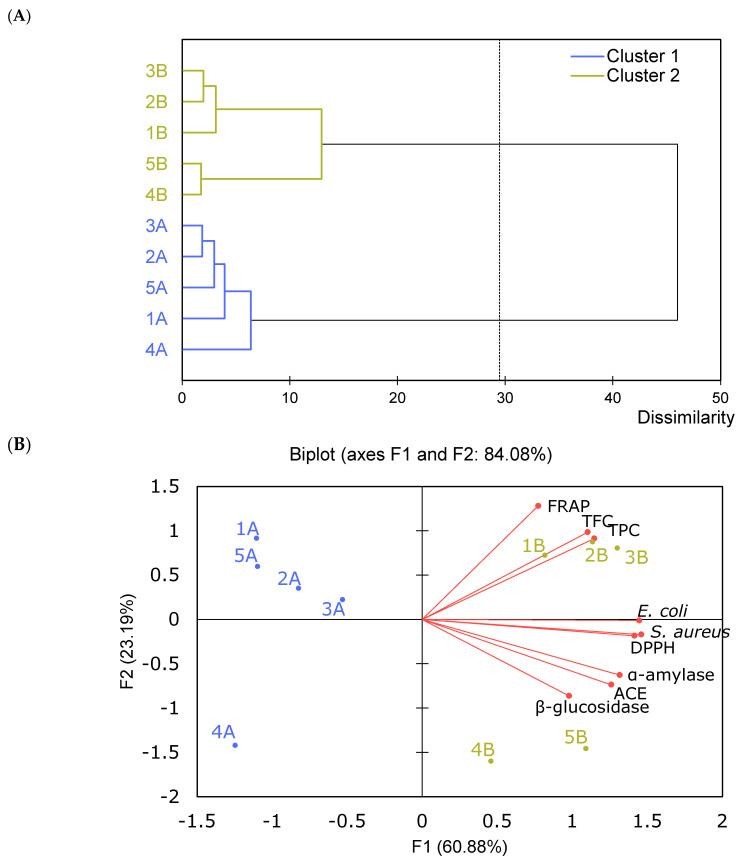
The main goal of this research was to investigate how particle size influences the characteristics of pear ( L.) pomace flour and to examine the impact of different pre-treatment methods on the phenolic content and associated bioactivities. Pear pomace flour was fractionated into different particle sizes, namely 1 mm, 710 µm, 180 µm, 75 µm and 53 µm. Then two extraction methods, namely maceration with methanol and two-step extraction with hexane via Soxhlet followed by ultrasound extraction with methanol, were tested. Total phenolic and total flavonoid contents ranged from 375.0 to 512.9 mg gallic acid/100 g DW and from 24.7 to 34.6 mg quercetin/100 g DW, respectively. Two-step extraction provided antioxidant activity up to 418.8 (in FRAP assay) and 340.0 mg Trolox/100 g DW (in DPPH assay). In order to explore various bioactive properties, this study assessed the inhibitory effects of enzymes, specifically α-amylase and β-glucosidase (associated with antidiabetic effects), as well as angiotensin-converting enzyme (linked to potential antihypertensive benefits). Additionally, the research investigated antibacterial potential against both Gram-negative () and Gram-positive () bacteria, revealing significant results ( < 0.05), particularly in the case of the two-step extraction method. This investigation underscores the substantial value of certain food industry wastes, highlighting their potential as bioactive ingredients within the framework of a circular economy.
本研究的主要目标是探究粒径如何影响梨(L.)果渣粉的特性,并考察不同预处理方法对酚类含量及相关生物活性的影响。将梨果渣粉分级为不同粒径,即1毫米、710微米、180微米、75微米和53微米。然后测试了两种提取方法,即甲醇浸渍法以及先用己烷通过索氏提取进行两步提取,随后用甲醇进行超声提取。总酚含量和总黄酮含量分别为375.0至512.9毫克没食子酸/100克干重以及24.7至34.6毫克槲皮素/100克干重。两步提取法在铁离子还原抗氧化能力(FRAP)测定中的抗氧化活性高达418.8,在2,2-二苯基-1-苦基肼(DPPH)测定中的抗氧化活性为340.0毫克 Trolox/100克干重。为了探究各种生物活性特性,本研究评估了酶的抑制作用,具体为α-淀粉酶和β-葡萄糖苷酶(与抗糖尿病作用相关)以及血管紧张素转换酶(与潜在的降压益处相关)。此外,该研究还考察了对革兰氏阴性菌()和革兰氏阳性菌()的抗菌潜力,结果显示有显著效果(<0.05),特别是在两步提取法的情况下。这项研究强调了某些食品工业废弃物的巨大价值,突出了它们在循环经济框架内作为生物活性成分的潜力。


 Zotero 插件