
面向初学者的在硼掺杂金刚石电极上电化学生成高氧化性活性物种的分步指南。
Step-by-step guide for electrochemical generation of highly oxidizing reactive species on BDD for beginners.
作者信息
Castillo-Cabrera G Xavier, Pliego-Cerdán Caroline I, Méndez Erika, Espinoza-Montero Patricio J
机构信息
Escuela de Ciencias Químicas, Pontificia Universidad Católica del Ecuador, Quito, Ecuador.
Facultad de Ciencias Químicas, Benemérita Universidad Autónoma de Puebla, Puebla, Mexico.
出版信息
Front Chem. 2024 Jan 4;11:1298630. doi: 10.3389/fchem.2023.1298630. eCollection 2023.
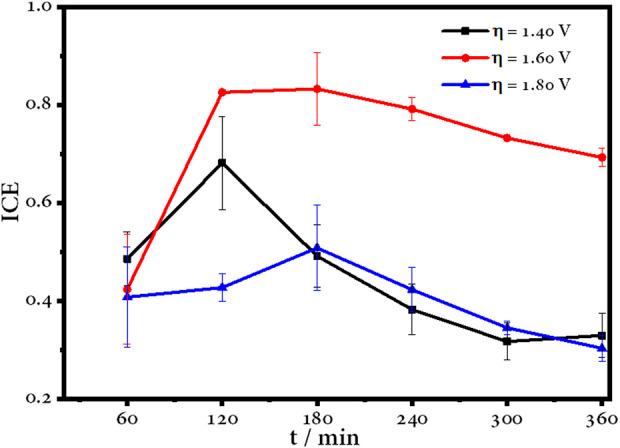
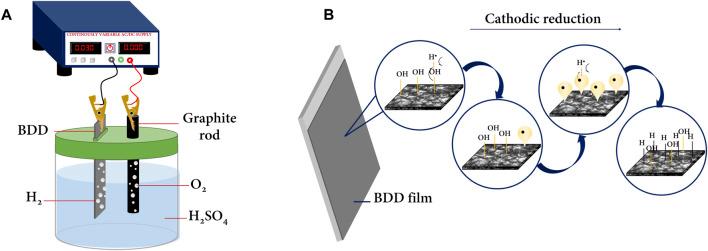
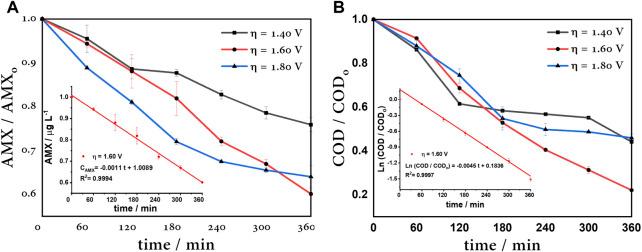
Selecting the ideal anodic potential conditions and corresponding limiting current density to generate reactive oxygen species, especially the hydroxyl radical (OH), becomes a major challenge when venturing into advanced electrochemical oxidation processes. In this work, a step-by-step guide for the electrochemical generation of OH on boron-doped diamond (BDD) for beginners is shown, in which the following steps are discussed: i) BDD activation (assuming it is new), ii) the electrochemical response of BDD (in electrolyte and ferri/ferro-cyanide), iii) Tafel plots using sampled current voltammetry to evaluate the overpotential region where OH is mainly generated, iv) a study of radical entrapment in the overpotential region where OH generation is predominant according to the Tafel plots, and v) finally, the previously found ideal conditions are applied in the electrochemical degradation of amoxicillin, and the instantaneous current efficiency and relative cost of the process are reported.
在探索先进的电化学氧化过程时,选择理想的阳极电位条件和相应的极限电流密度以产生活性氧物种,尤其是羟基自由基(OH),成为一项重大挑战。在这项工作中,展示了一份针对初学者在硼掺杂金刚石(BDD)上电化学生成OH的分步指南,其中讨论了以下步骤:i)BDD活化(假设它是新的),ii)BDD的电化学响应(在电解质和铁氰化物/亚铁氰化物中),iii)使用采样电流伏安法的塔菲尔曲线来评估主要产生OH的过电位区域,iv)根据塔菲尔曲线对OH生成占主导的过电位区域中的自由基捕获进行研究,以及v)最后,将先前找到的理想条件应用于阿莫西林的电化学降解,并报告该过程的瞬时电流效率和相对成本。


 Zotero 插件