
轻度 COVID-19 后出现的脑微结构异常、疲劳和认知功能障碍。
Microstructural brain abnormalities, fatigue, and cognitive dysfunction after mild COVID-19.
机构信息
Brazilian Institute of Neuroscience and Neurotechnology (BRAINN), University of Campinas, Campinas, Brazil.
Department of Neurology, Clinics Hospital, University of Campinas, Campinas, Brazil.
出版信息
Sci Rep. 2024 Jan 19;14(1):1758. doi: 10.1038/s41598-024-52005-7.
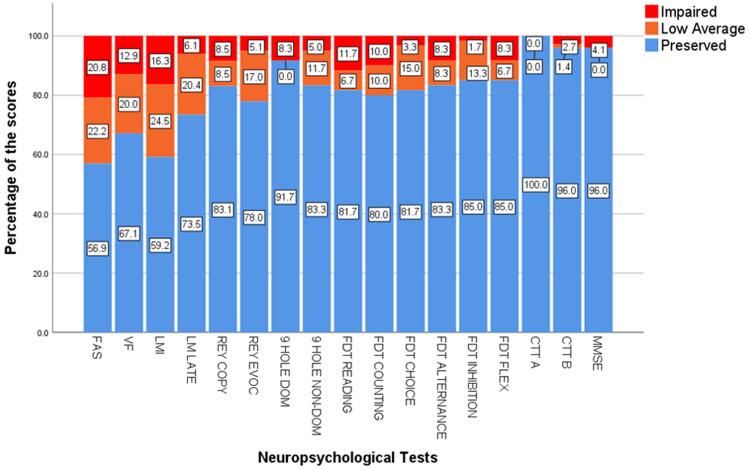
Although some studies have shown neuroimaging and neuropsychological alterations in post-COVID-19 patients, fewer combined neuroimaging and neuropsychology evaluations of individuals who presented a mild acute infection. Here we investigated cognitive dysfunction and brain changes in a group of mildly infected individuals. We conducted a cross-sectional study of 97 consecutive subjects (median age of 41 years) without current or history of psychiatric symptoms (including anxiety and depression) after a mild infection, with a median of 79 days (and mean of 97 days) after diagnosis of COVID-19. We performed semi-structured interviews, neurological examinations, 3T-MRI scans, and neuropsychological assessments. For MRI analyses, we included a group of non-infected 77 controls. The MRI study included white matter (WM) investigation with diffusion tensor images (DTI) and functional connectivity with resting-state functional MRI (RS-fMRI). The patients reported memory loss (36%), fatigue (31%) and headache (29%). The quantitative analyses confirmed symptoms of fatigue (83% of participants), excessive somnolence (35%), impaired phonemic verbal fluency (21%), impaired verbal categorical fluency (13%) and impaired logical memory immediate recall (16%). The WM analyses with DTI revealed higher axial diffusivity values in post-infected patients compared to controls. Compared to controls, there were no significant differences in the functional connectivity of the posterior cingulum cortex. There were no significant correlations between neuropsychological scores and neuroimaging features (including DTI and RS-fMRI). Our results suggest persistent cognitive impairment and subtle white matter abnormalities in individuals mildly infected without anxiety or depression symptoms. The longitudinal analyses will clarify whether these alterations are temporary or permanent.
虽然一些研究已经表明,在 COVID-19 后患者中存在神经影像学和神经心理学改变,但对轻度急性感染患者进行联合神经影像学和神经心理学评估的研究较少。在这里,我们研究了一组轻度感染个体的认知功能障碍和大脑变化。我们对 97 名连续轻度感染后无当前或既往精神症状(包括焦虑和抑郁)的受试者进行了横断面研究,这些受试者在 COVID-19 诊断后中位数为 79 天(平均为 97 天)。我们进行了半结构化访谈、神经检查、3T-MRI 扫描和神经心理学评估。对于 MRI 分析,我们纳入了一组未感染的 77 名对照。MRI 研究包括对弥散张量图像(DTI)进行白质(WM)研究和对静息状态功能磁共振成像(RS-fMRI)进行功能连接研究。患者报告有记忆障碍(36%)、疲劳(31%)和头痛(29%)。定量分析证实存在疲劳症状(83%的参与者)、过度嗜睡(35%)、语音流畅性受损(21%)、词语流畅性受损(13%)和逻辑记忆即时回忆受损(16%)。与对照组相比,感染后患者的 WM 分析显示轴向弥散度值升高。与对照组相比,后扣带回皮层的功能连接没有显著差异。神经心理学评分与神经影像学特征(包括 DTI 和 RS-fMRI)之间没有显著相关性。我们的结果表明,在没有焦虑或抑郁症状的轻度感染个体中存在持续的认知障碍和轻微的白质异常。纵向分析将阐明这些改变是暂时的还是永久的。


 Zotero 插件