
基于 H-NMR 分析潜在生物标志物与饮食结构和生活方式对难治性痛风的关系。
Analysis of the relationship of refractory gout between potential biomarkers and diet structure and lifestyle based on H-NMR.
机构信息
Department of Rheumatology, Dongguan Hospital of Traditional Chinese Medicine, Dongguan, 523200, China.
Dongguan Hospital of Traditional Chinese Medicine, Guangzhou University of Chinese Medicine, Guangzhou, 510006, China.
出版信息
J Orthop Surg Res. 2024 Jan 19;19(1):78. doi: 10.1186/s13018-024-04540-2.
OBJECTIVE
We investigated the different life styles among the diet structures and exercise patterns of 100 patients with refractory gout and 79 healthy volunteers; of these, we selected 39 patients and 20 healthy volunteers for serum proton magnetic resonance (H-NMR) metabolic network detection. We determined the potential biomarkers of refractory gout and attempted to explore the relation between potential biomarkers and diet structures and exercise patterns.
METHODS
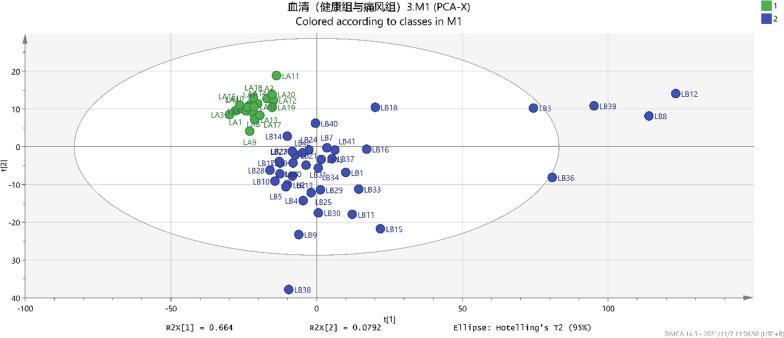
The study employed a questionnaire survey to analyze diet structures and exercise patterns from 100 patients of refractory gout and 79 healthy volunteers. At the same time, using H-NMR metabolic technology to analyze the metabolites present in the serum samples obtained from 39 patients of refractory gout (group B) and 20 healthy subjects (group A). Employing MestReNova (Version 8.0.1) to analyze the metabolites maps, collecting the NMR results, further importing into SIMCA-P+ 14.0 software (Umetrics, Sweden) for principal component analysis (PCA), partial least squares discriminant analysis (PLS-DA), and orthogonal partial least squares discriminant analysis (OPLS-DA) statistical analysis. Combining patterns recognition and multivariate statistics, potential biomarkers were searched. Other experimental data, including creatinine and adiponectin, were counted by the SPSS21.0. The measurement data were expressed by X ± S and t test. The counting data were expressed in percent and performed by X test.
RESULTS
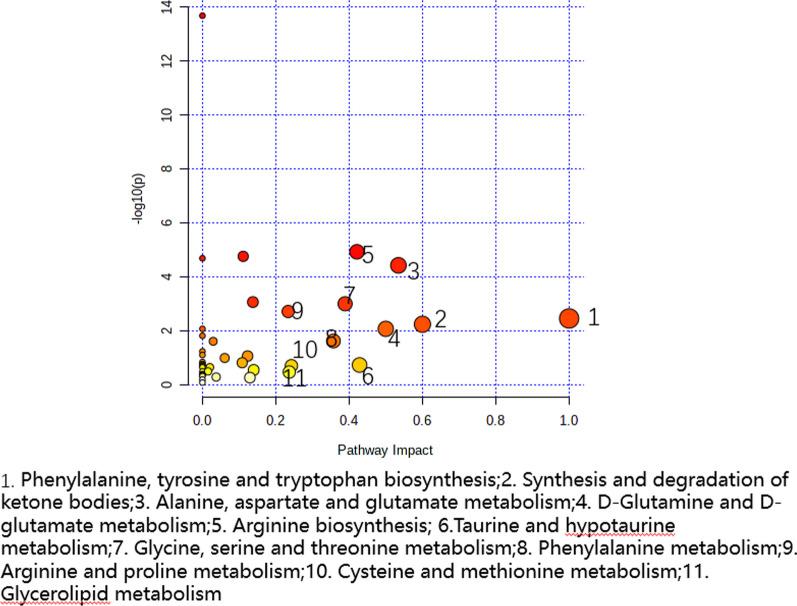
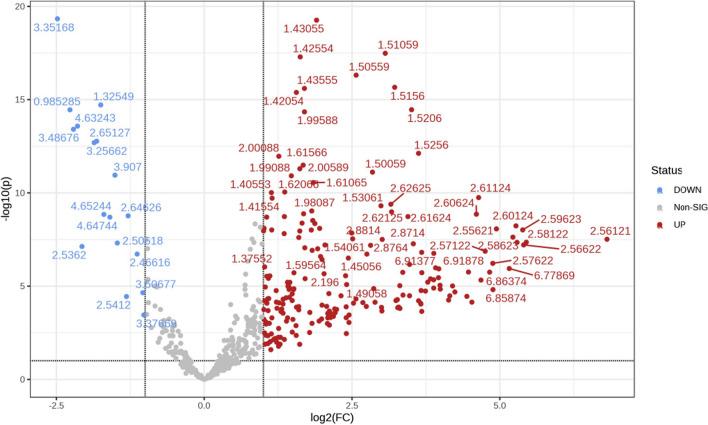
Our results revealed that patients with gout tended to be obese, and there were differences in their lifestyle with exercise, sleep, and smoking, as well as in their preference for fructose drinks, alcohol, and total and structural distribution of meat, milk, eggs, and so on when compared with the healthy volunteers. Importantly, we found the adiponectin in the gout group was lower as compared to the healthy group. Further, metabolomics in combination with KEGG analysis revealed that the biosynthesis of aminoacyl tRNA, biosynthesis of valine, leucine, and isoleucine, metabolism of alanine, aspartic, and glutamate, metabolism of glycine, serine, and threonine, phenylalanine, glycolysis/gluconeogenesis, ketone body synthesis and degradation, metabolism of D-glutamine, citric acid cycle (TCA cycle), triglyceride metabolism, and others could be used as specific biomarkers of this disease.
CONCLUSION
Recurrent refractory gout and formation of tophus may be related to the diet structures and lifestyles between the patients and the healthy people, and their abnormal metabolic network may be related to the disorder of mitochondrial energy metabolism, which further results in abnormal metabolism of glucose, lipids, amino acids, and deposition of uric acid in joints, peripheral connective tissue, and kidney, inducing an inflammatory response.
目的
我们调查了 100 例难治性痛风患者和 79 例健康志愿者的饮食结构和运动模式中的不同生活方式;从中选择 39 例患者和 20 例健康志愿者进行血清质子磁共振(H-NMR)代谢网络检测。我们确定了难治性痛风的潜在生物标志物,并试图探讨潜在生物标志物与饮食结构和运动模式之间的关系。
方法
采用问卷调查分析 100 例难治性痛风患者和 79 例健康志愿者的饮食结构和运动模式。同时,采用 H-NMR 代谢技术分析 39 例难治性痛风患者(B 组)和 20 例健康受试者(A 组)血清样本中的代谢物。采用 MestReNova(版本 8.0.1)分析代谢物图谱,收集 NMR 结果,进一步导入 SIMCA-P+ 14.0 软件(Umetrics,瑞典)进行主成分分析(PCA)、偏最小二乘判别分析(PLS-DA)和正交偏最小二乘判别分析(OPLS-DA)统计分析。结合模式识别和多元统计,寻找潜在的生物标志物。其他实验数据,包括肌酐和脂联素,由 SPSS21.0 计算。计量资料用 X ± S 表示,采用 t 检验。计数资料用百分比表示,采用 X 检验。
结果
我们的结果表明,痛风患者倾向于肥胖,且在运动、睡眠和吸烟习惯以及果糖饮料、酒精以及肉类、牛奶、鸡蛋等的总摄入量和结构分布等方面与健康志愿者存在差异。重要的是,我们发现痛风组的脂联素水平低于健康组。此外,代谢组学结合 KEGG 分析表明,丙氨酸、天冬氨酸和谷氨酸的代谢、甘氨酸、丝氨酸和苏氨酸的代谢、苯丙氨酸、糖酵解/糖异生、酮体合成和降解、D-谷氨酰胺的代谢、柠檬酸循环(TCA 循环)、甘油三酯代谢等可能作为该病的特异性生物标志物。
结论
复发性难治性痛风和痛风石的形成可能与患者和健康人群的饮食结构和生活方式有关,其异常代谢网络可能与线粒体能量代谢紊乱有关,进而导致葡萄糖、脂质、氨基酸代谢异常,尿酸在关节、外周结缔组织和肾脏沉积,引发炎症反应。



 Zotero 插件