
靶向血栓性疾病中的半胱氨酸氧化
Targeting Cysteine Oxidation in Thrombotic Disorders.
作者信息
Yang Moua, Silverstein Roy L
机构信息
Division of Hemostasis and Thrombosis, Beth Israel Deaconess Medical Center, Harvard Medical School, 3 Blackfan Circle, CLS-924, Boston, MA 02115, USA.
Department of Medicine, Medical College of Wisconsin, Hub 8745, 8701 W Watertown Plank Rd., Milwaukee, WI 53226, USA.
出版信息
Antioxidants (Basel). 2024 Jan 9;13(1):83. doi: 10.3390/antiox13010083.
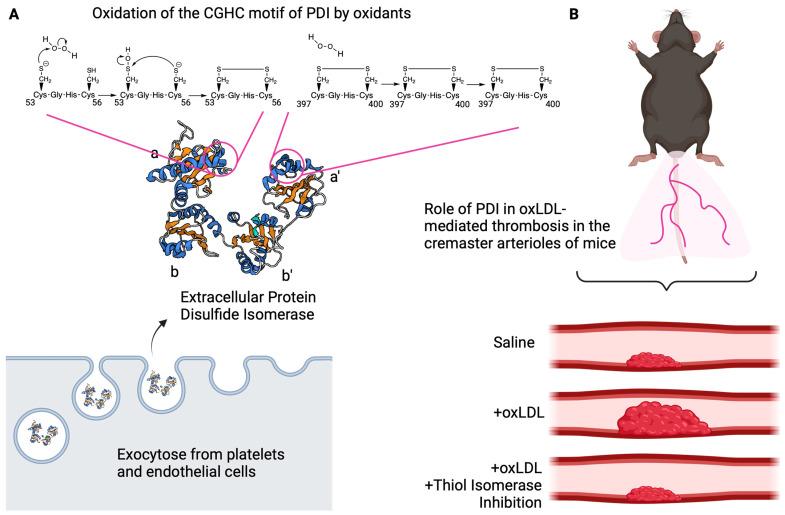
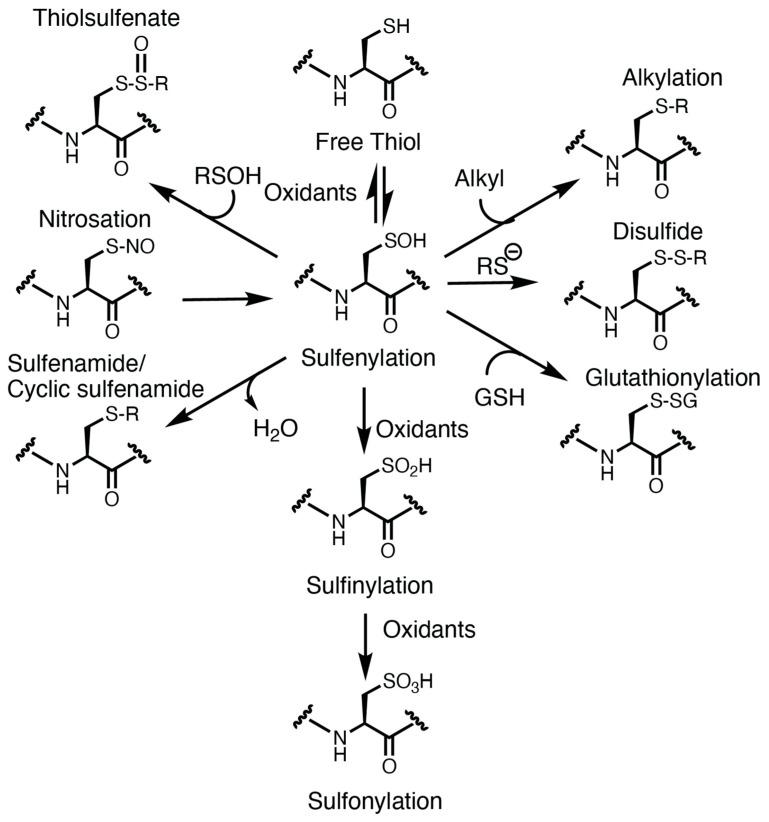
Oxidative stress increases the risk for clinically significant thrombotic events, yet the mechanisms by which oxidants become prothrombotic are unclear. In this review, we provide an overview of cysteine reactivity and oxidation. We then highlight recent findings on cysteine oxidation events in oxidative stress-related thrombosis. Special emphasis is on the signaling pathway induced by a platelet membrane protein, CD36, in dyslipidemia, and by protein disulfide isomerase (PDI), a member of the thiol oxidoreductase family of proteins. Antioxidative and chemical biology approaches to target cysteine are discussed. Lastly, the knowledge gaps in the field are highlighted as they relate to understanding how oxidative cysteine modification might be targeted to limit thrombosis.
氧化应激会增加临床上显著血栓形成事件的风险,然而氧化剂促血栓形成的机制尚不清楚。在这篇综述中,我们概述了半胱氨酸的反应性和氧化。然后,我们重点介绍了氧化应激相关血栓形成中半胱氨酸氧化事件的最新发现。特别强调的是在血脂异常中由血小板膜蛋白CD36以及硫醇氧化还原酶家族成员蛋白质二硫键异构酶(PDI)诱导的信号通路。讨论了针对半胱氨酸的抗氧化和化学生物学方法。最后,强调了该领域在理解如何靶向氧化半胱氨酸修饰以限制血栓形成方面的知识空白。



 Zotero 插件