
HLA 遗传变异在 COVID-19 易感性、严重程度和死亡率中的作用:全球综述。
The role of HLA genetic variants in COVID-19 susceptibility, severity, and mortality: A global review.
机构信息
Student Research Committee, Bushehr University of Medical Sciences, Bushehr, Iran.
Department of Hematology, School of Para-Medicine, Bushehr University of Medical Sciences, Bushehr, Iran.
出版信息
J Clin Lab Anal. 2024 Jan;38(1-2):e25005. doi: 10.1002/jcla.25005. Epub 2024 Jan 22.
BACKGROUND
The COVID-19 pandemic has had a profound global impact, with variations in susceptibility, severity, and mortality rates across different regions. While many factors can contribute to the spread and impact of the disease, specifically human leukocyte antigen (HLA) genetic variants have emerged as potential contributors to COVID-19 outcomes.
METHODS
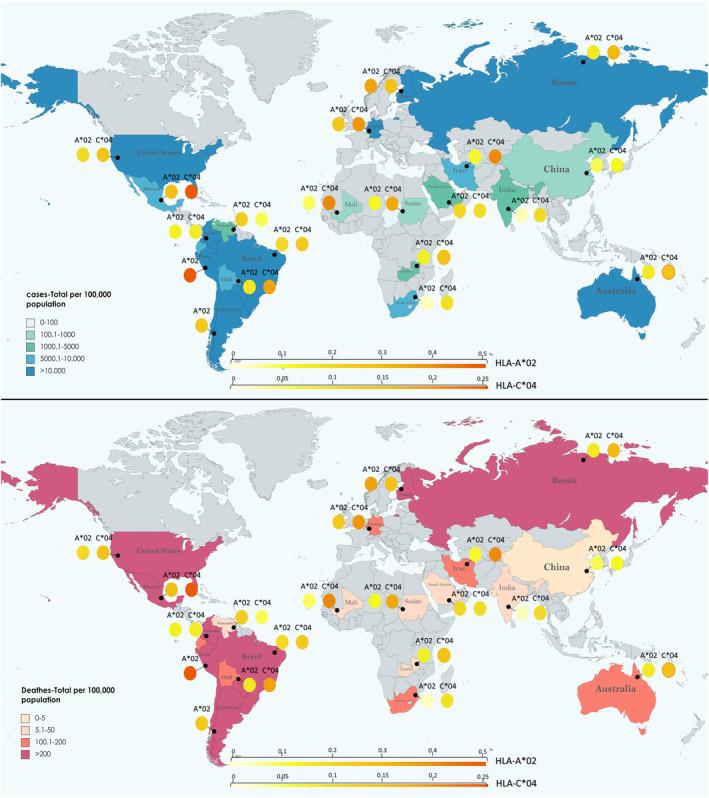
In this comprehensive narrative review, we conducted a thorough literature search to identify relevant studies investigating the association between HLA genetic variants and COVID-19 outcomes. Additionally, we analyzed allelic frequency data from diverse populations to assess differences in COVID-19 incidence and severity.
RESULTS
Our review provides insights into the immunological mechanisms involving HLA-mediated responses to COVID-19 and highlights potential research directions and therapeutic interventions. We found evidence suggesting that certain HLA alleles, such as HLA-A02, may confer a lower risk of COVID-19, while others, like HLA-C04, may increase the risk of severe symptoms and mortality. Furthermore, our analysis of allele frequency distributions revealed significant variations among different populations.
CONCLUSION
Considering host genetic variations, particularly HLA genetic variants, is crucial for understanding COVID-19 susceptibility and severity. These findings have implications for personalized treatment and interventions based on an individual's genetic profile. However, further research is needed to unravel the precise mechanisms underlying the observed associations and explore the potential for targeted therapies or preventive measures based on HLA genetic variants.
背景
COVID-19 大流行在全球范围内产生了深远的影响,不同地区的易感性、严重程度和死亡率存在差异。虽然许多因素可能导致疾病的传播和影响,但人类白细胞抗原(HLA)遗传变异已成为 COVID-19 结果的潜在影响因素。
方法
在这项全面的叙述性综述中,我们进行了彻底的文献检索,以确定研究 HLA 遗传变异与 COVID-19 结果之间关联的相关研究。此外,我们分析了来自不同人群的等位基因频率数据,以评估 COVID-19 发病率和严重程度的差异。
结果
我们的综述提供了对涉及 HLA 介导的对 COVID-19 反应的免疫机制的深入了解,并强调了潜在的研究方向和治疗干预措施。我们有证据表明,某些 HLA 等位基因,如 HLA-A02,可能降低 COVID-19 的风险,而其他等位基因,如 HLA-C04,则可能增加严重症状和死亡率的风险。此外,我们对等位基因频率分布的分析显示,不同人群之间存在显著差异。
结论
考虑宿主遗传变异,特别是 HLA 遗传变异,对于理解 COVID-19 的易感性和严重程度至关重要。这些发现对基于个体遗传谱的个性化治疗和干预具有重要意义。然而,需要进一步研究来阐明观察到的关联背后的精确机制,并探索基于 HLA 遗传变异的靶向治疗或预防措施的潜力。
 Zotero 插件