
抗老化药物及相关信号通路
Anti-Aging Drugs and the Related Signal Pathways.
作者信息
Du Nannan, Yang Ruigang, Jiang Shengrong, Niu Zubiao, Zhou Wenzhao, Liu Chenyu, Gao Lihua, Sun Qiang
机构信息
Frontier Biotechnology Laboratory, Beijing Institute of Biotechnology, Beijing 100071, China.
Research Unit of Cell Death Mechanism, 2021RU008, Chinese Academy of Medical Science, Beijing 100071, China.
出版信息
Biomedicines. 2024 Jan 8;12(1):127. doi: 10.3390/biomedicines12010127.
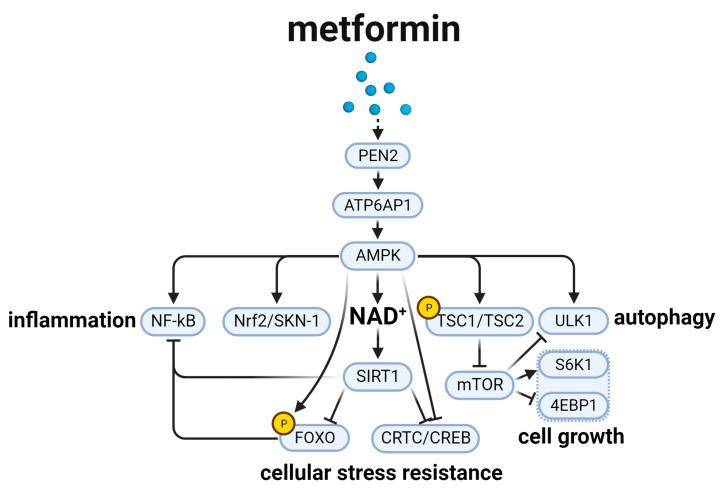
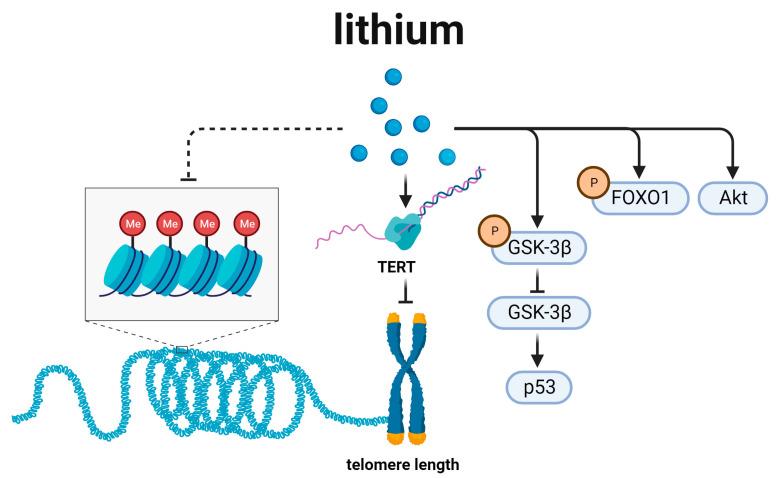
Aging is a multifactorial biological process involving chronic diseases that manifest from the molecular level to the systemic level. From its inception to 31 May 2022, this study searched the PubMed, Web of Science, EBSCO, and Cochrane library databases to identify relevant research from 15,983 articles. Multiple approaches have been employed to combat aging, such as dietary restriction (DR), exercise, exchanging circulating factors, gene therapy, and anti-aging drugs. Among them, anti-aging drugs are advantageous in their ease of adherence and wide prevalence. Despite a shared functional output of aging alleviation, the current anti-aging drugs target different signal pathways that frequently cross-talk with each other. At present, six important signal pathways were identified as being critical in the aging process, including pathways for the mechanistic target of rapamycin (mTOR), AMP-activated protein kinase (AMPK), nutrient signal pathway, silent information regulator factor 2-related enzyme 1 (SIRT1), regulation of telomere length and glycogen synthase kinase-3 (GSK-3), and energy metabolism. These signal pathways could be targeted by many anti-aging drugs, with the corresponding representatives of rapamycin, metformin, acarbose, nicotinamide adenine dinucleotide (NAD), lithium, and nonsteroidal anti-inflammatory drugs (NSAIDs), respectively. This review summarized these important aging-related signal pathways and their representative targeting drugs in attempts to obtain insights into and promote the development of mechanism-based anti-aging strategies.
衰老是一个多因素的生物学过程,涉及从分子水平到全身水平表现出的慢性疾病。从开始到2022年5月31日,本研究检索了PubMed、科学网、EBSCO和考科蓝图书馆数据库,从15983篇文章中确定相关研究。已经采用了多种方法来对抗衰老,如饮食限制(DR)、运动、交换循环因子、基因治疗和抗衰老药物。其中,抗衰老药物在依从性和广泛普及方面具有优势。尽管在减轻衰老方面有共同的功能输出,但目前的抗衰老药物针对的是不同的信号通路,这些信号通路经常相互串扰。目前,已确定有六条重要的信号通路在衰老过程中起关键作用,包括雷帕霉素机制靶点(mTOR)、AMP激活蛋白激酶(AMPK)、营养信号通路、沉默信息调节因子2相关酶1(SIRT1)、端粒长度调节和糖原合酶激酶-3(GSK-3)以及能量代谢通路。这些信号通路可以被许多抗衰老药物靶向,相应的代表药物分别是雷帕霉素、二甲双胍、阿卡波糖、烟酰胺腺嘌呤二核苷酸(NAD)、锂和非甾体抗炎药(NSAIDs)。本综述总结了这些与衰老相关的重要信号通路及其代表性靶向药物,试图深入了解并促进基于机制的抗衰老策略的发展。




 Zotero 插件